Realistic arrival windows
What we do is build the trip into the day's route and give you a realistic window when you call, rather than a number that sounds good on the phone and falls apart on the road.
Temescal Valley, Moreno Valley CA
Newer homes, newer hardware: Temescal Valley's mostly post-2000 housing means different common faults than older parts of the service area. We travel from Moreno Valley to fix them.
What we do here
Door impact
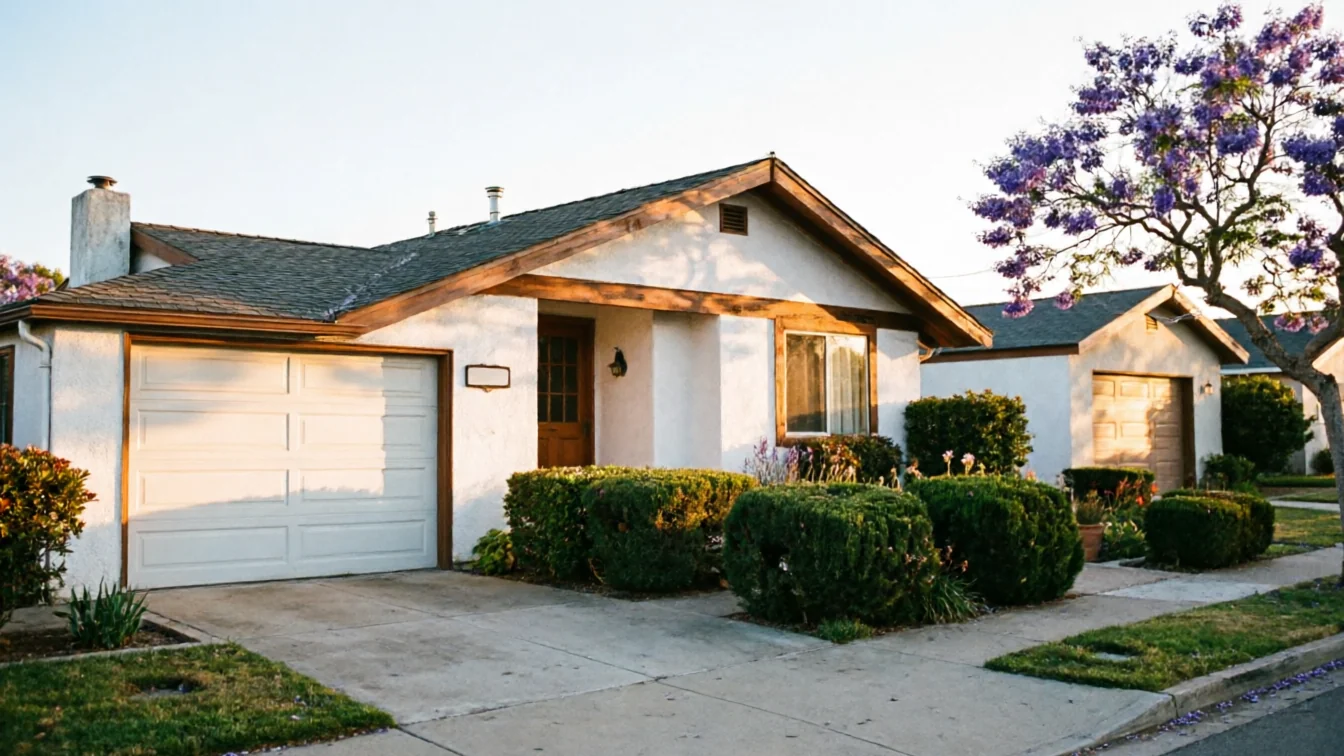
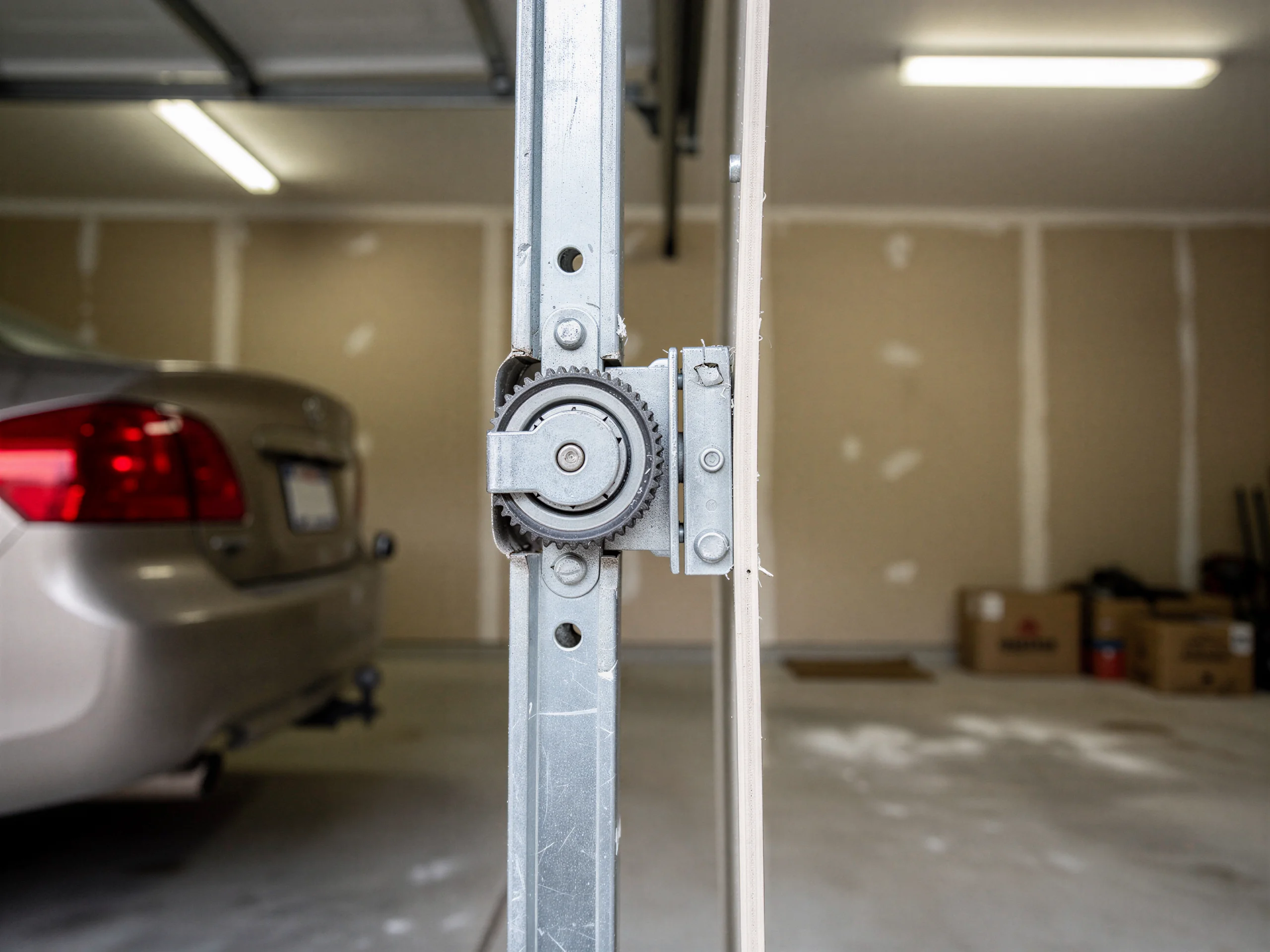
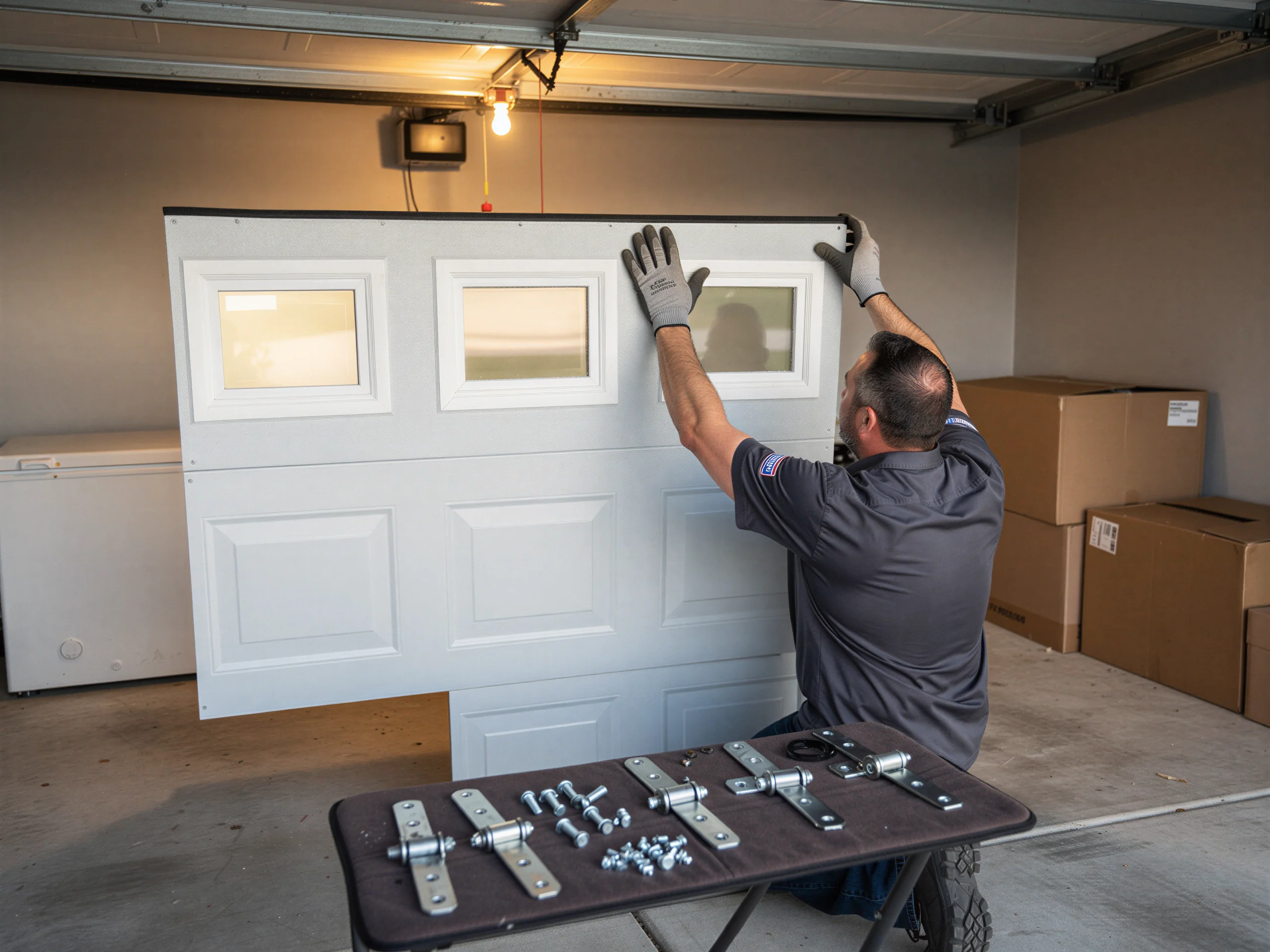
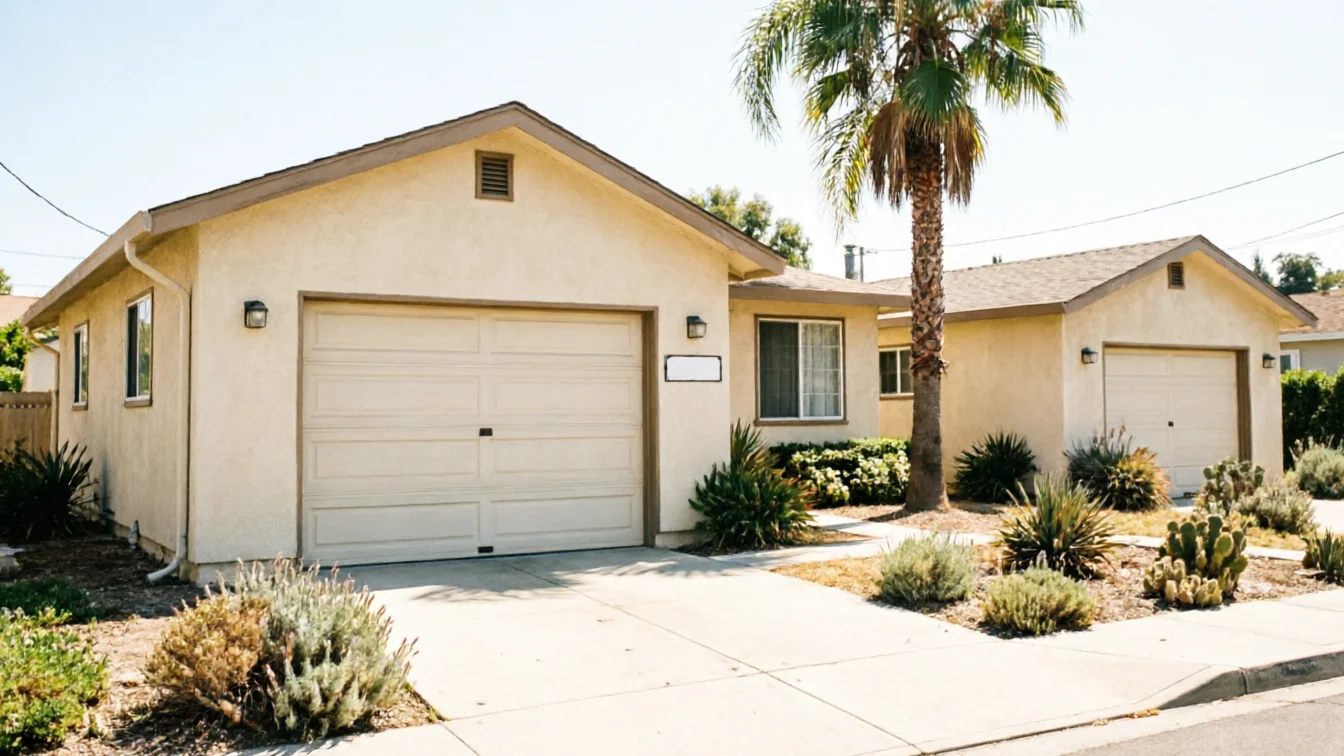
Temescal Valley sits at the newer end of the housing curve for this area. The median build year here is 2003, a full two decades past the 1983 median across the wider service territory. That gap matters more than it sounds like it should. Homes built in the early 2000s came standard with steel rolled-panel doors and torsion springs mounted on a center shaft, not the older extension-spring setups you'll find on houses from the 1960s and 70s elsewhere in the region. Openers from this era almost always carry photo-eye safety sensors and a keypad, since those became standard equipment industry-wide well before 2003.
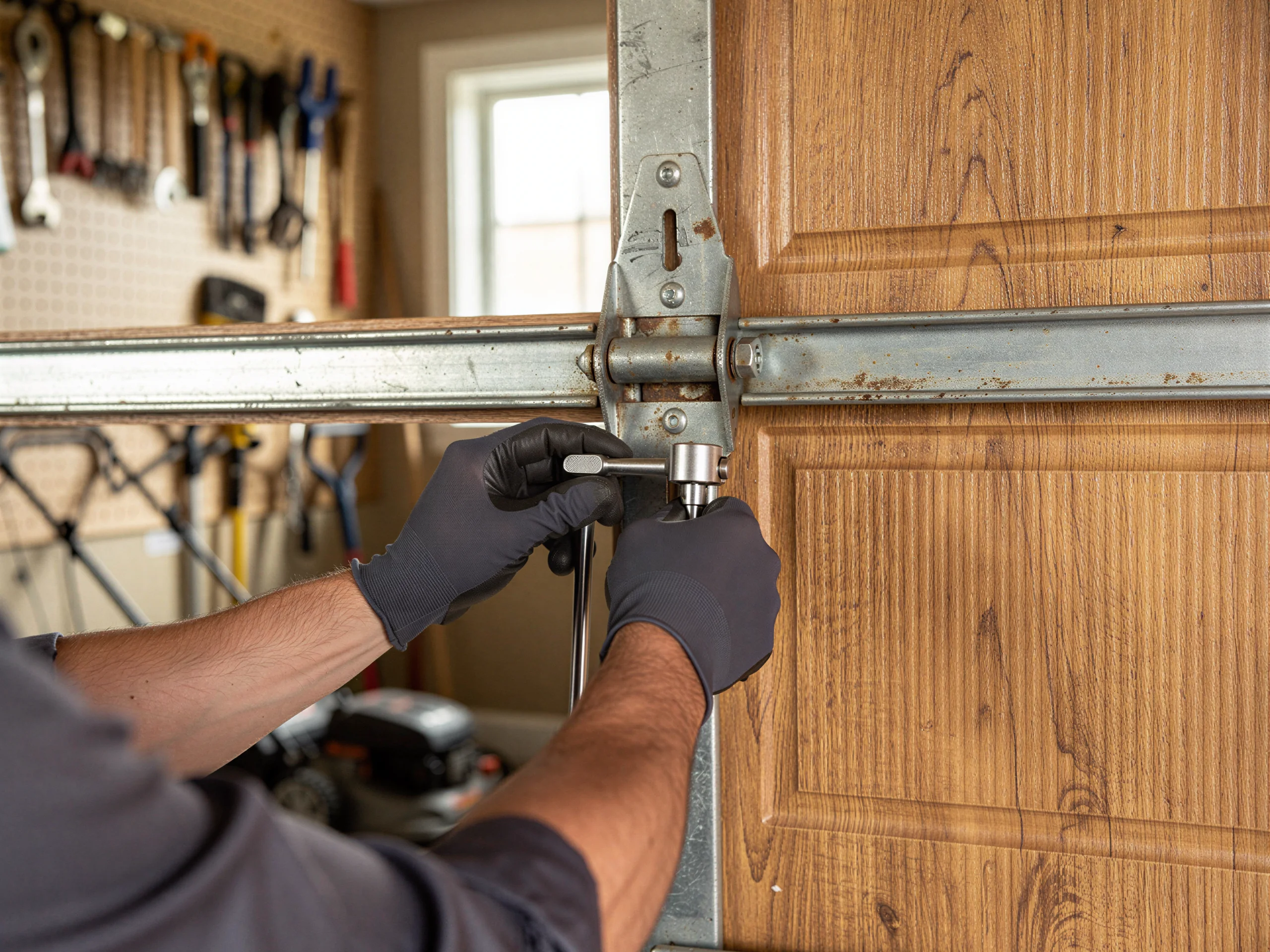
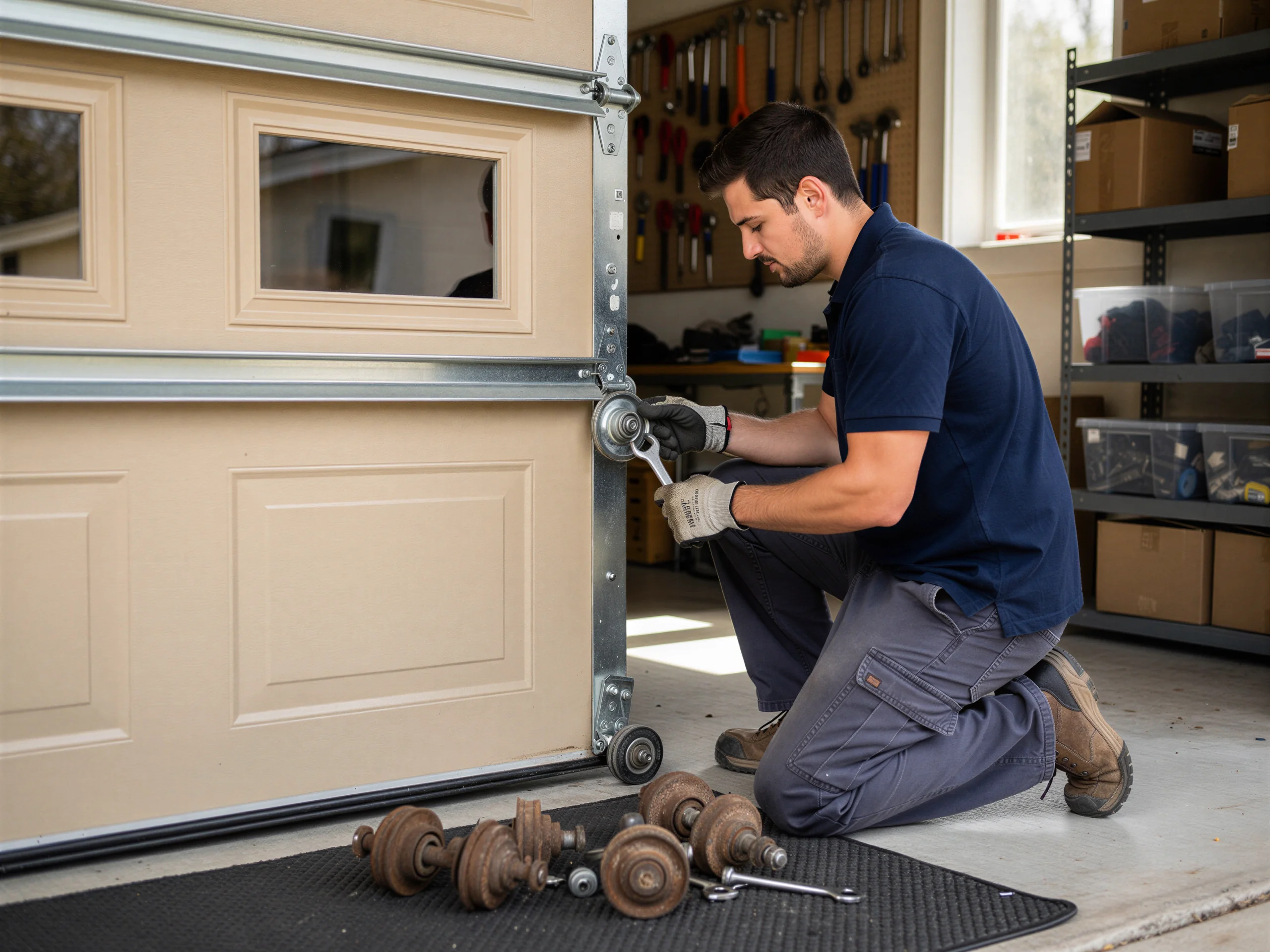
What this means in practice: when something goes wrong on a Temescal Valley door, it's rarely a brittle one-piece panel or a worn-out extension spring pulley, the kind of failure common on much older housing stock nearby. It's more often a torsion spring that's done its 10,000-cycle run, a photo-eye knocked out of alignment, or a logic board in the opener acting up. Different problem, different fix, and parts that are still in normal production rather than hard to source.
We're not guessing at this. It's what the build-year data for this pocket of the service area tells us before we even get a call.
Local housing
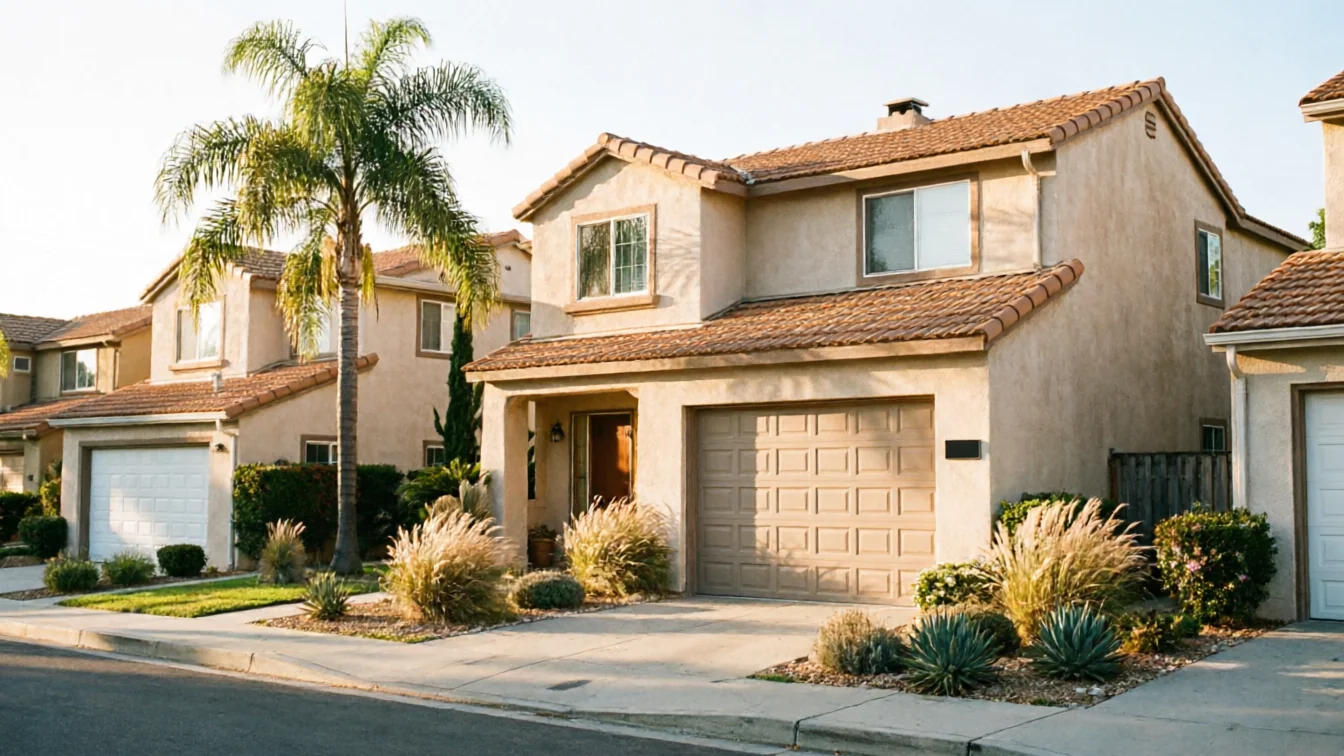
With roughly 9,013 households in Temescal Valley, this is a smaller, newer pocket compared to the 136,012 owner-occupied houses spread across the broader service area and its 34 named communities. Median household income here runs $119,647, well above the $83,246 figure for the wider territory. That combination, newer construction and higher income, tends to show up as better-maintained original hardware and more owners who've already upgraded to insulated doors or belt-drive openers rather than living with the original chain-drive unit for 20 years.
It doesn't mean nothing breaks. Torsion springs still fatigue on a fixed cycle count no matter the household income, and rollers still wear out from the same friction they would anywhere. But we go in expecting steel panels, torsion hardware, and opener electronics from the post-2000 generation, not the mix of eras you'd plan for in an older neighborhood.
Response times
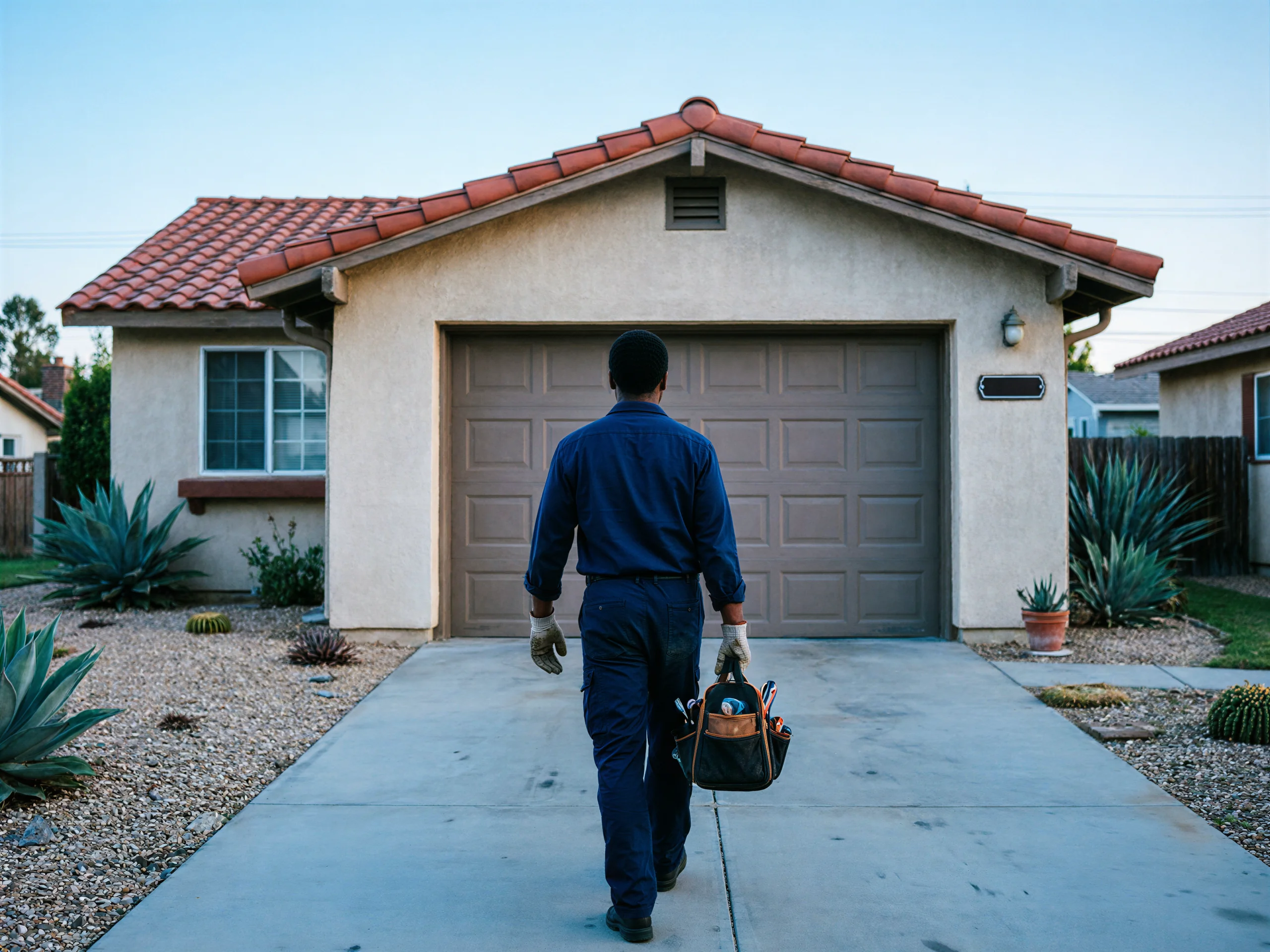
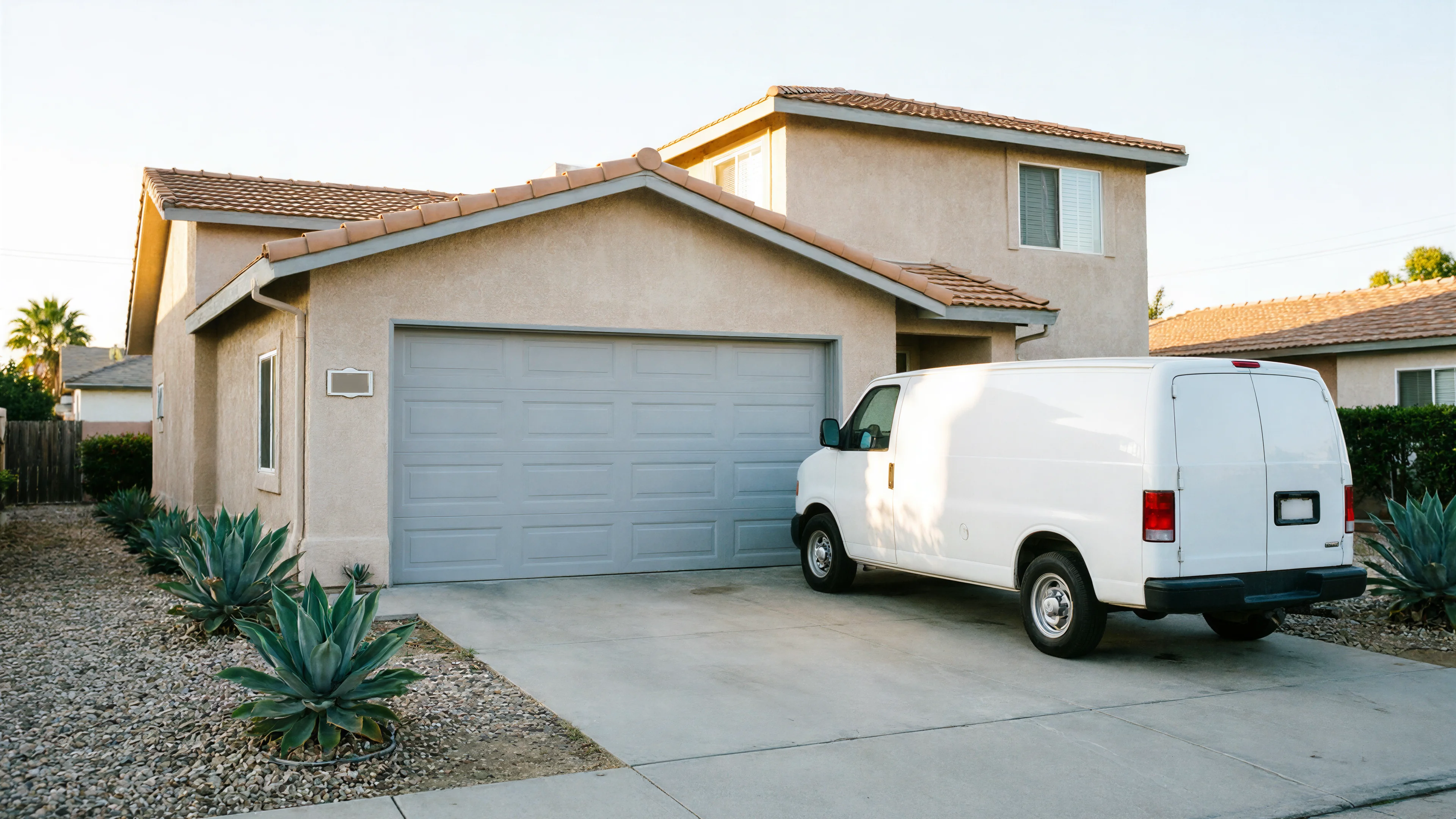
We run out of Moreno Valley, and Temescal Valley is about 19 miles from the shop. That's a real drive, not a next-door hop, so we don't promise a same-hour arrival just because someone called.
What we do is build the trip into the day's route and give you a realistic window when you call, rather than a number that sounds good on the phone and falls apart on the road.
If your door is stuck open or a spring has let go and the car's trapped inside, say so when you call. That changes how we sequence the day.
A dead opener battery or a slow-closing door usually isn't an emergency and can wait for a scheduled slot, which also tends to be the cheaper way to handle it.
Common jobs
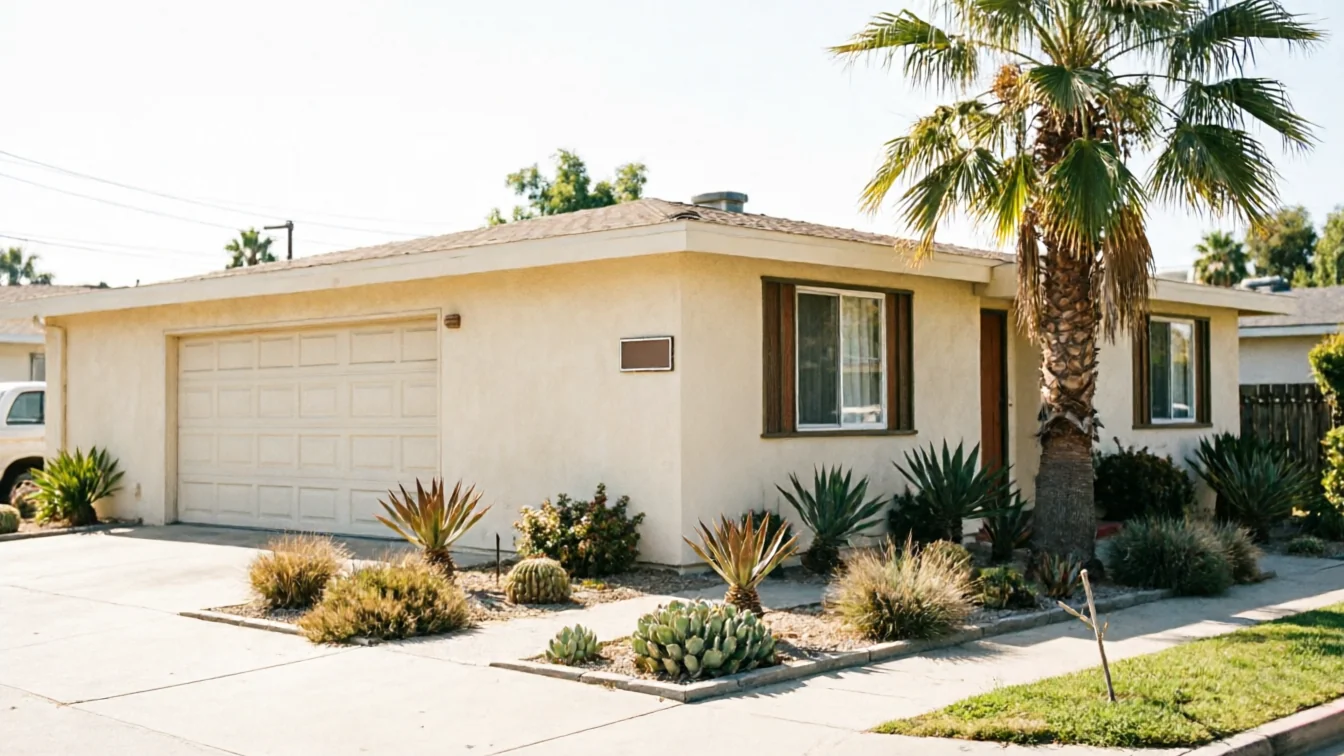
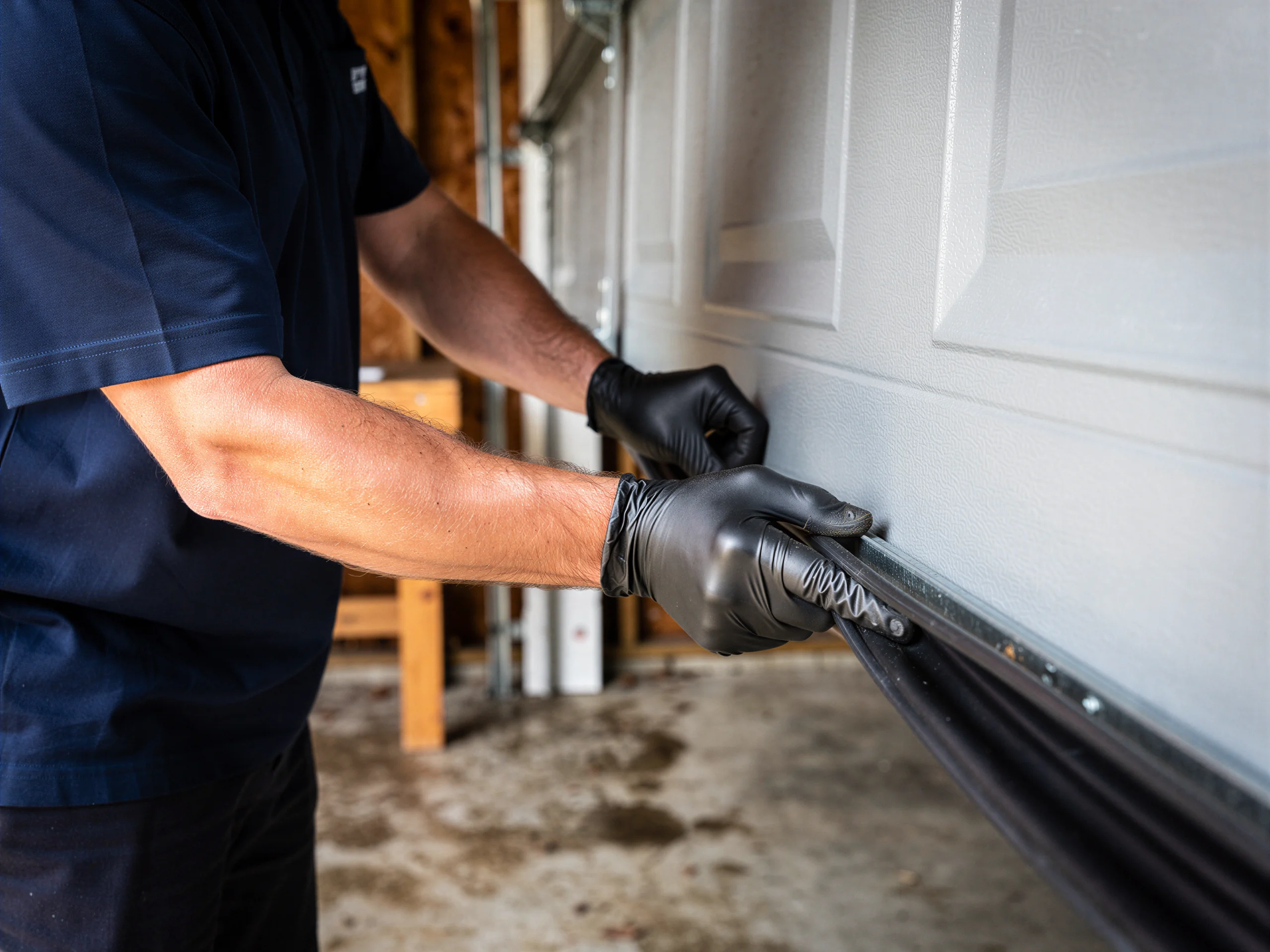
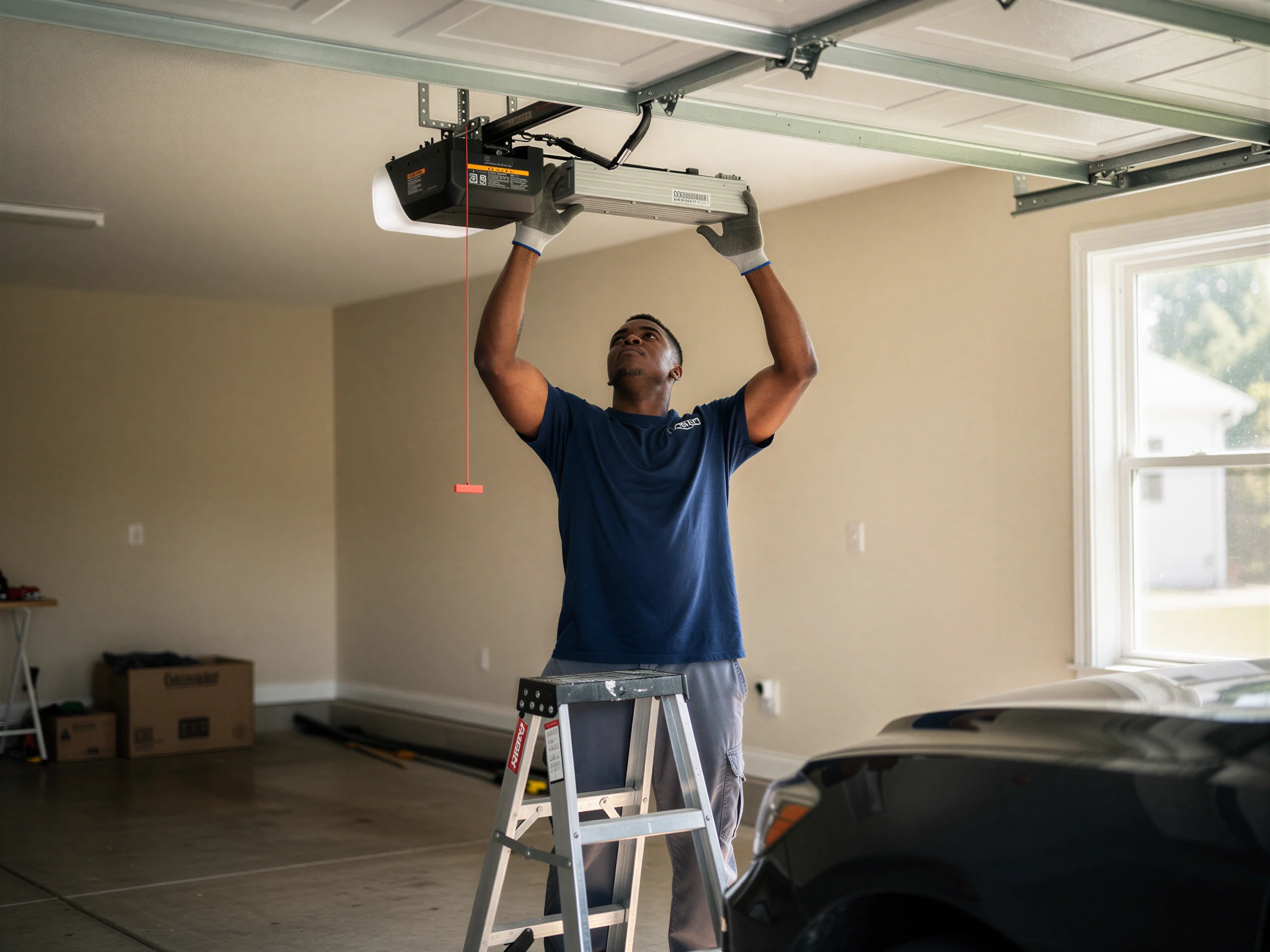
Given the 2003 median build year, the calls we get most from Temescal Valley are torsion spring replacements, opener sensor realignments, and the occasional circuit board swap on an aging but still-electronic opener. We also see garage door track adjustments on homes where the door's been cycled hard for close to two decades straight.
What we don't do is replace a torsion spring system with another extension-spring setup just because that's what a neighbor's older house has. Mixing hardware generations on a newer door usually creates more problems than it solves, and if a repair isn't worth it against the cost of a new opener or door, we'll tell you that plainly instead of running up a bill on a system close to the end of its service life.
Service areas
Questions
Temescal Valley's median build year is 2003, roughly 20 years newer than the broader service area's 1983 median. Houses built around 2003 almost always came with torsion-spring hardware and steel rolled panels standard, while older stock elsewhere more often has extension springs and one-piece panels. The fix depends on which setup you've got.
No. We run out of Moreno Valley, about 19 miles away, and route Temescal Valley calls into the day's schedule. We'll give you a realistic time window on the phone rather than a same-hour promise we can't back up from that distance.
Torsion spring replacement and opener sensor or logic board issues, both typical failure points for doors and openers built in the early 2000s. These houses rarely have the brittle one-piece panels or frayed extension-spring cables you'd see on much older housing stock.
Depends on the opener's age and what's failed. If the motor or circuit board is the problem on a unit that's otherwise sound, repair usually makes sense. If several components are failing at once, we'll say so plainly rather than patch it repair by repair.
Ready when you are
Moreno Valley Garage Door Pros repairs and installs garage doors, springs and openers in Moreno Valley, CA and the surrounding area.