Single spring doing double duty
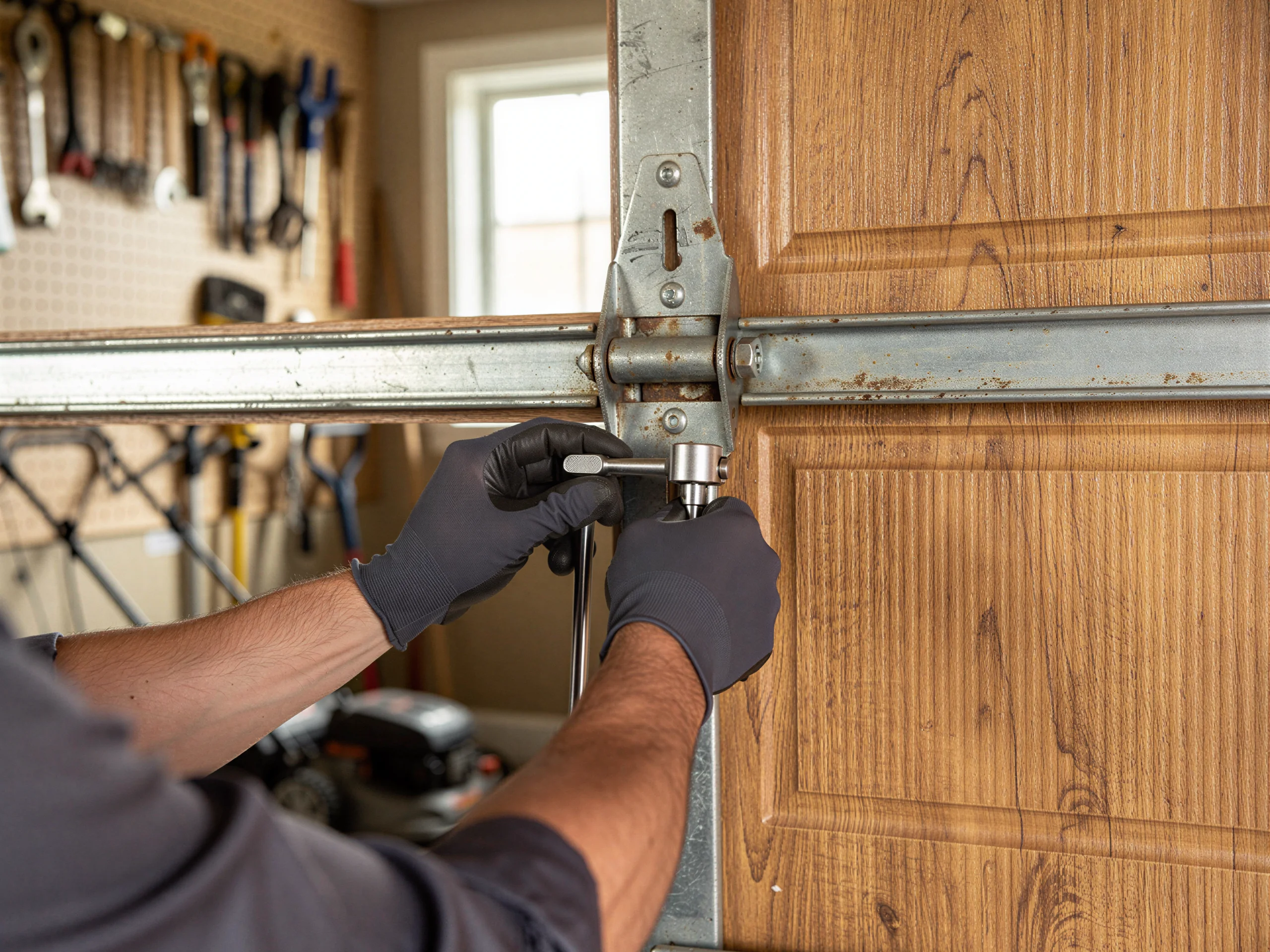
On a two-car door with a single torsion spring - common in the 1980s-90s builds across this area - that spring is doing double duty, and when it fails it often takes a cable or a bent shaft with it.
Moreno Valley, CA
Garage door repair for Moreno Valley homes built 1958-2003, where original torsion hardware and heat-dried lubricant cause the most spring and opener failures.
Local causes
Most of Moreno Valley's housing stock went up between 1958 and 2003, with the bulk of it dating to the 1980s and 90s. That matters for repair work because a door installed in 1985 is still running the torsion spring, drum, and cable set it shipped with, unless someone already swapped it once. Springs are rated by cycle count, not by calendar years, and a door that's opened and closed four times a day for three decades has used up its coil long before the metal looks worn.
The other factor is the climate band here, which federal data classifies as moderate heat. That doesn't sound dramatic, but it means long stretches of hot, dry air that cook the grease out of rollers and hinges faster than a cooler coastal town would. Factory lubricant on an opener's drive screw or a track's roller stems turns gummy, then dry, and the motor starts working harder to pull a door that should move freely. Combine 1980s-era hardware with that drying cycle and you get the two most common calls we take: a spring that lets go without warning, and an opener that strains, reverses, or stalls halfway up.
None of this is unique to one street or subdivision - it's a function of when the area's homes were built and what the air here does to steel and grease over time.
Watch-outs
The mistake we see most is someone replacing just the broken spring on a door that's pushing 25-30 years of cycles, without checking the drum, cable, and bottom bracket that have been under the same load the whole time.
On a two-car door with a single torsion spring - common in the 1980s-90s builds across this area - that spring is doing double duty, and when it fails it often takes a cable or a bent shaft with it.
Swap the spring alone and you're back out in six months for the part nobody checked. The second way it goes sideways is opener-side. A homeowner hears grinding or sees the door reverse and assumes the opener motor is dying, so they replace the whole unit.
Half the time the real problem is a dry track or a roller that's seized from heat-dried grease, and the "new" opener does the exact same thing within a season because it's still fighting friction it was never built to fight. We won't sell a new opener onto a door that just needs its rollers and track serviced - that's a repair, not a replacement, and we'll say so even when the bigger ticket would be easier for us.
Warning signs
If the door won't budge and you hear a loud bang beforehand, that's a torsion spring letting go - expect the door to feel like dead weight when you try to lift it by hand.
A door that opens partway, shudders, then reverses on its own is usually the opener's safety sensors reacting to a track that's binding, often from dried-out rollers rather than anything electrical. Grinding or squealing that gets worse in the heat of the day points to the same cause: lubricant that's cooked off the hinges and roller stems.
Cables that look frayed near the bottom bracket, or a door that hangs crooked on one side, usually means one cable has stretched or started to separate while the other hasn't - common once a door's original hardware passes the couple-decades mark that's typical for this area's housing.
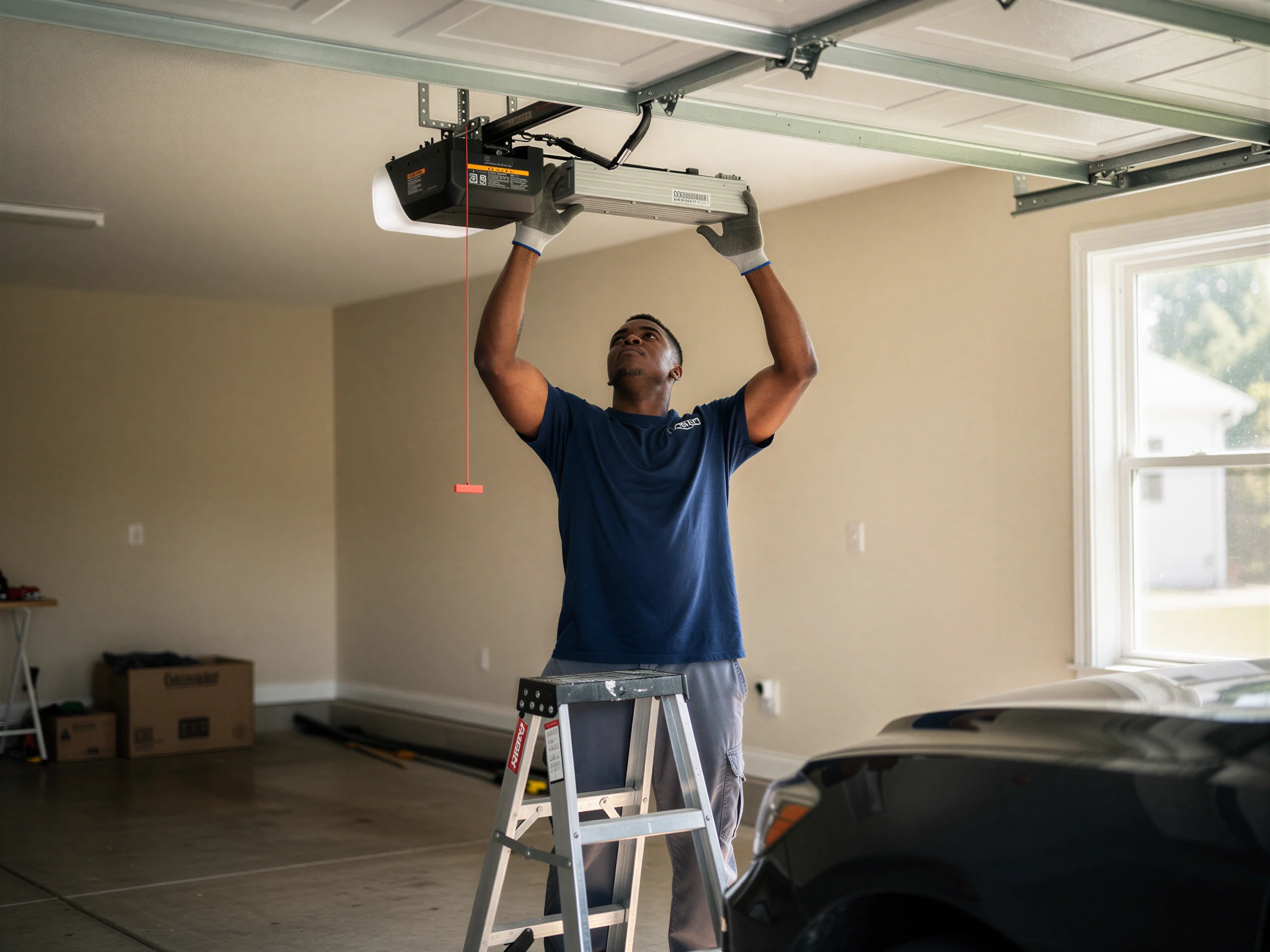
An opener that runs but the door doesn't move is almost always a stripped gear inside the unit, not the motor itself, and that's a part we can often replace without swapping the whole opener.
Our process
We start by checking the whole system, not just the part that failed - spring, cable, drum, rollers, track, and the opener's drive gear - because on a door with 1980s or 90s-era hardware, one failure is usually a sign the rest of the set is close behind.
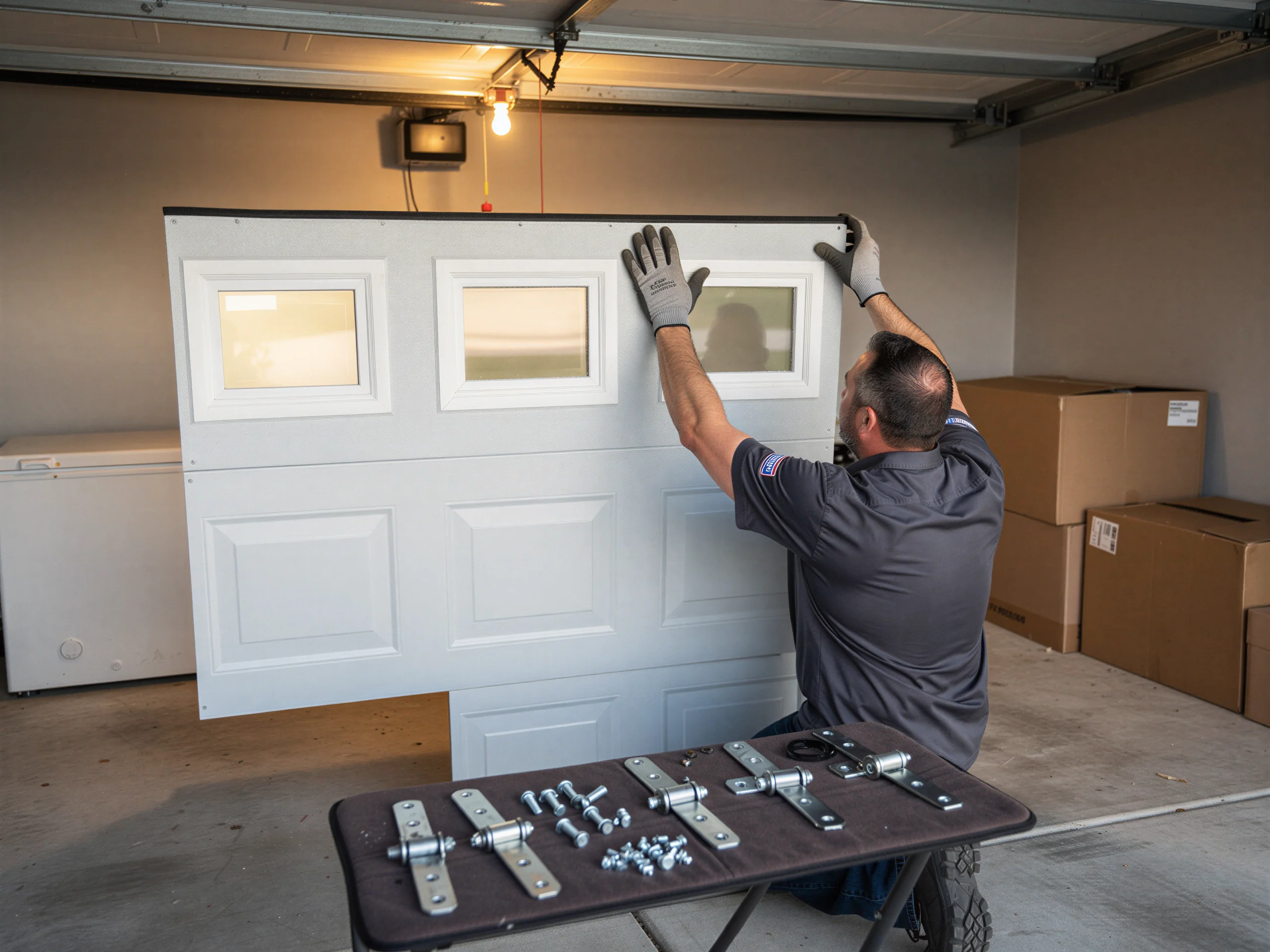
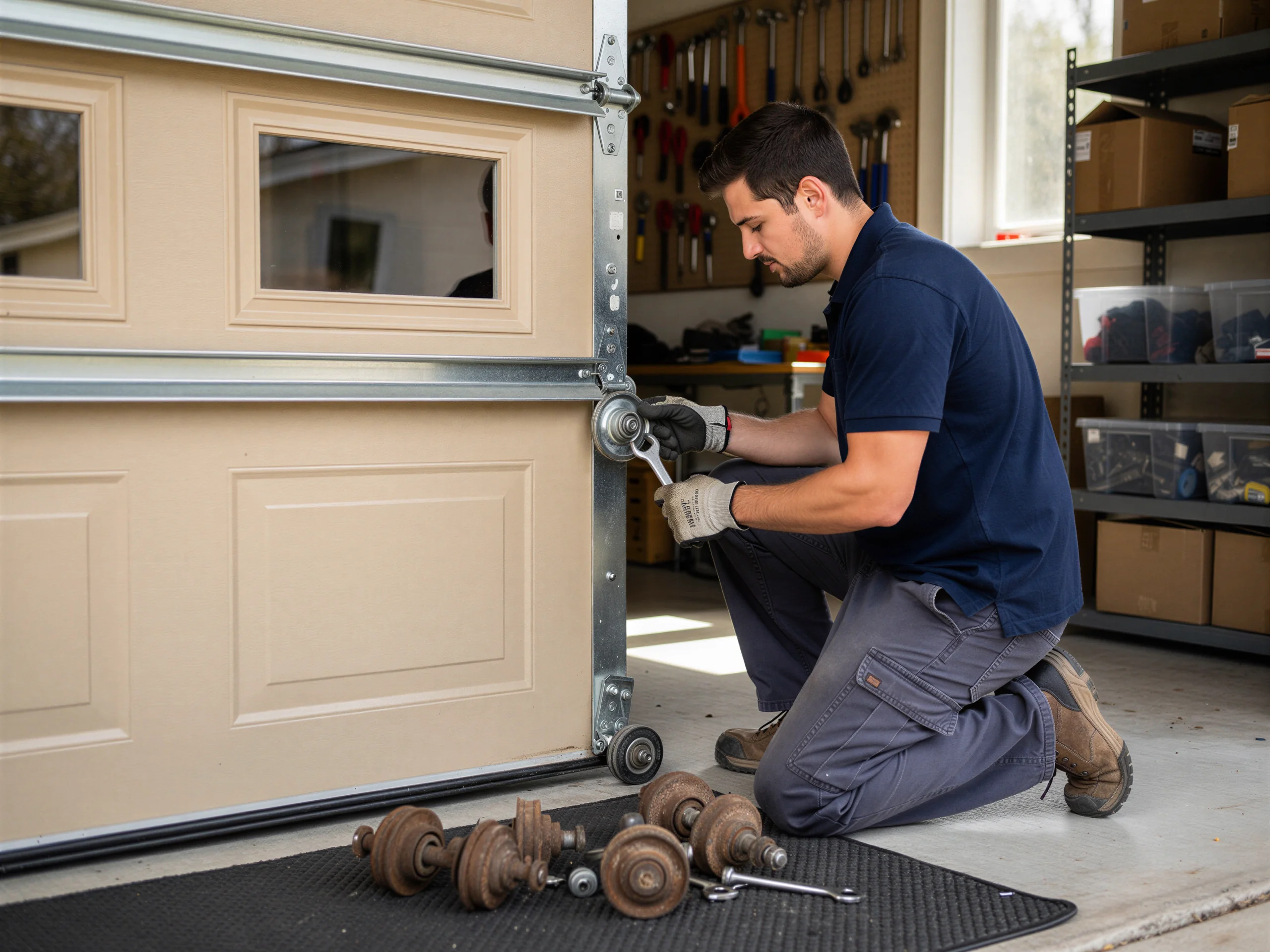
If the spring's gone, we replace it matched to the door's weight and cycle rating, and we check the second spring on dual-spring setups rather than leaving an old one paired with a new one.
For opener trouble tied to dried-out rollers or a binding track, we clean and re-lubricate the hardware the heat here dries out fastest, and we only recommend a new opener when the motor or circuit board is actually the problem.
One honest limit: if your opener is an older chain-drive unit and the logic board has failed, replacement parts for some models are hard to source, and a full opener swap is usually faster and cheaper than waiting on a back-ordered board. We work throughout Moreno Valley and the surrounding communities within roughly a 20-mile stretch, including areas like Woodcrest, Grand Terrace, and Perris.
Questions
Torsion springs fail by cycle count, not age you can see. A lot of Moreno Valley homes still have original hardware from builds dating back to the 1980s-90s, and a spring that's handled tens of thousands of open-close cycles can snap suddenly even if the door looked fine the day before.
More often it's the track or rollers. The moderate-heat climate here dries out factory grease faster than cooler areas, and a binding roller makes the opener's safety sensors think something's blocking the door, so it reverses. We check the track before assuming the opener motor is bad.
Depends on what we find. On older hardware we check the drum, cable, and bracket alongside the spring, since they've carried the same load for decades. We'll tell you if a full hardware refresh makes more sense than a single-part fix, and we won't push a replacement the door doesn't need.
Explore more
Ready when you are
Moreno Valley Garage Door Pros repairs and installs garage doors, springs and openers in Moreno Valley, CA and the surrounding area.