Opener compensating for weak spring
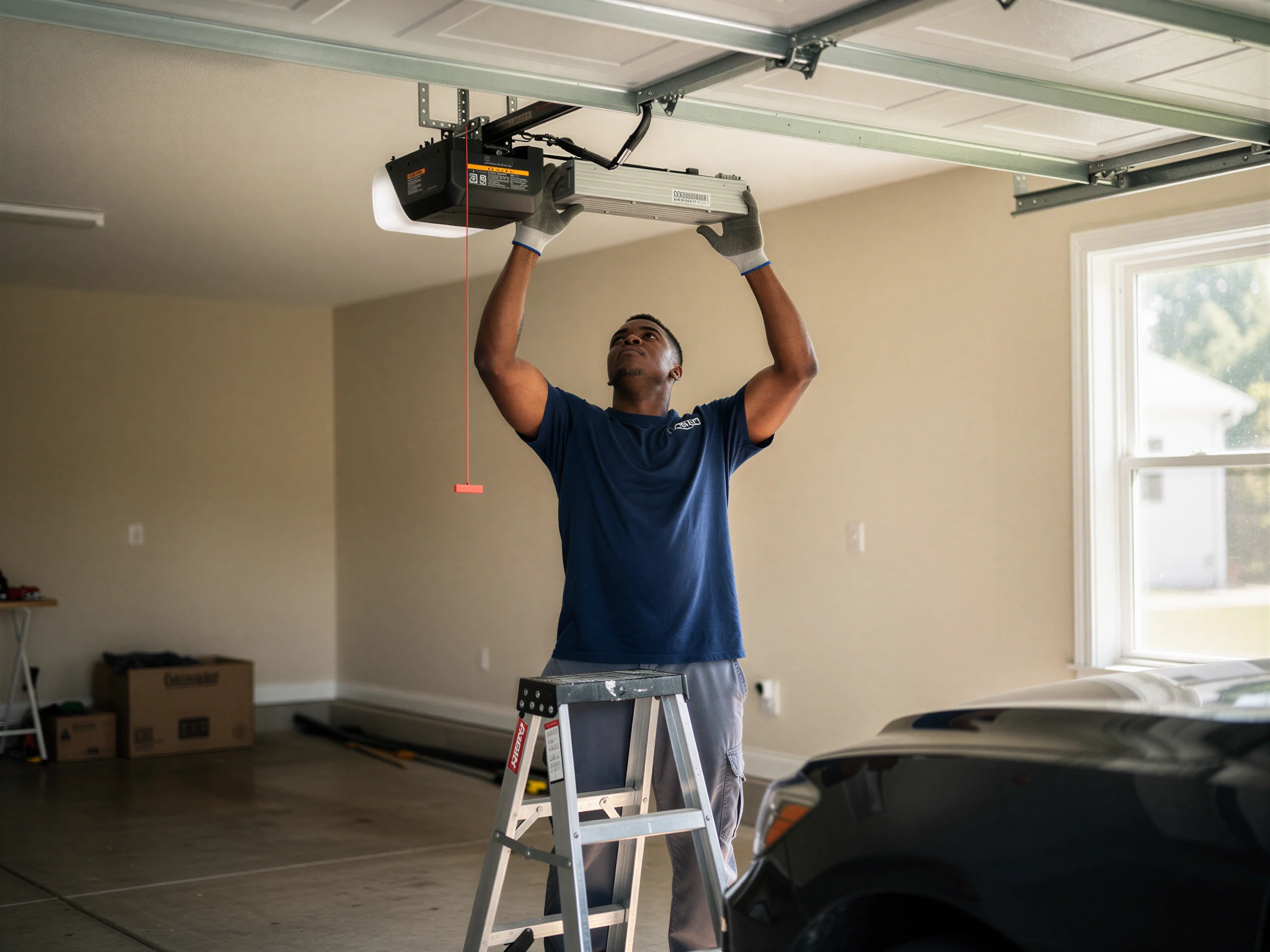
The opener doesn't know the spring is weaker, so it keeps pulling the same amount of current, and the gears inside it start grinding to make up the difference.
Moreno Valley, CA
Garage door service for Moreno Valley homes built 1958-2003, where original hardware and heat-dried lubricant are the most common cause of a stuck or noisy door.
Local causes
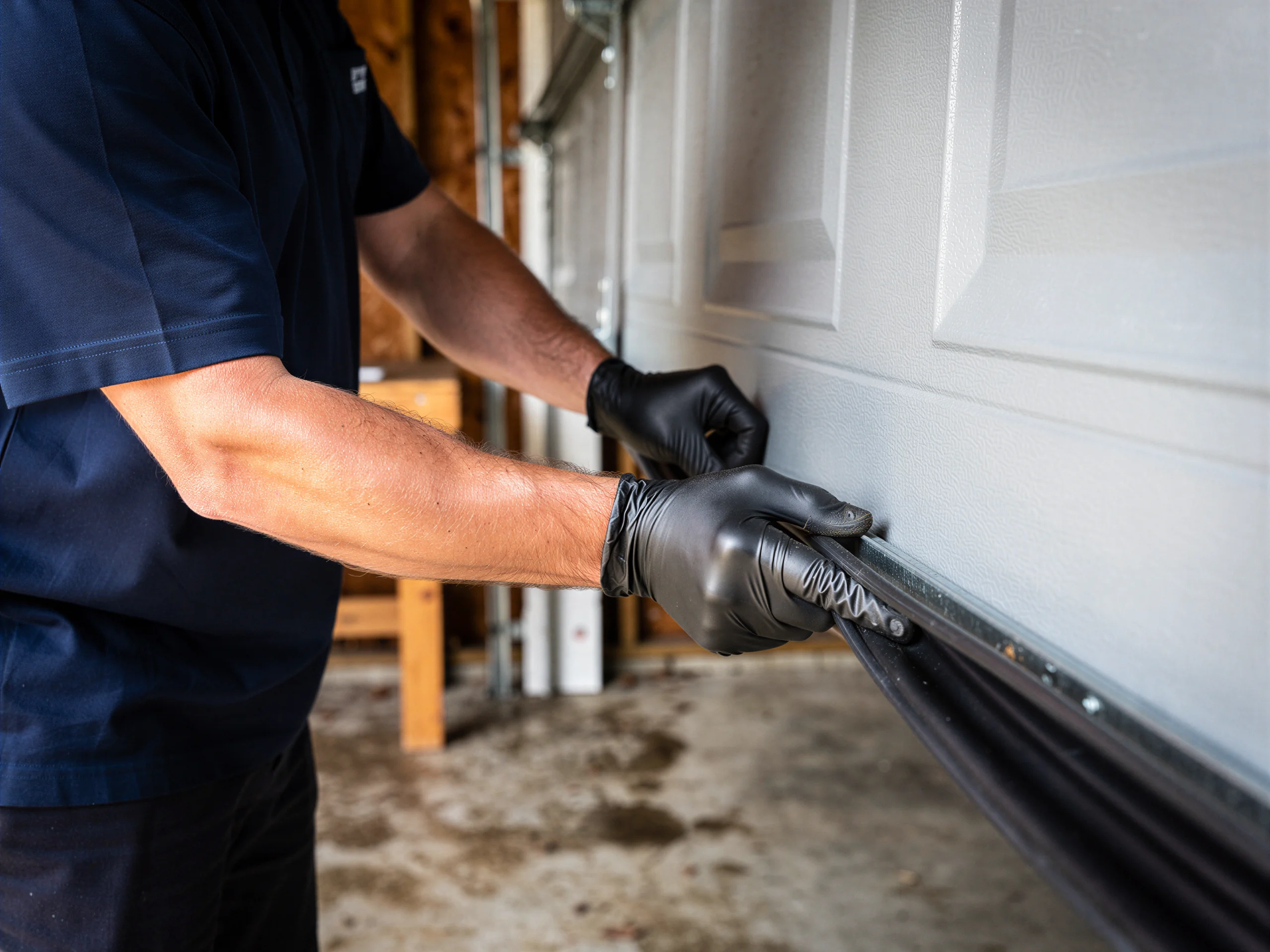
Most houses in this area went up between 1958 and 2003, with the bulk of the stock dating to the 1980s and 90s across the 34 named areas we work in. That matters because a door installed when the house was built is now 25 to 65 years old, and the torsion spring, the rollers, and the factory lubricant inside it were never meant to last that long. Add in a moderate heat climate band, and the grease inside an old bearing or hinge cooks thin every summer, then re-thickens every winter. That cycle is what kills a spring early and what dries out a nylon roller until it cracks. We see it on the same few door models over and over because the same few builders put up most of the houses on this side of town in that same stretch of decades. If your house falls in that 1958-2003 window, the door on it is a candidate for the wear pattern below, not a coincidence. A newer door from a recent remodel usually doesn't show the same symptoms yet, which is its own clue when we're diagnosing a call.
Watch-outs
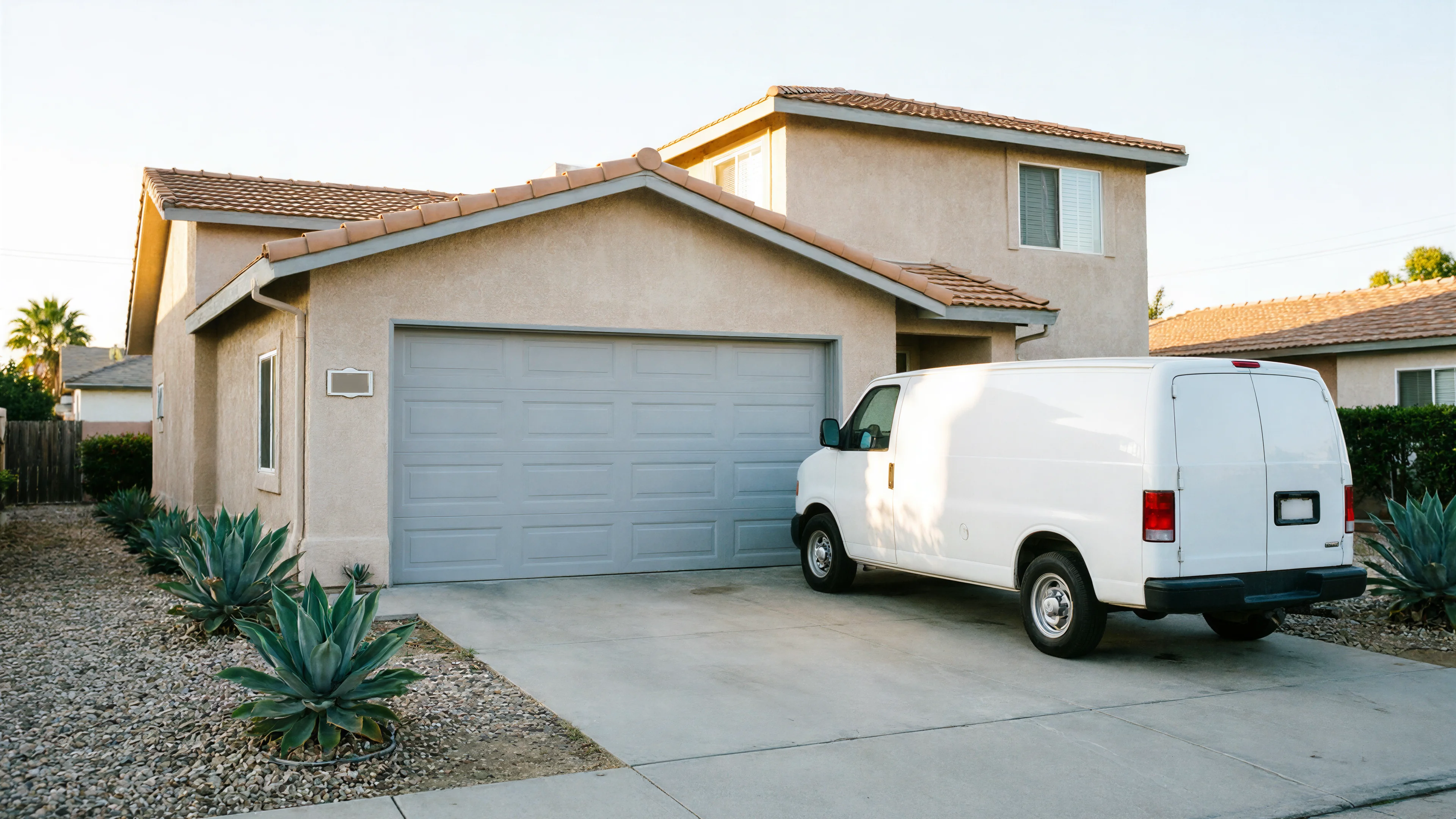
The trouble isn't the spring snapping - that part's loud and obvious. It's everything that happens before it snaps. An original torsion spring from a house built in the 80s or 90s has been cycling through heat-driven lubricant breakdown for decades, and it starts losing tension slowly, a little at a time.
The opener doesn't know the spring is weaker, so it keeps pulling the same amount of current, and the gears inside it start grinding to make up the difference.
By the time someone calls us, we're often not looking at one bad part - we're looking at a spring near the end of its life, an opener gear stripped from compensating for it, and rollers that have been riding dry for a year. Replace just the spring and the door runs for a week before the opener fails too.
This is the piece people underestimate: in a housing stock this old, parts rarely fail one at a time. We check the whole chain before we quote the job, because a single new spring on a door with a worn-out opener motor is money spent twice.
Warning signs
The door that's slow to open and groans partway up usually has a spring losing tension, which is normal for original hardware this age in our heat pattern.
A door that reverses right after it starts closing is the opener's safety sensors reading resistance from a track that's gone slightly out of alignment, common once a house settles over a few decades.
Grinding or popping when the door moves is almost always a roller gone brittle - the original plastic or nylon rollers from the 80s and 90s weren't built for the number of heat cycles they've been through.
A door that's heavy to lift by hand, with the opener straining audibly, points to a spring that's lost most of its tension and an opener motor doing a job it was never sized to do alone. None of these show up overnight.
Our process
We start by checking the spring's actual tension against what the door weighs, not just listening for noise. If it's original hardware from the 1958-2003 build window, we're usually replacing the torsion spring outright rather than patching it, since a spring that old has already outlived its rated cycles.
We lubricate and inspect the rollers and track at the same visit, because in our heat pattern a roller that looks fine can still be dry at the core.
If the opener gear shows wear from compensating for a weak spring, we'll tell you straight - sometimes the honest move is replacing the opener instead of nursing a stripped gear along, and we won't talk you into a patch job that fails again in a month.
One limitation worth saying plainly: if a door has been neglected long enough that the track is bent and the panels are warped, repair stops making sense and we'll tell you that instead of billing you for parts that won't hold. Most calls in this area don't get there, but some do.
Questions
Heat cycling breaks down the lubricant in the spring and rollers faster than cold does in our climate band. A door that's borderline the rest of the year often tips over into grinding or sticking once summer heat runs through a full season of expansion and contraction on hardware that's already decades old.
Yes - a lot of the housing stock here dates from 1958 to 2003, with a concentration in the 1980s and 90s, and plenty of those doors never had the spring or rollers swapped out. It's common, but it also means that hardware is well past the point where failure is a surprise.
Sometimes, yes. But if the opener's been straining against a weak spring for a while, the gear inside is often already worn. We check both before quoting, because replacing only the spring on a door with a failing opener usually means a second call soon after.
Explore more
Ready when you are
Moreno Valley Garage Door Pros repairs and installs garage doors, springs and openers in Moreno Valley, CA and the surrounding area.