The Common Mistake
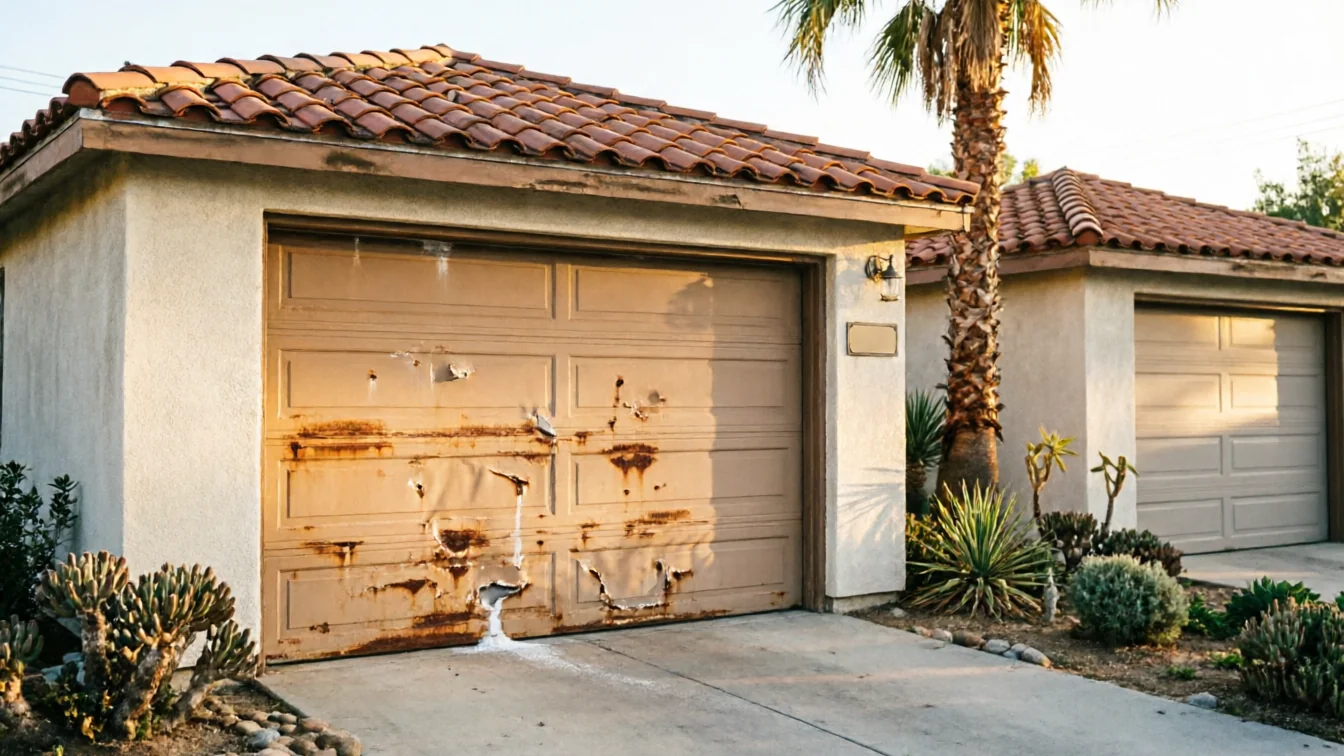
Most homeowners around Moreno Valley hear a noise, spray some lubricant on whatever they can reach, and call it fixed. That works for about two weeks. The mistake isn't the lubricant - it's guessing at the source. A lot of the housing stock here went up between 1958 and 2003, with the bulk of it in the 1980s and 90s, which means you've got original or first-replacement hardware on a lot of these doors: steel rollers instead of nylon, older extension or torsion springs, and tracks that were installed to a 30-year-old standard. A squeal from a dry roller sounds almost identical to a groan from a spring losing tension, but one is a five-minute fix and the other means the door could come down hard. Guessing wrong on a double door with a tired torsion spring isn't a small mistake - that spring is under real load and it doesn't fail quietly. If you can't tell which sound is which, don't keep running the opener to test it. That's how a $40 roller job turns into a cable replacement.
What Is Going On
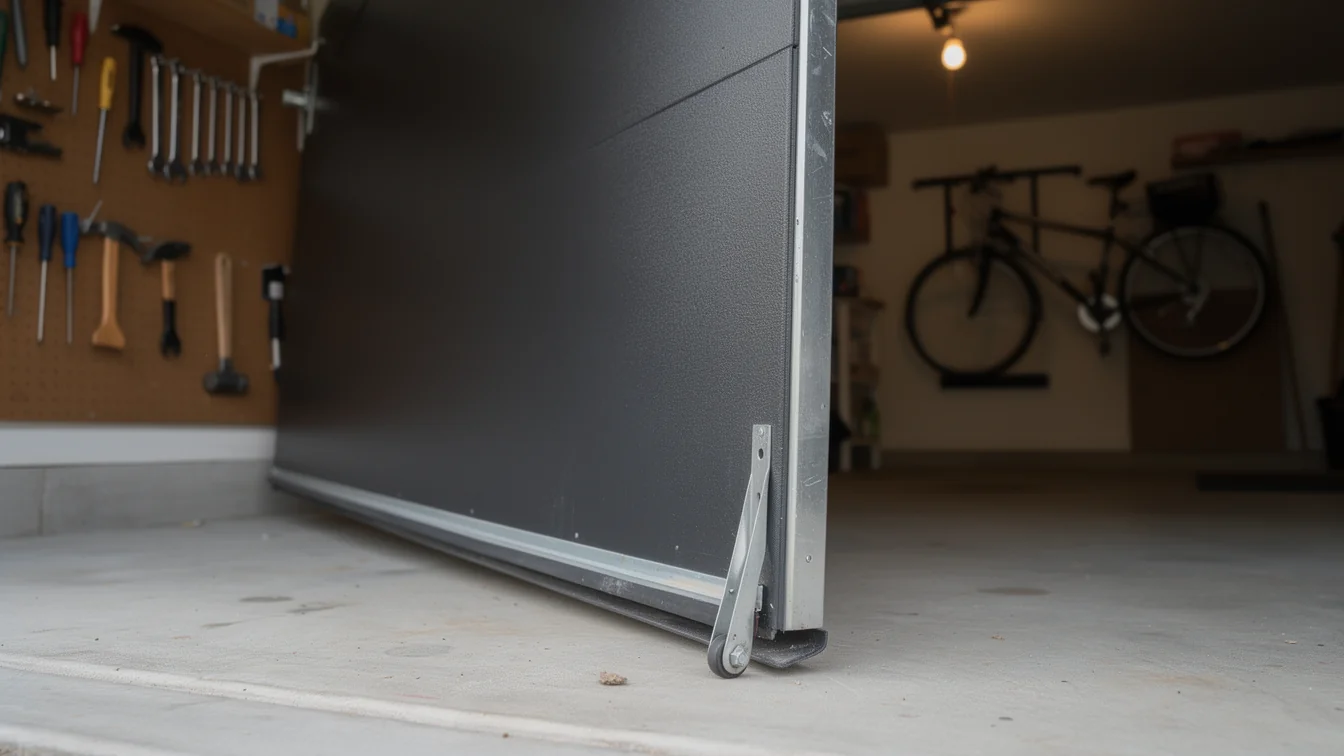
On the 1980s and 90s builds that make up most of the area, the common culprits are predictable: worn rollers rattling in the track, a loose hinge between panels that's been working its way out for years, or hardware that was fine in 1988 but has outlived its lubrication. Houses from the earlier end of that 1958-2003 range sometimes still have original spring sets that were never upgraded - these tend to make a dull thunk or a creak under load rather than a sharp squeal. Newer end-of-range builds, closer to 2003, more often have opener-related noise: a gear set wearing out inside the unit itself, which sounds like grinding rather than metal-on-metal. The age spread matters because it tells you where to start looking before you spend money on a part that isn't the problem.
What the Weather Here Does to It
Moreno Valley sits in a moderate heat climate band, not a freeze-thaw one, so the noises you get aren't from ice cracking seals or metal contracting overnight the way they would somewhere with hard winters. What you get instead is dry heat working on lubrication and rubber over time. Grease that would hold up fine in a milder climate bakes thin and stops doing its job, which is why a door that was quiet in spring starts squealing by late summer. Weatherstripping and rubber bumpers dry out and crack rather than freeze and split. That's a different failure pattern than a lot of generic garage door advice assumes, and it's why re-lubricating on a schedule that matches our heat does more good here than it would in a cooler area.
The Seasonal Bit
The honest answer is that most of these noises build up slowly over a full season of heat rather than showing up overnight, so the fix is routine, not emergency. Given the dry heat here, a lubrication and hardware check once a year - ideally before the hottest stretch - catches the dried-out grease and loosening hardware before it turns into a squeal you can hear from the driveway. We don't recommend tearing into spring adjustment yourself; that's the one job on a garage door where the parts are under enough tension to cause a real injury, and it's not worth the risk to save a service call. If your door is on the older end of that 1958-2003 range and still has its original springs, that's worth a look regardless of noise, just because of age.
Talk to a local pro
Garage door trouble in Moreno Valley?
Same-day service with honest, upfront quotes.