The Common Mistake
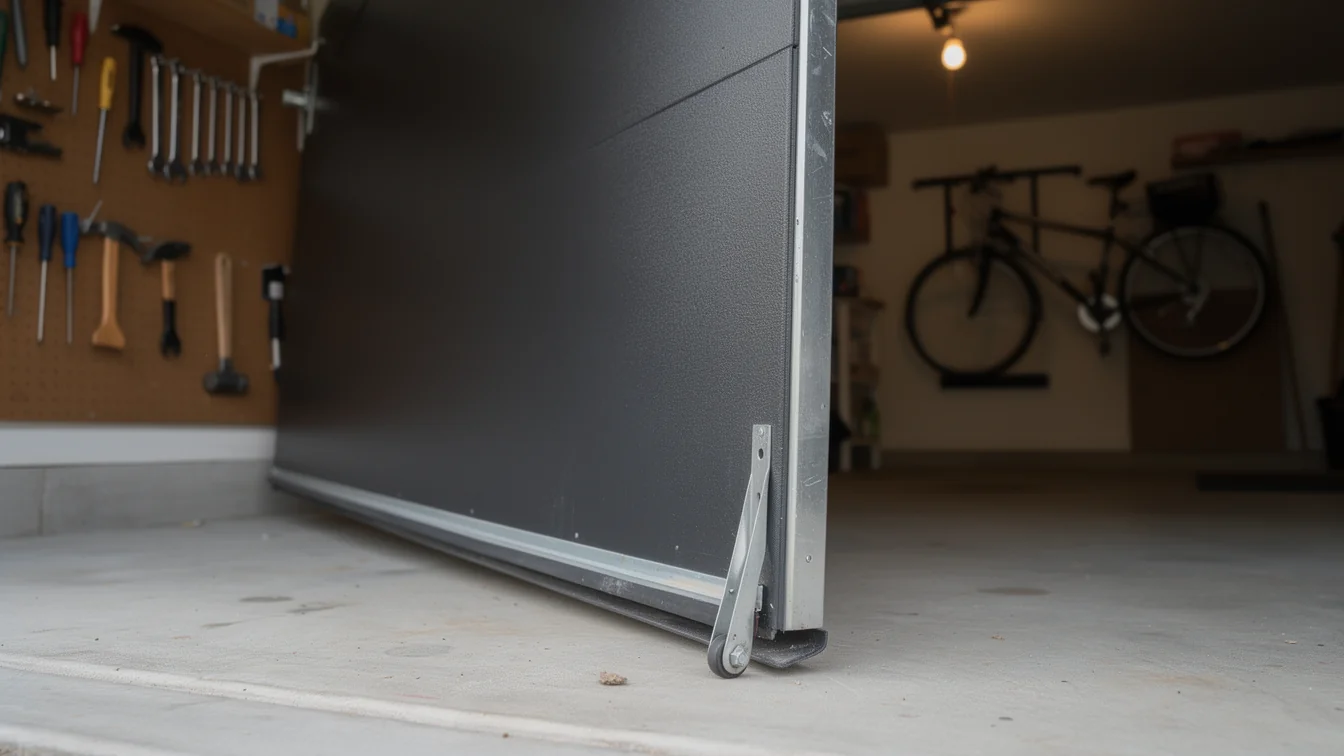
Most homeowners here notice the gap at the bottom of the garage door only after a leaf pile or a trail of dust shows up inside. The instinct is to blame the door itself - warped panel, bent track, something structural. Nine times out of ten it's the bottom seal and the side weather stripping, not the door. Moreno Valley's housing stock runs from 1958 to 2003, with a median build year around 1983, which means a lot of garages are hitting the point where the original rubber seal has hardened and cracked, or a prior owner's replacement seal is itself 15-20 years old. People re-caulk the slab edge or add a door sweep on the man-door and never touch the garage door seal, which is the actual gap letting air and grit through. The seal is a $20-30 part on most doors. Treating it as a structural problem means paying for a diagnostic call that ends with the tech pointing at a strip of cracked vinyl.
What Is Going On
The bottom seal (the astragal) and the side/top weather stripping are extruded rubber or vinyl, and that material has a service life that's shorter than the door around it. On a house built in the early-to-mid 1980s - the median era for this area - the garage door itself is often original or one replacement in, but the seals have usually been swapped at least twice, sometimes never. Once a seal hardens, it stops flexing against the slab or jamb when the door closes, and you get a visible light gap or a draft you can feel with your hand at floor level. On the 1980s-90s tract construction that makes up most of the 34 named areas in this service district, slabs have settled slightly over four decades, so the gap is rarely uniform - it's wider at one corner, which is a seal problem compounding a slab problem, not a door problem.
What the Weather Here Does to It
Moreno Valley sits in a moderate-heat climate band, and that's the specific thing that kills seals early. It's not freeze-thaw cracking - this isn't a region where ice splits rubber. It's UV and heat cycling: the seal bakes against a dark-colored slab and steel door all afternoon, cools at night, and expands and contracts on that cycle every single day for years. Vinyl and rubber both get brittle under that kind of repeated heat exposure well before they'd fail from cold. That's why a seal here can look fine - no visible tearing - and still have lost its flex, which is the part that actually matters. A seal that doesn't compress properly when the door closes isn't sealing anything, it's just sitting there.
The Seasonal Bit
There isn't a hard freeze season here to force the issue, so seal failure tends to get ignored longer than it would somewhere with a real winter. The heat does the damage gradually, and most people only catch it when the hot months bring dust and bugs in under the door, or when an attached garage starts running noticeably warmer than it should given the insulation in the rest of the house. If you're checking your own door, do it on a hot afternoon rather than in the morning - that's when a hardened seal shows its gaps most clearly, pulled away from the slab instead of flat against it. One honest limitation: if the seal is intact but the gap is from an uneven or settled slab, a new seal alone won't close it fully, and that's a conversation worth having before paying for a part that won't fix the actual problem.
Talk to a local pro
Garage door trouble in Moreno Valley?
Same-day service with honest, upfront quotes.