Fast garage door repair in Moreno ValleyCall (951) 281-3899

Moreno Valley, CA

Garage Door Roller Replacement for Moreno Valley Homes

Worn rollers on 1980s-era Moreno Valley garage doors grind, stick, and derail in summer heat. We diagnose and replace rollers fast, with nylon or steel options.

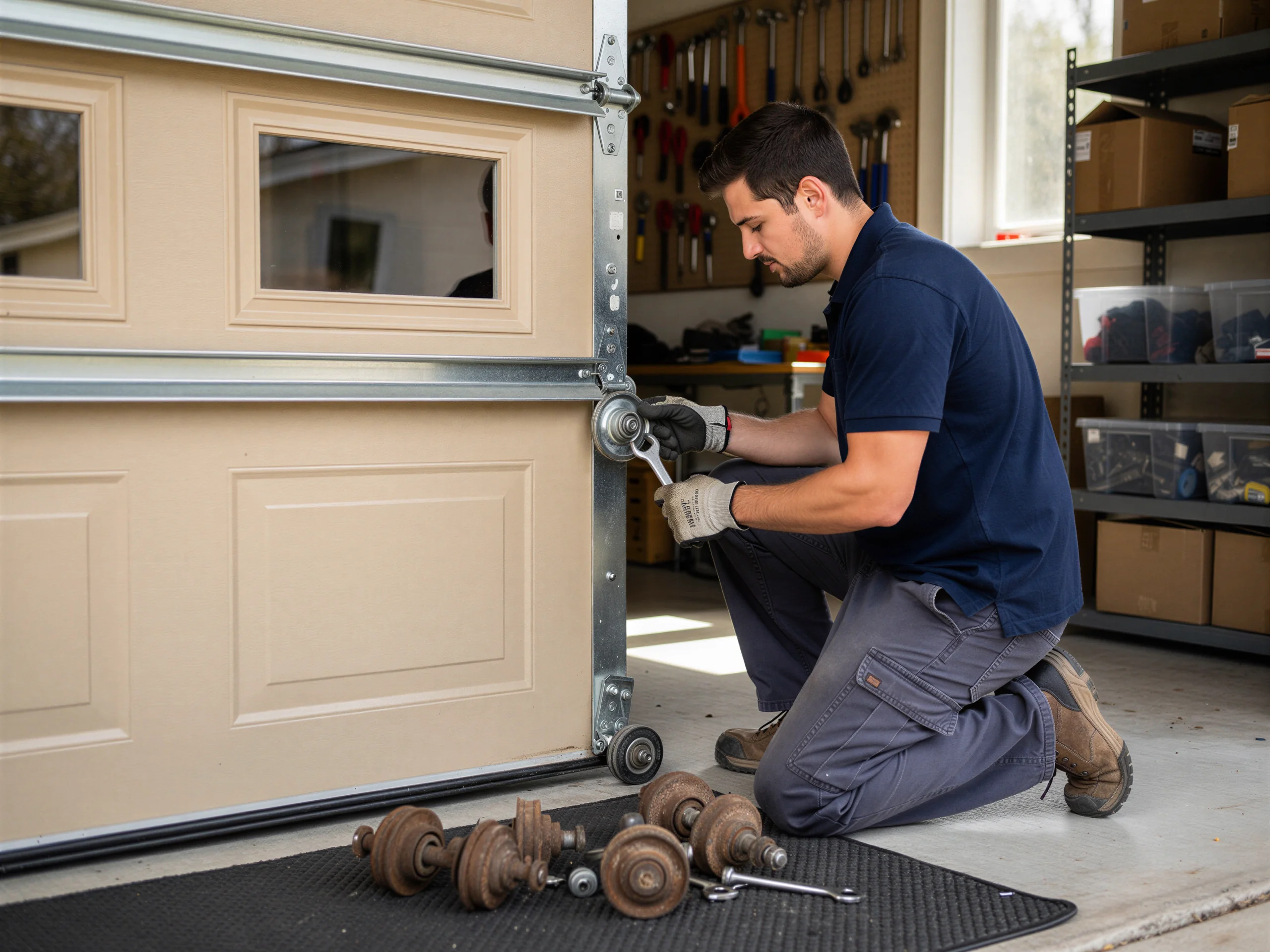
A technician kneels, repairing a beige garage door with a wrench.
Serving Moreno Valley, CABackground-checked techsHonest, upfront pricingFast local response
Local
Crews that work this area daily
Same-day
Response for most repair calls
Upfront
Pricing agreed before we start
Insured
Background-checked technicians

Local causes

Why It Happens Here

Most garage doors in this service area were installed on houses built between 1958 and 2003, with the bulk of that stock going up in the 1980s and 90s. That means a lot of original steel rollers are still riding in the tracks thirty-plus years later, way past their working life. Steel rollers without sealed bearings wear down from the inside, and once the bearing surface goes, the roller starts to flat-spot and chatter in the track every time the door moves.

The heat band this area sits in adds its own wear pattern. Moderate but sustained summer heat dries out the grease packed into older roller bearings faster than it would in a cooler climate. Dry bearings run hotter, expand unevenly, and bind. You hear it before you see it: a grinding or clicking sound right as the door passes the bend from vertical to horizontal track, which is exactly where roller wear shows up first.

This isn't a defect in any one door brand. It's the math of a housing stock that's now 20 to 65 years old meeting a climate that's hard on lubricated metal parts. Houses built in the 1990s are just now hitting the age where factory rollers are done, and we see that pattern across the whole area, not just one neighborhood.
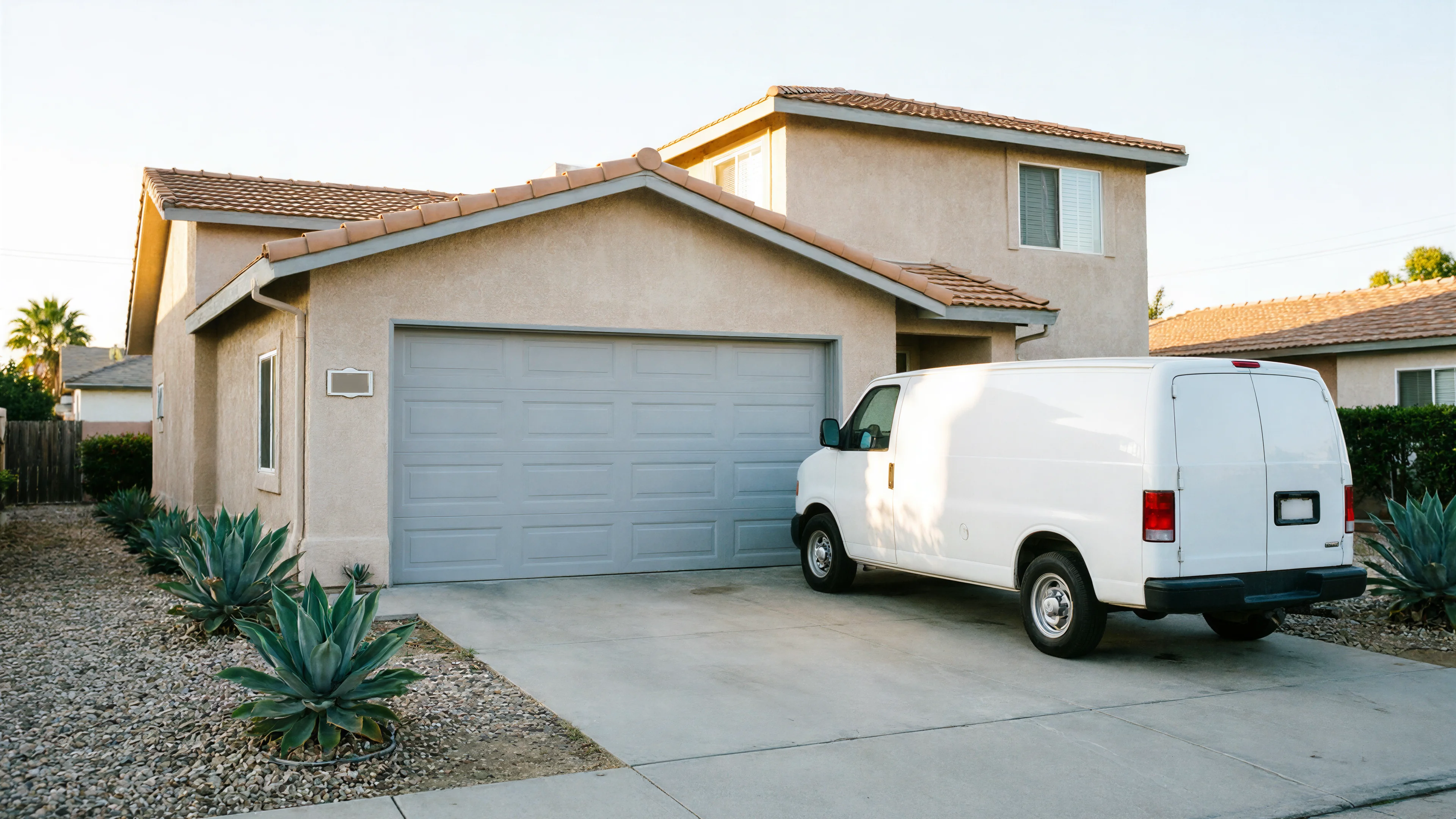
A white service van is parked in the driveway of a house with a gray garage door.

Watch-outs

Where This Job Goes Sideways

Roller replacement looks simple and usually is, but there are a few ways it turns into a bigger job than expected. The first is track damage.

Flat roller grooves track

If a roller has been flat-spotting for months, it can chew a groove into the track rail itself. Swap the roller and leave a damaged track, and the new roller wears unevenly within weeks. The second is hardware that's seized. On doors from the older end of the 1958-2003 build range, the roller stem brackets are sometimes rusted or bent from years of a dragging roller pulling sideways on them.

Seized brackets, not just rollers

Those brackets need straightening or replacing, not just a new roller dropped in the same hole. The third, and the one that actually causes injury, is attempting this with the door under spring tension. Torsion and extension springs on doors from this era are original or near-original in a lot of homes, and pulling a roller near a loaded spring without releasing tension first is how people lose fingers.

Working under spring tension

We mention this because it's the single most common way a homeowner turns a $40 roller job into an ER visit. We won't pretend every roller job is quick. If the track's bent or the bracket's seized, we tell you before we start, not after we've billed for it.

Warning signs

What You Are Seeing

A few signs point straight to rollers rather than springs, cables, or the opener. Grinding or squealing that happens only at certain points in the door's travel, not the whole way up or down, usually means one or two bad rollers, not a system-wide problem.

Oval rollers cause vibration

A door that shudders or vibrates visibly as it moves, especially near the top of the track, is often rollers that have gone oval instead of round. You might also notice the door sitting slightly crooked in the frame when closed, or one side dragging a half-second behind the other.

Uneven sun-driven roller wear

That's a sign rollers on one side are worn more than the other, which happens a lot when a door gets more direct afternoon sun on one track than the other. If you see the door jump or skip in the track, or hear a rhythmic clunk timed to the door's speed, that's a roller with a flat spot hitting the rail on every rotation.

Flat spots spread damage

Left alone, that flat spot accelerates track wear and can eventually let the door jump the track entirely. None of these symptoms mean the opener is failing, and replacing the opener motor won't fix any of them.

Our process

How We Fix It

We start by running the door manually, disconnected from the opener, to isolate the sound and feel to the actual roller rather than guessing from the motor end.

  1. Track inspection before rollers

    Once we know which rollers are bad, we check the tracks for the grooving or bends that come from a roller that's been failing a while. A track that's just dirty gets cleaned. A track that's actually damaged gets straightened or replaced in that section - we don't replace a whole track run if the damage is localized.

  2. Nylon or steel choice

    For the rollers themselves, we offer standard steel ball-bearing rollers or sealed nylon rollers. Nylon runs quieter and doesn't need the same lubrication schedule, which matters given how fast grease dries out in this climate; steel costs less up front. We'll tell you which makes sense for your door's weight and track condition rather than defaulting to the upsell.

  3. Tension release and test cycles

    Spring tension gets released properly before any roller near a loaded spring comes out, and we reset tension correctly before testing. Once the new rollers are in, we run the door a dozen cycles under load to confirm it tracks straight and quiet before we call the job done.

Questions

Common questions

How many garage door rollers usually need replacing at once?

If one roller has failed, the others on that door are usually close behind, especially on houses in the 1958-2003 build range where all the rollers are the same age. We generally recommend replacing the full set rather than one or two, so you're not paying a second labor call in six months for the next one to go.

Can I replace garage door rollers myself?

You can on a door with no spring tension on the section you're working, but most residential doors keep tension on the system at all times. Working near a loaded torsion or extension spring without releasing it properly is genuinely dangerous. If you're not sure whether your door has accessible tension-free sections, it's worth a call.

Why do my rollers keep wearing out faster than they should?

Sustained summer heat in this area dries out bearing grease faster than it would in a milder climate, and that's especially true for original steel rollers on older homes. Sealed nylon rollers hold up better against that pattern because they don't depend on grease staying put inside the bearing.

Will new rollers fix a noisy door, or do I need a new opener?

If the noise happens only at certain points in the door's travel rather than constantly, it's almost always rollers or tracks, not the opener motor. We check both before recommending anything, but replacing an opener rarely solves a grinding or shuddering sound tied to the door's movement through the track.

Explore more

Explore More Services In Moreno Valley, CA

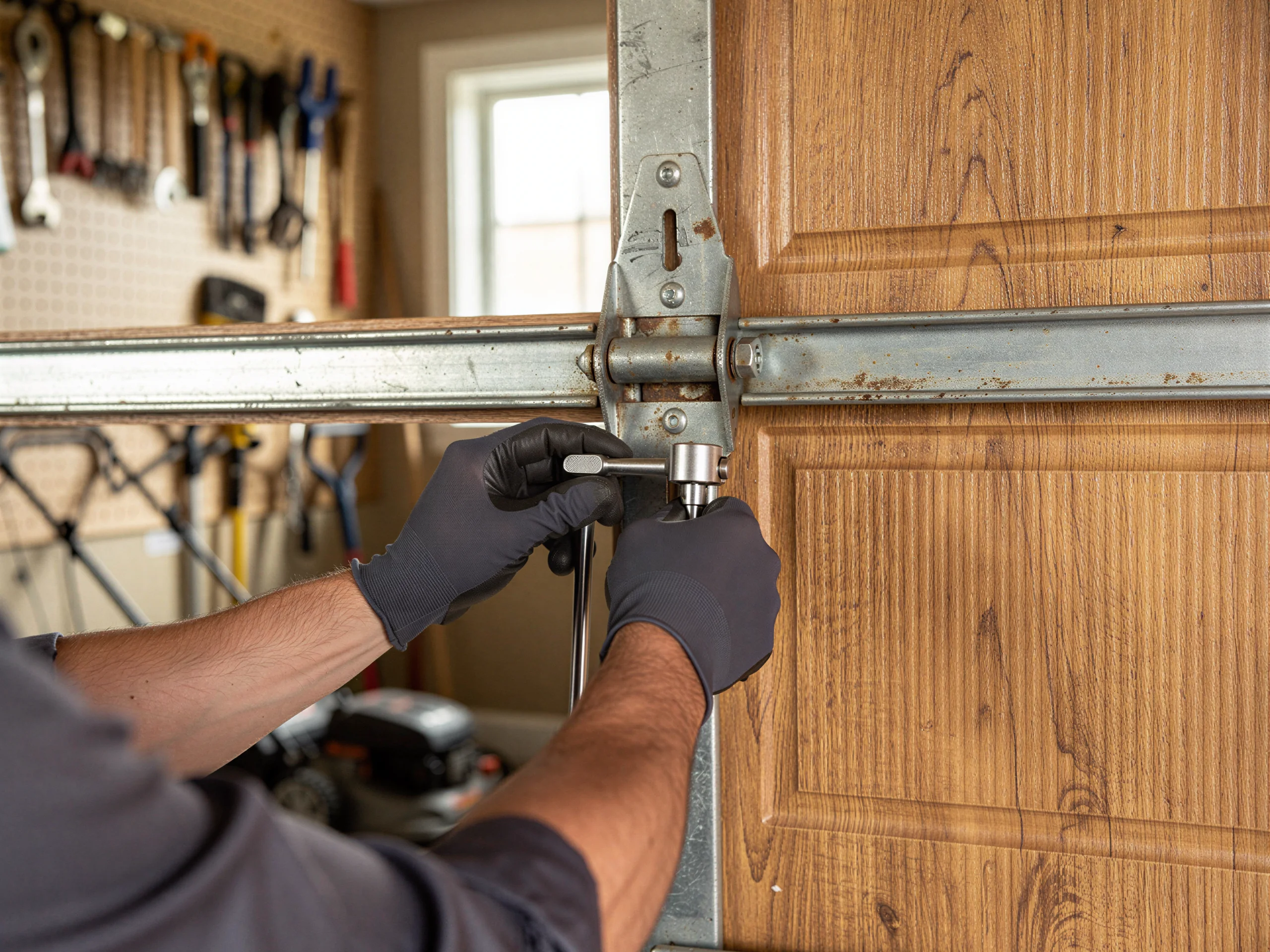
A technician in black gloves adjusts a garage door hinge with a wrench.

Garage Door Repair for Moreno Valley Homes

Garage door repair for Moreno Valley homes built 1958-2003, where original torsion hardware and heat-dried lubricant cause the most spring and opener failures. Learn more →
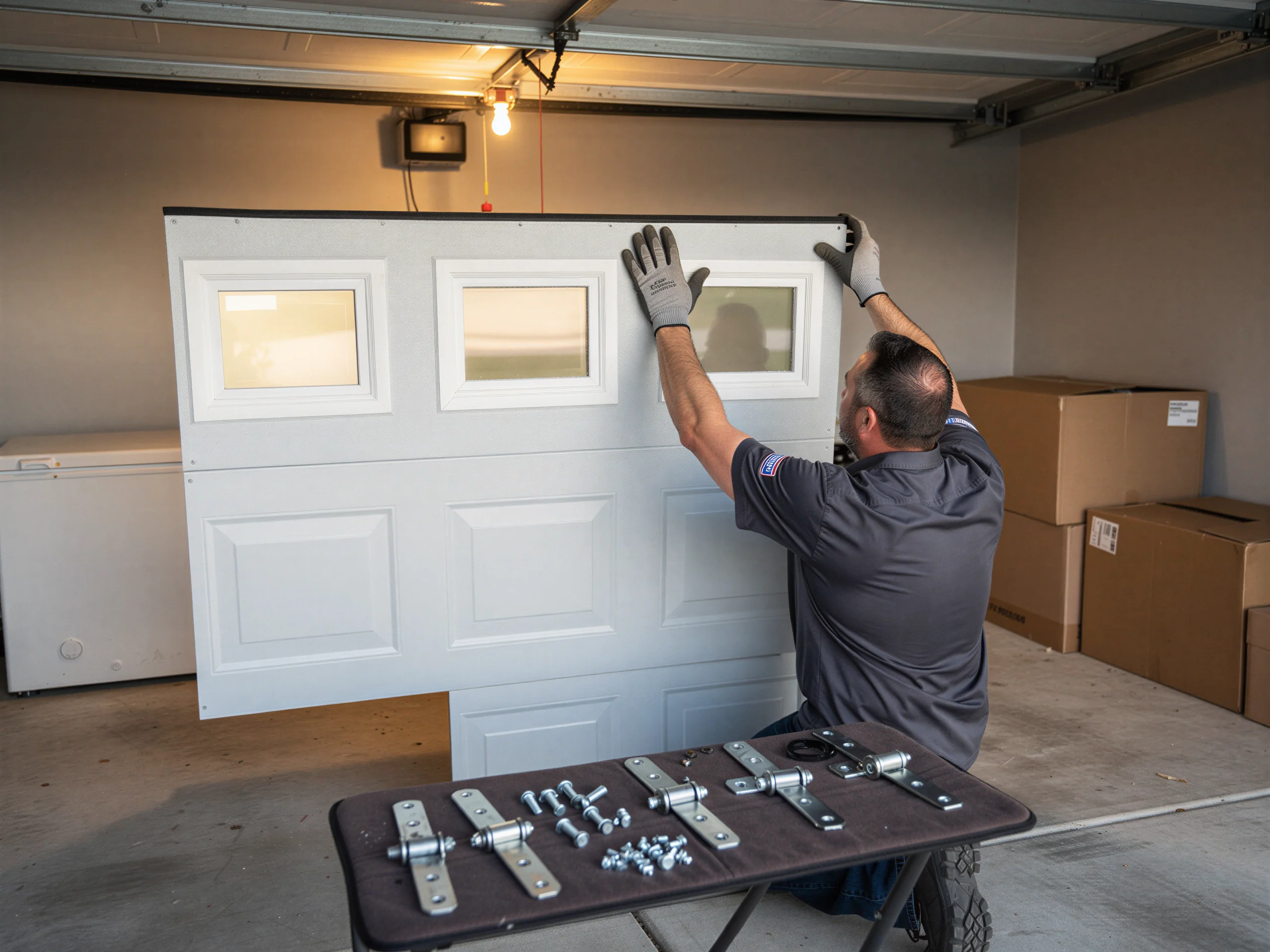
A technician installs a white garage door panel with windows.

Panel Replacement for Moreno Valley Garage Doors

Dented, cracked, or sun-faded garage door panels on Moreno Valley homes built between 1958 and 2003. Learn more →
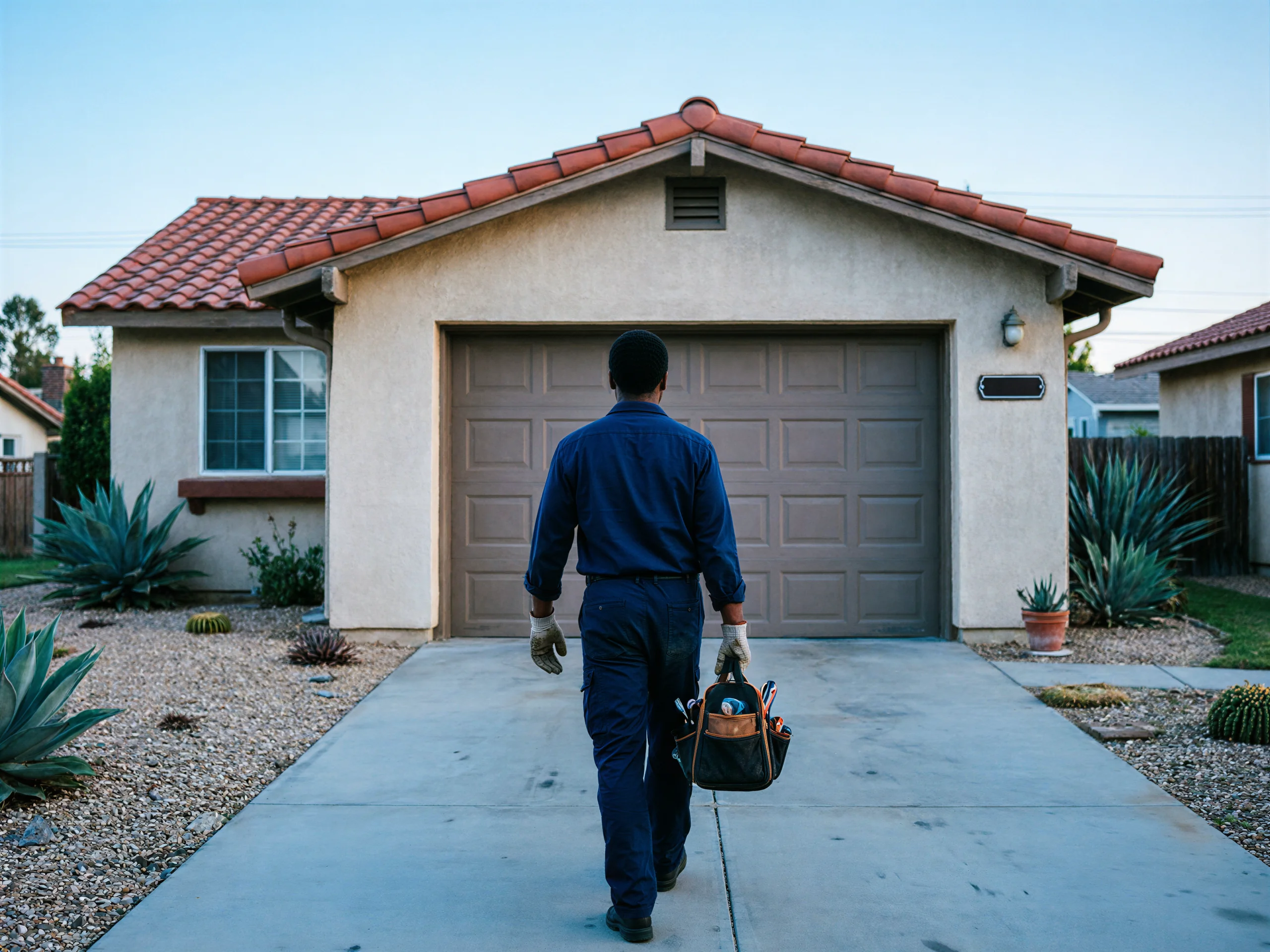
A technician walks toward a house with a brown garage door and a red tile roof.

Emergency Garage Door Repair in Moreno Valley

Broken spring or stuck door in Moreno Valley? Learn more →
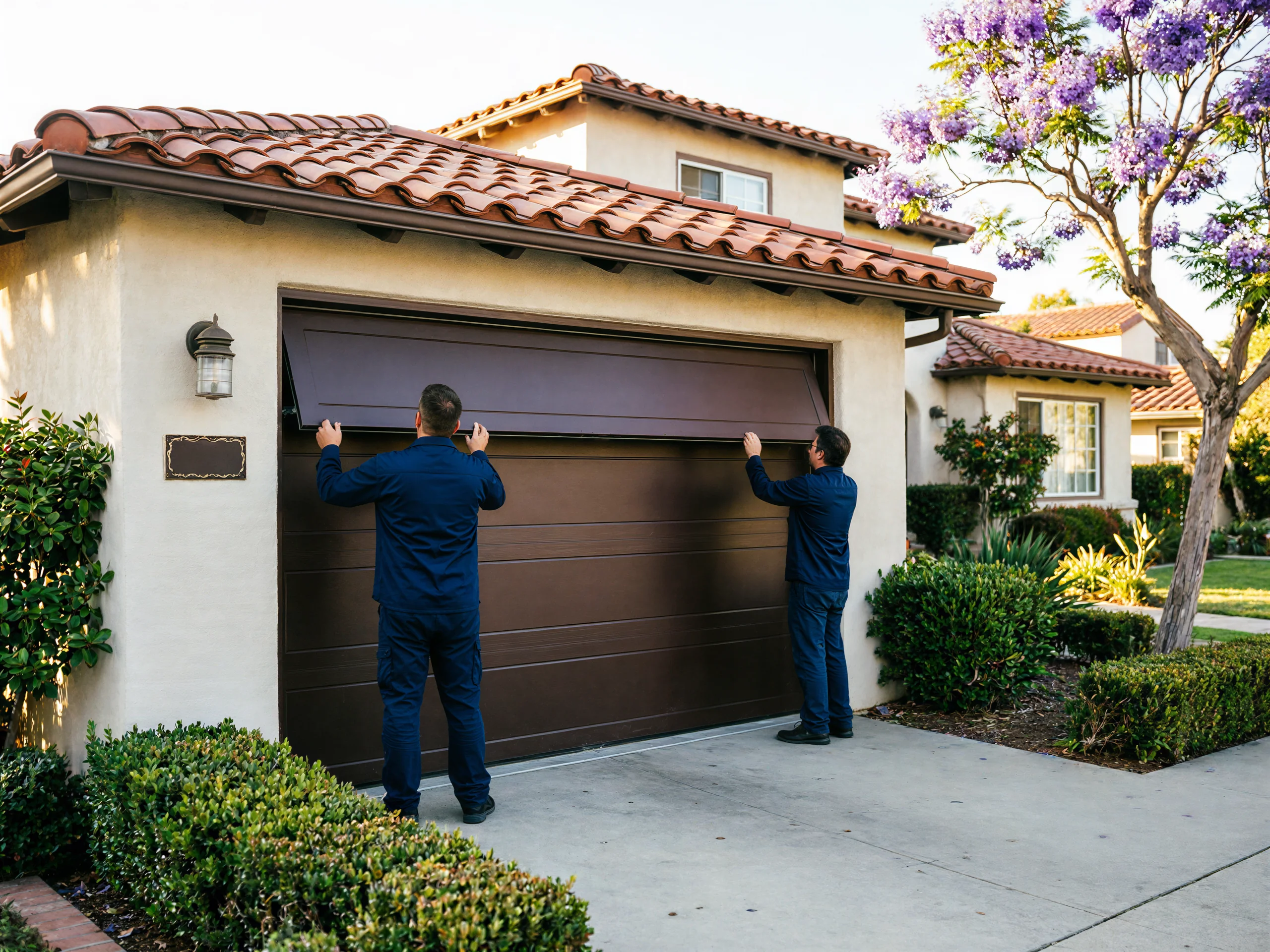
Two technicians are installing a brown garage door on a house.

Garage Door Installation for Moreno Valley Homes

Moreno Valley homes built mostly 1958-2003 often carry original, uninsulated steel doors worn by years of heat. Learn more →
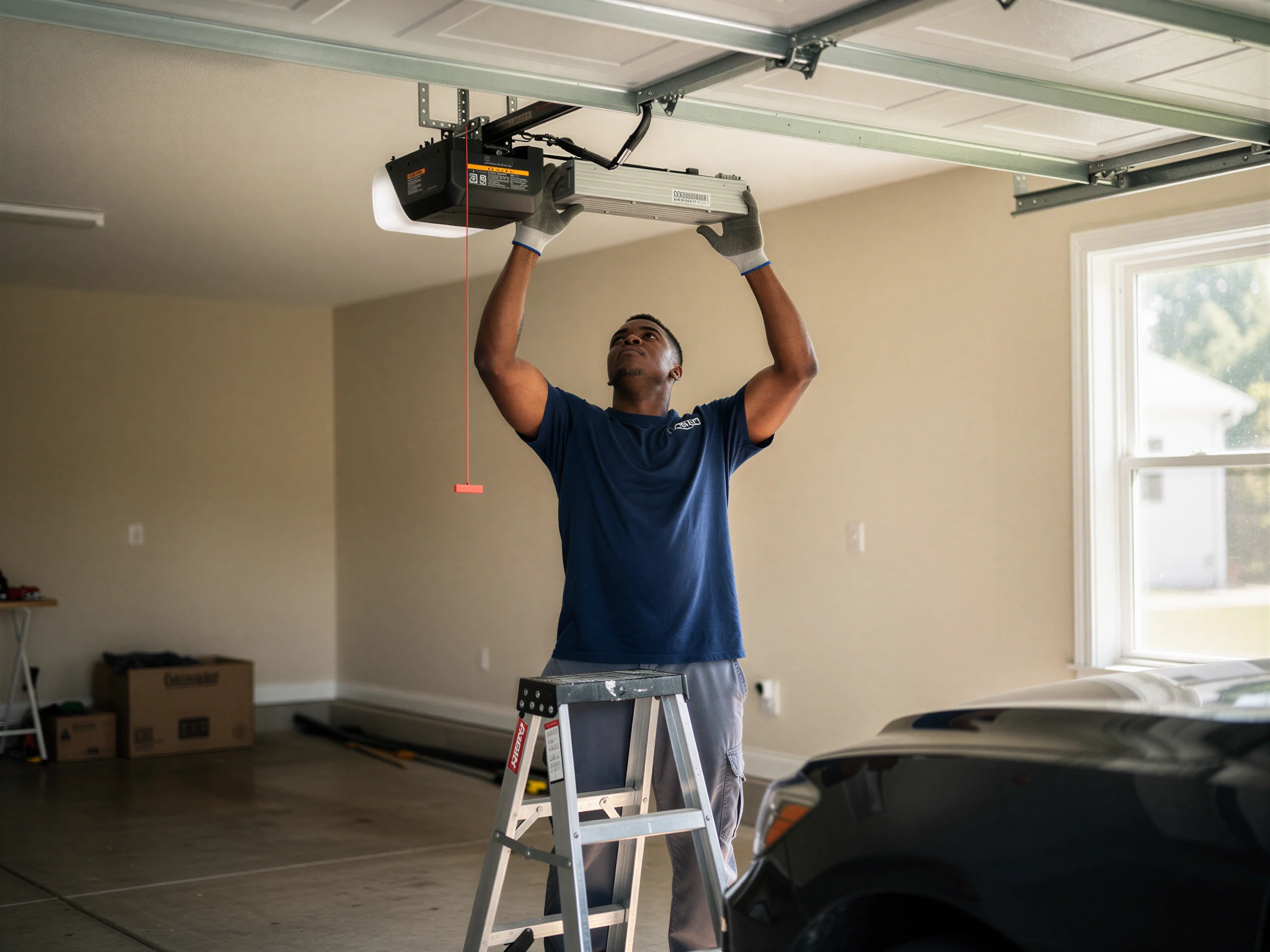
A technician on a ladder installs a garage door opener in a garage.

Garage Door Opener Installation for Moreno Valley Homes

Moreno Valley homes built 1958-2003 often run original chain-drive openers past their life. Learn more →
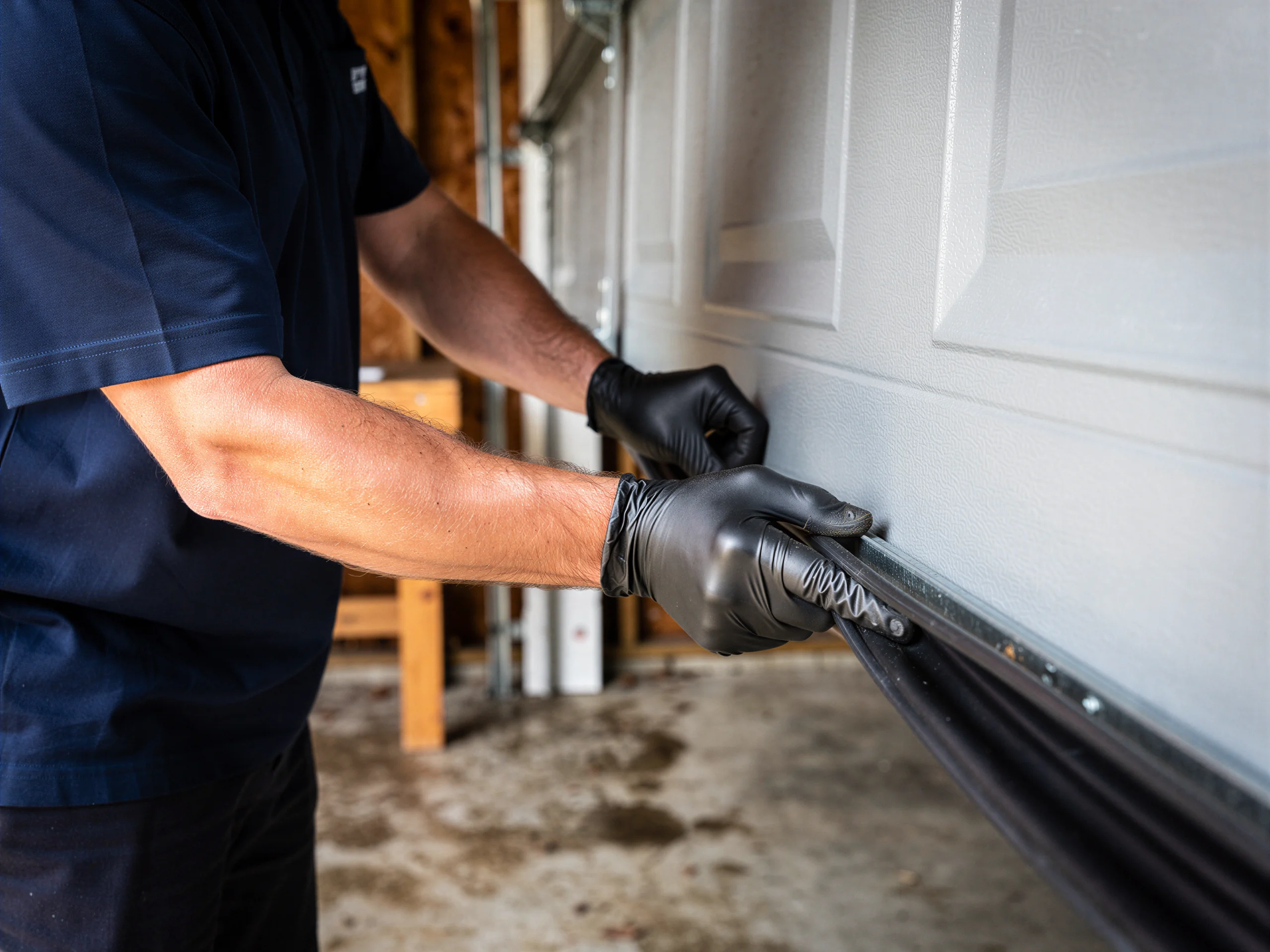
A technician wearing black gloves is installing a garage door bottom seal.

Garage Door Maintenance for Moreno Valley's 1980s-Era Housing Stock

Most Moreno Valley garage doors date to the 1958-2003 building boom. Learn more →

Ready when you are

Need a garage door sorted in Moreno Valley?

Moreno Valley Garage Door Pros repairs and installs garage doors, springs and openers in Moreno Valley, CA and the surrounding area.

Call NowGet a quote