Lube and weatherstrip stock
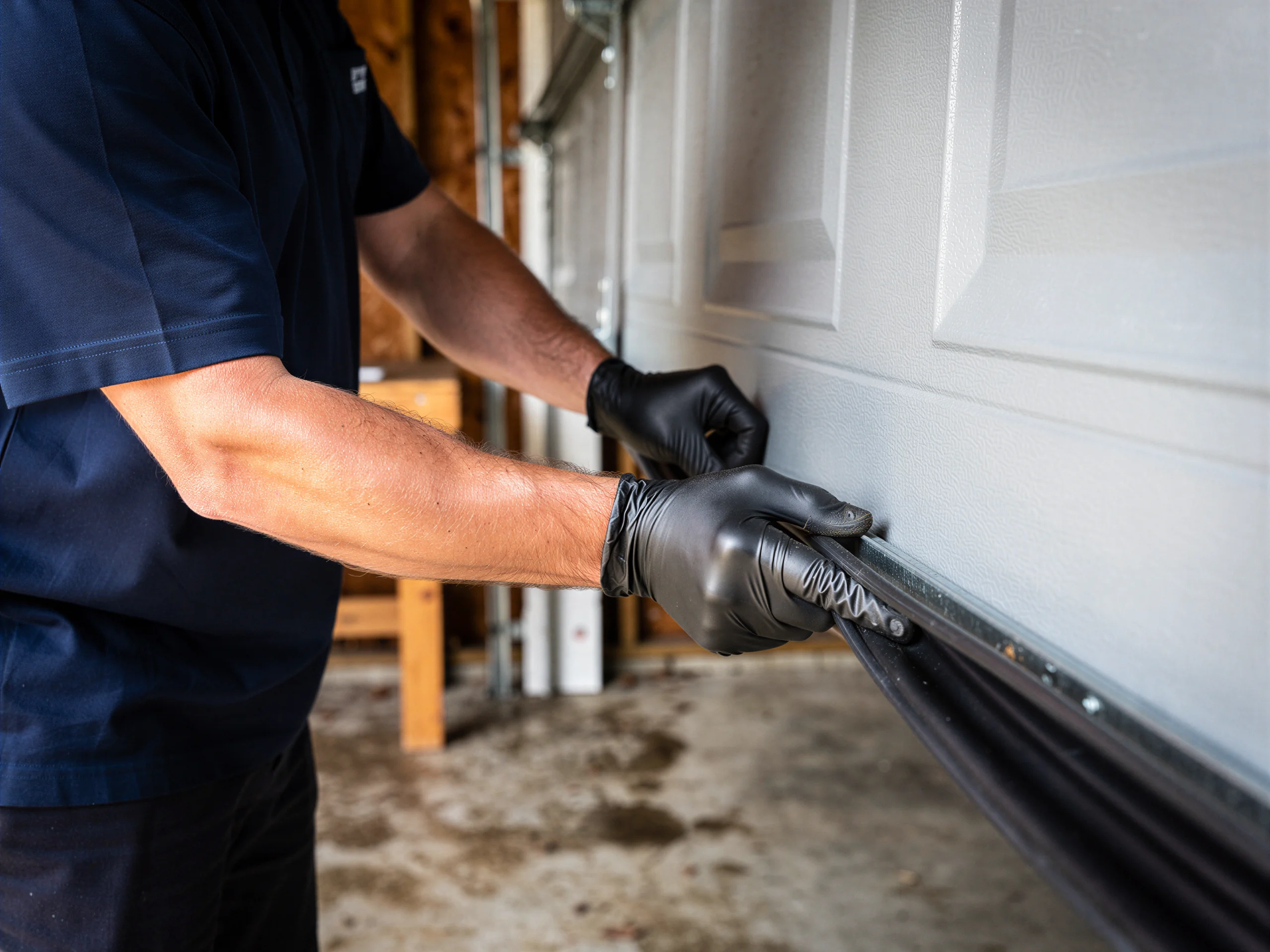
We carry general-purpose and cold-weather lube appropriate for this area's moderate heat band, plus weatherstrip and bottom seal stock in the widths that fit newer steel doors rather than older wood ones.
Temescal Valley, Moreno Valley
Temescal Valley's newer homes wear differently than older stock nearby. Moreno Valley Garage Door Pros tunes springs, tracks, and openers out here each visit.
Local causes
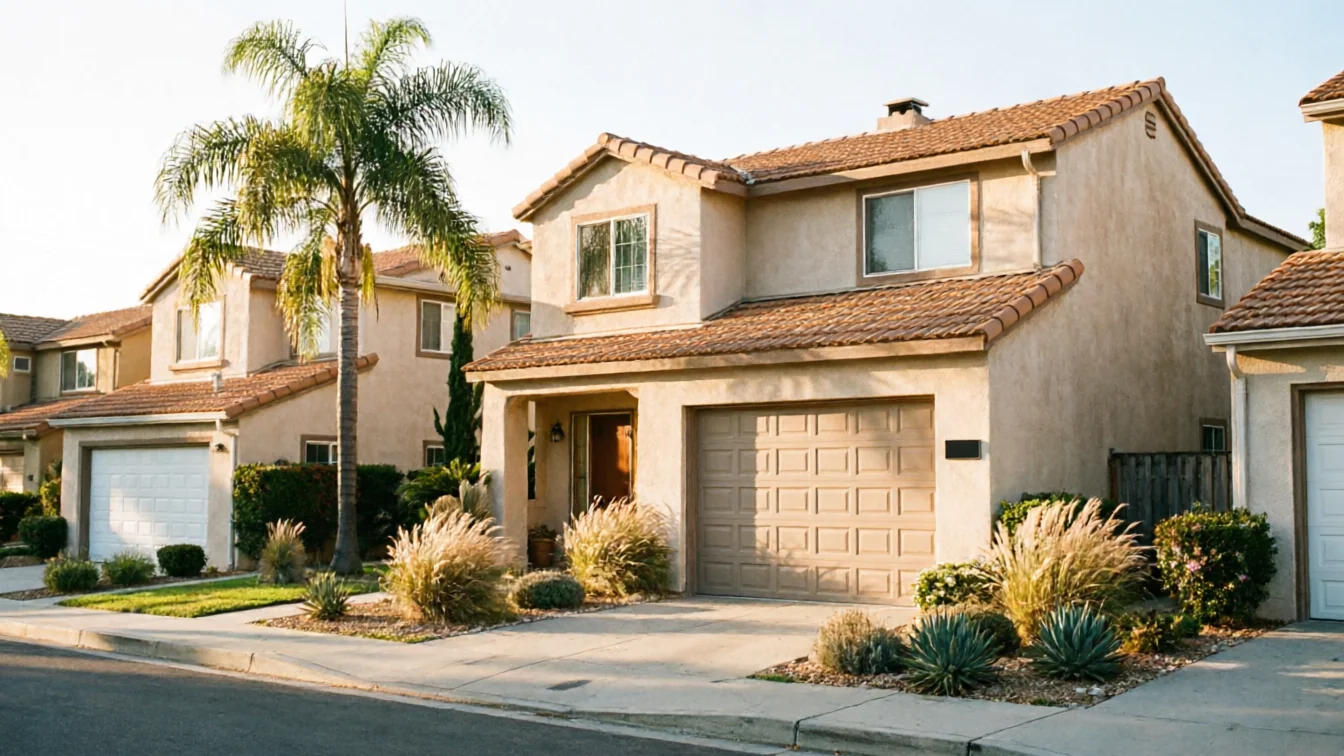
Temescal Valley has about 9,013 households, which is a small slice of the 250,595 households spread across the wider service area we cover out of Moreno Valley. A town this size doesn't generate the volume of calls a dense older neighborhood does, but the calls that do come in follow a pattern tied to when the houses were built. Across the broader service area, the housing stock runs from 1958 to 2003 with a median year of 1983 - a lot of it from the 1980s and 90s. Temescal Valley sits at the far end of that range, with a median build year of 2003. That means fewer original one-piece doors on old side-mounted torsion hardware, and more builder-grade steel sectional doors on standard extension or torsion springs. The failures we see here are less about ancient parts nobody stocks anymore and more about years of unlubricated rollers, worn weatherstripping, and openers whose force settings were never touched after install. The moderate heat band this region sits in still dries out lubricant and hardens rubber seals faster than owners expect, even on a 20-year-old door. It's a different maintenance call than the one we run on a 1983-built house twenty minutes away.
On the truck
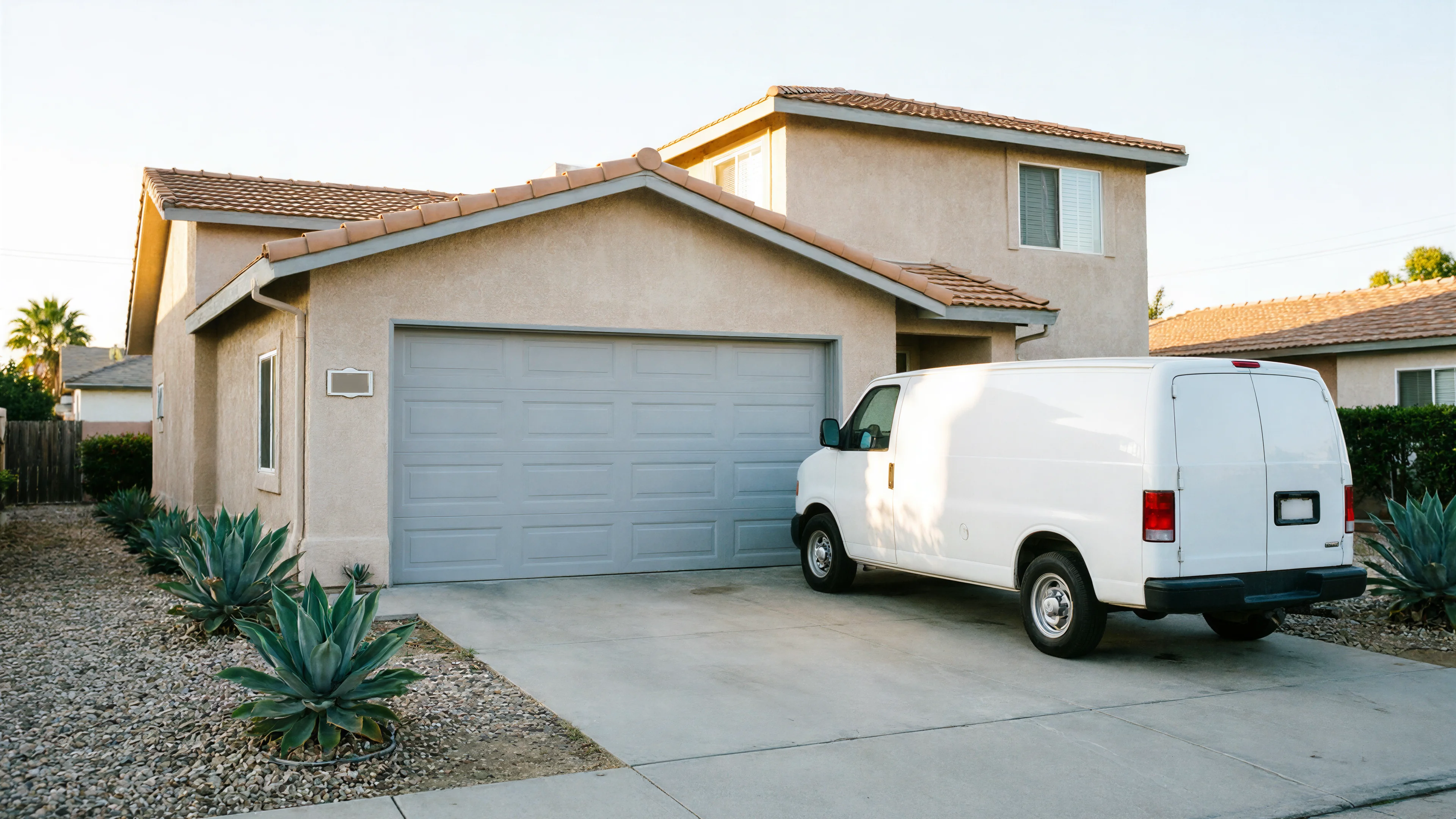
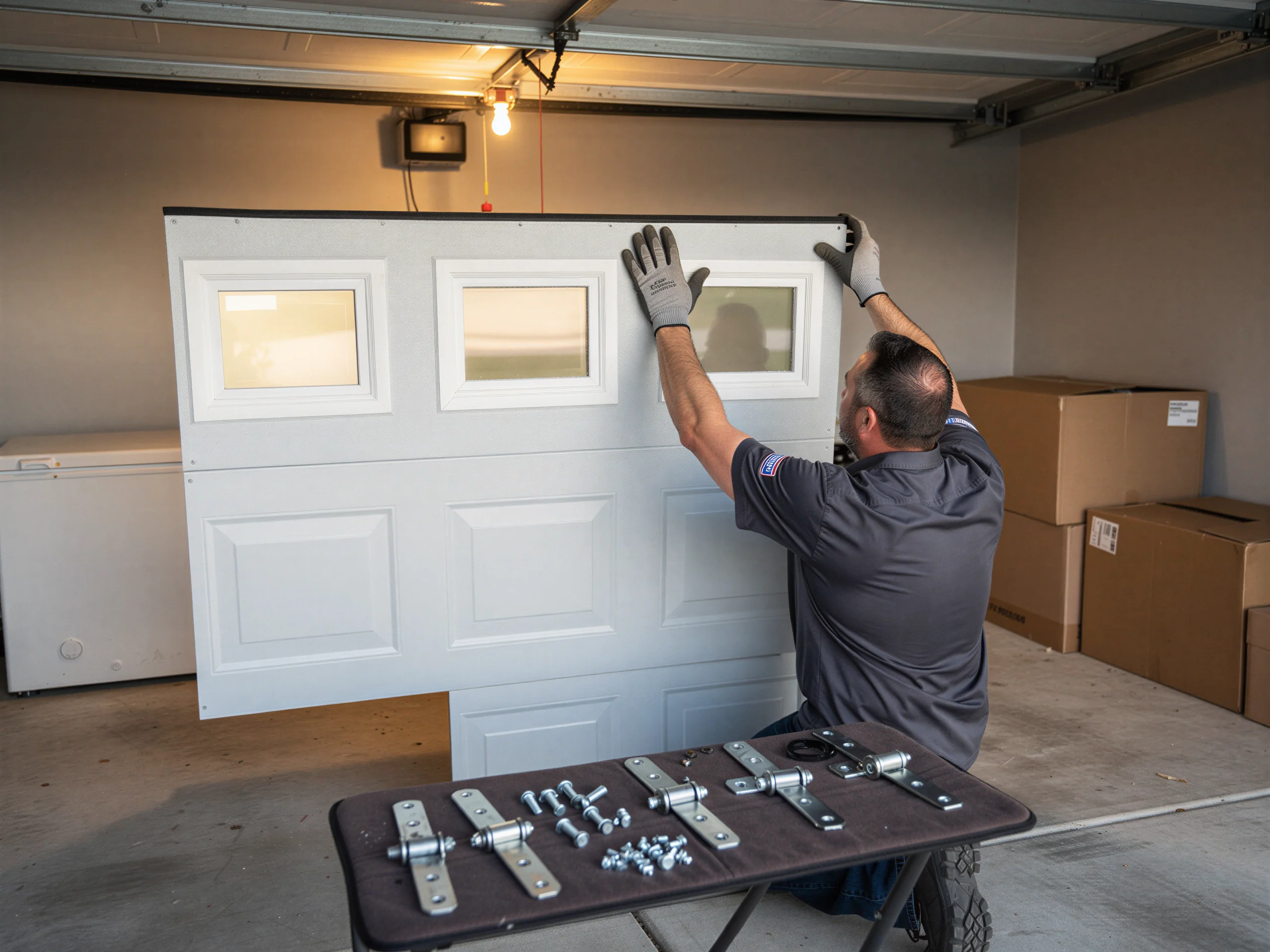
For a town built mostly after 2000, the truck carries what fits a standard builder door rather than odd legacy sizes. That means a run of common torsion springs sized for a typical two-car sectional door, steel rollers (nylon where the opener is older and noise matters), hinges, end bearing plates, and cable sets in the common lengths.
We carry general-purpose and cold-weather lube appropriate for this area's moderate heat band, plus weatherstrip and bottom seal stock in the widths that fit newer steel doors rather than older wood ones.
We also bring a force gauge and travel limit tools for openers, since most Temescal Valley garages are running a chain or belt-drive unit installed with the house rather than retrofitted decades later.
What we don't carry is custom millwork or wood panel stock - homes built after 2000 here are almost all steel or composite doors, so we're not stocking replacement wood panels on the truck for this town the way we might for an older area. If a door turns out to need something outside that standard kit, we note it and order rather than guess.
Our process
A maintenance visit starts with a balance check - disconnecting the opener and lifting the door by hand to see if the springs are still carrying their share of the weight.
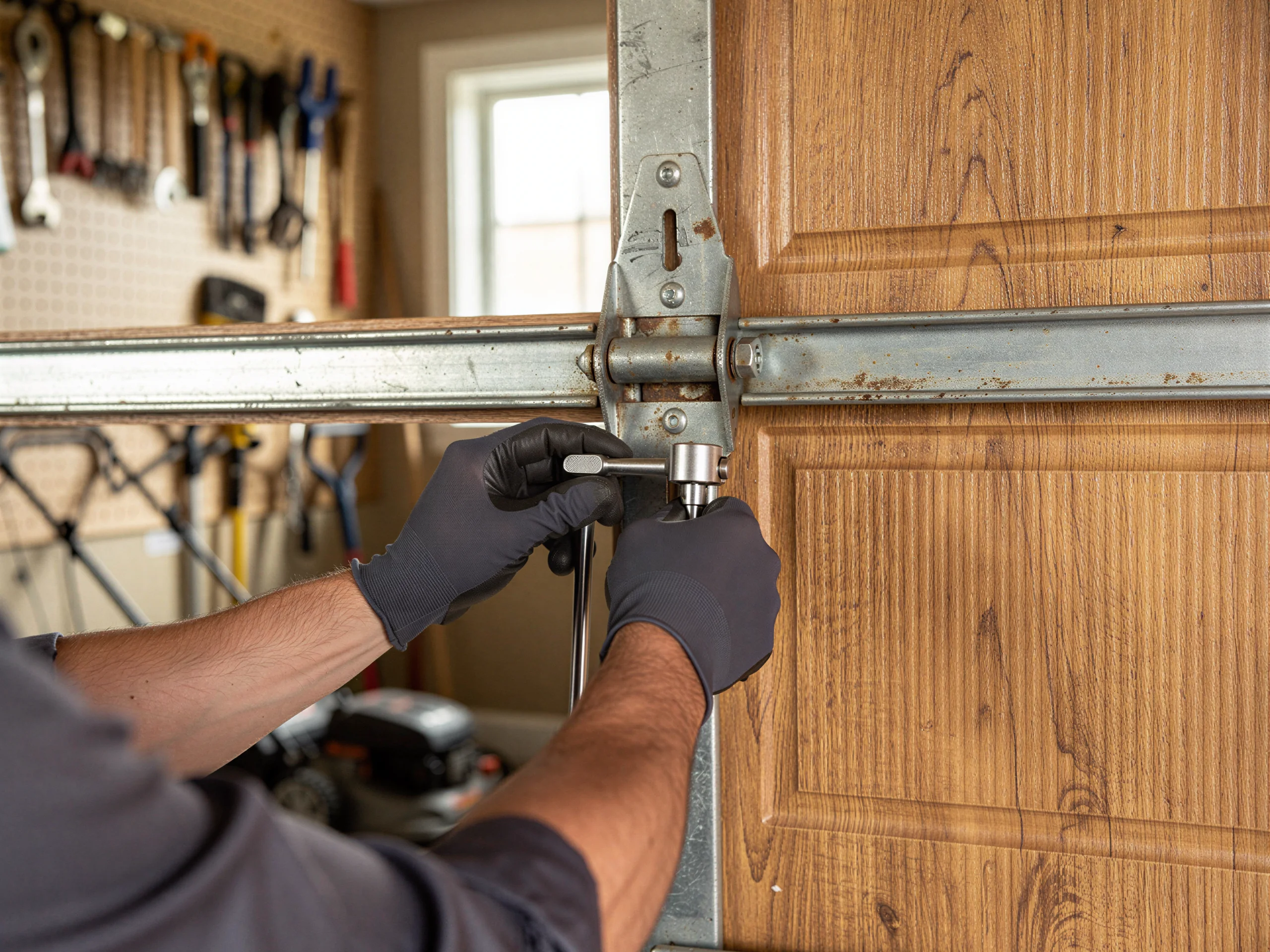
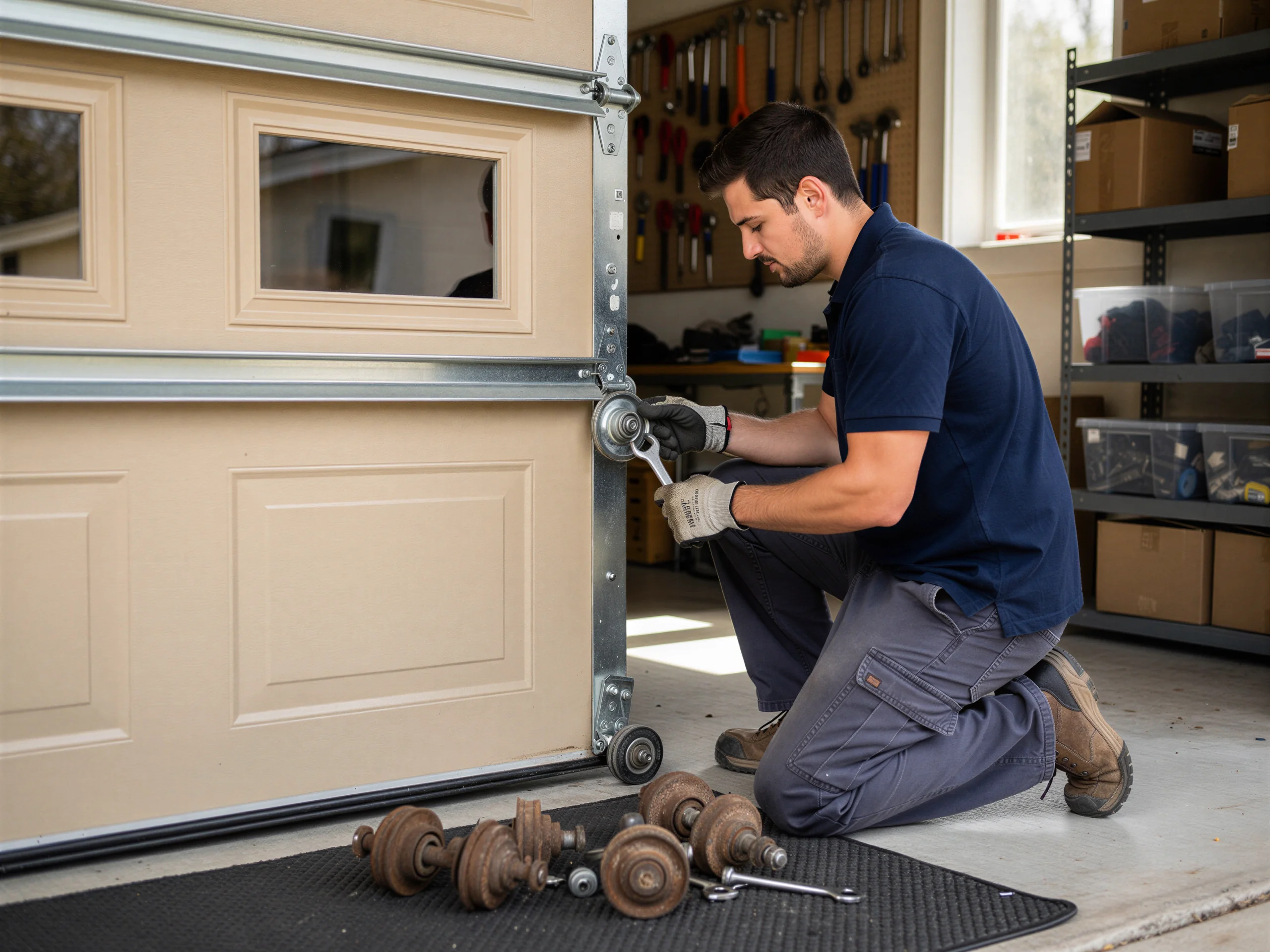
On a door built in the last twenty years, that's usually fine, but the lift cables and rollers have had two decades of use with no attention, so those get inspected next. We lube the rollers, hinges, and torsion shaft, then check the track for alignment since a builder-grade install sometimes has slightly uneven mounting that only shows up years later as noise or binding.
Weatherstripping gets checked for cracking - the moderate heat here is enough to dry out the bottom seal and side stops over time even without extreme weather events. Then we test the opener's force and travel limits, since factory settings from installation rarely match a door after years of spring relaxation.
Bolts on the track brackets and hinges get checked and tightened. The whole sequence is the same regardless of brand - it's just that on a 2003-median town, we're rarely dealing with rust-frozen torsion drums or hardware that's been discontinued, which is a different job than an older house nearby.
Job timing
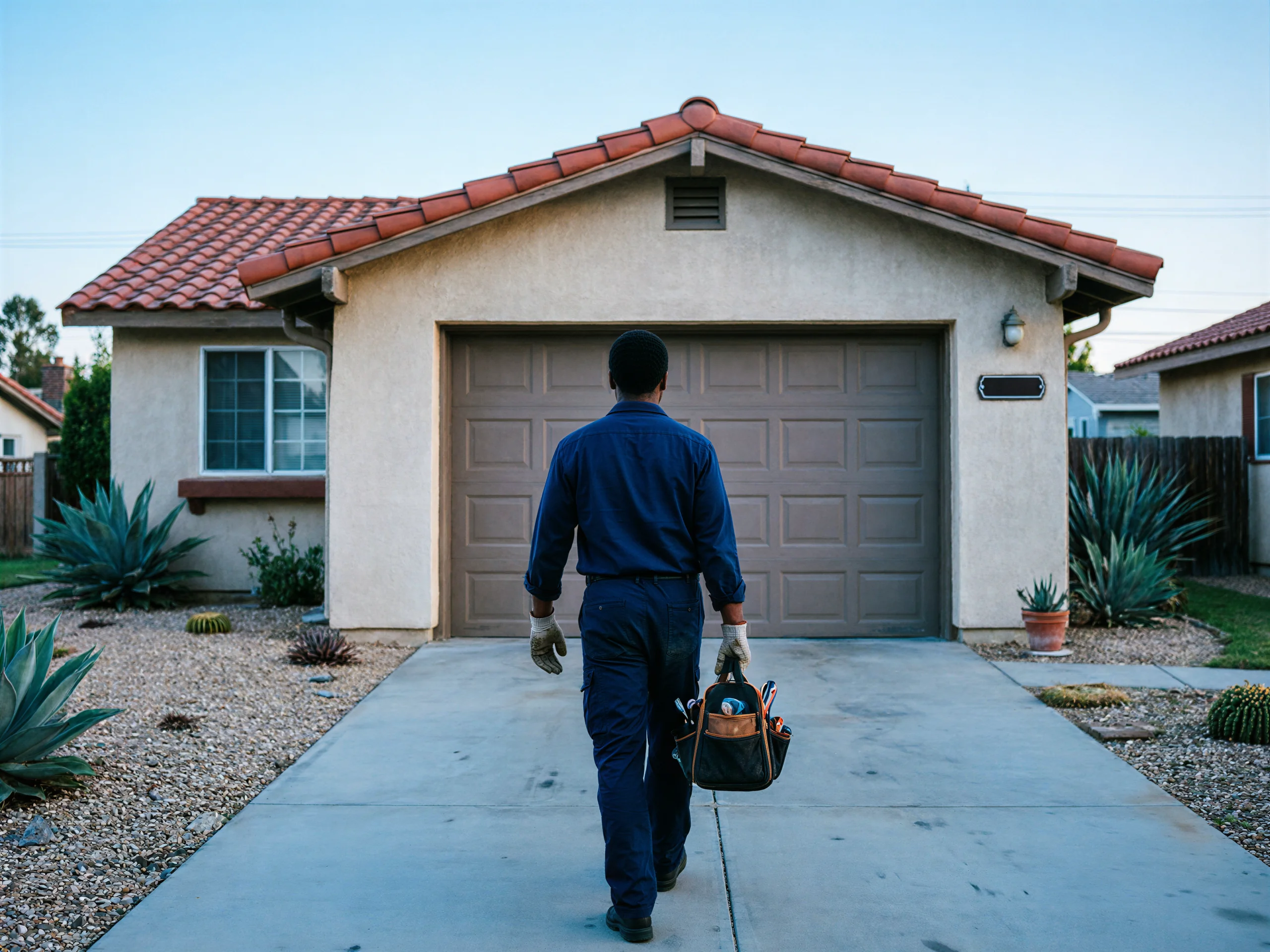
Because the trip out from Moreno Valley runs 19 miles each way, we schedule maintenance visits in Temescal Valley as a full appointment rather than a quick add-on stop.
Once on site, the work itself moves faster here than it does on older homes, simply because builder-grade doors from the 2000s don't usually have the seized bearings or stripped hardware that comes with age. Most of the visit is inspection, lubrication, and adjustment rather than parts replacement.
If a spring or cable does need swapping, that adds time, since torsion springs are under real tension and have to be unwound and rewound with bars, not rushed. We don't quote a fixed number of minutes for every job because a two-car door with a working opener and a single-car door with a seized roller aren't the same visit, even on the same street.
What we can say is that the drive is a bigger share of the trip here than the work itself, which is part of why we try to group visits in this area when we can.
Pricing
We don't have a published price list to quote here, and giving you a number without seeing the door would be a guess, which isn't something we're willing to do.
What we can tell you is what drives the cost on a job like this: whether it's lubrication and adjustment only, or whether a roller, cable, or spring needs replacing.
Temescal Valley's median household income runs $119,647, well above the $83,246 median across the rest of the service area, and the newer, more uniform housing stock here means parts are usually standard sizes rather than custom orders - that tends to keep a repair simpler than it would be on an older, modified door.
The honest limitation is that if an inspection turns up a cracked panel or a door that's been limping along on a failing opener for years, maintenance isn't the right fix - replacement often costs less over time than repeated service calls on a door that's past its working life. We'll tell you straight if that's where your door is instead of running the meter on patch repairs.
DIY or pro
Plenty of maintenance on a newer door is fine to do yourself. Wipe down the tracks, vacuum the sensor eyes, check that the weatherstrip isn't cracked, and run a light spray lubricant on the rollers and hinges once or twice a year - none of that needs a technician. What you shouldn't touch is the torsion spring. Even on a door built in 2003, that spring holds enough stored tension to cause a serious injury if the winding cone slips while you're working on it, and the bars needed to wind or unwind it safely aren't something most garages have lying around. Adjusting opener force settings yourself is also riskier than it looks - set it too low and the door won't close, set it too high and it'll keep closing on things that should stop it. If your door is still under its original installation and just feels a little noisy or slow, basic cleaning and lube is a reasonable first step before calling anyone. If it's binding, sagging on one side, or the spring looks stretched or gapped, that's a call-in job.
Questions
Most homes here were built after the early 2000s, with a median build year of 2003, so the doors are typically builder-grade steel sectional doors on standard torsion hardware rather than the older one-piece or wood panel doors you'd find in a town built decades earlier.
No. We run out of Moreno Valley and drive out to Temescal Valley, about 19 miles each way, for scheduled maintenance and repair visits. There's no local branch here, just a truck that comes when you book it.
Once or twice a year is typical for a door under 20 years old - lubricating rollers and hinges, checking balance, and testing the opener's force settings. Even newer doors lose spring tension and dry out seals over time, especially under the moderate heat this area sees.
Yes. If an inspection shows a cracked panel, a spring that's stretched past safe use, or an opener that's been compensating for a failing door for years, we'll say so. Patching a door that's past its working life usually costs more over time than replacing it.
Explore more
Ready when you are
Moreno Valley Garage Door Pros repairs and installs garage doors, springs and openers in Moreno Valley, CA and the surrounding area.