
Motor and battery pricing
The price difference is mostly the motor and the backup battery, not labor. What we won't do is quote a number over the phone before we've seen the door.
Rialto, Moreno Valley
Most Rialto garage doors date to the early 1980s, before modern opener safety reversals existed. We install openers well sized for that original hardware.
Pricing
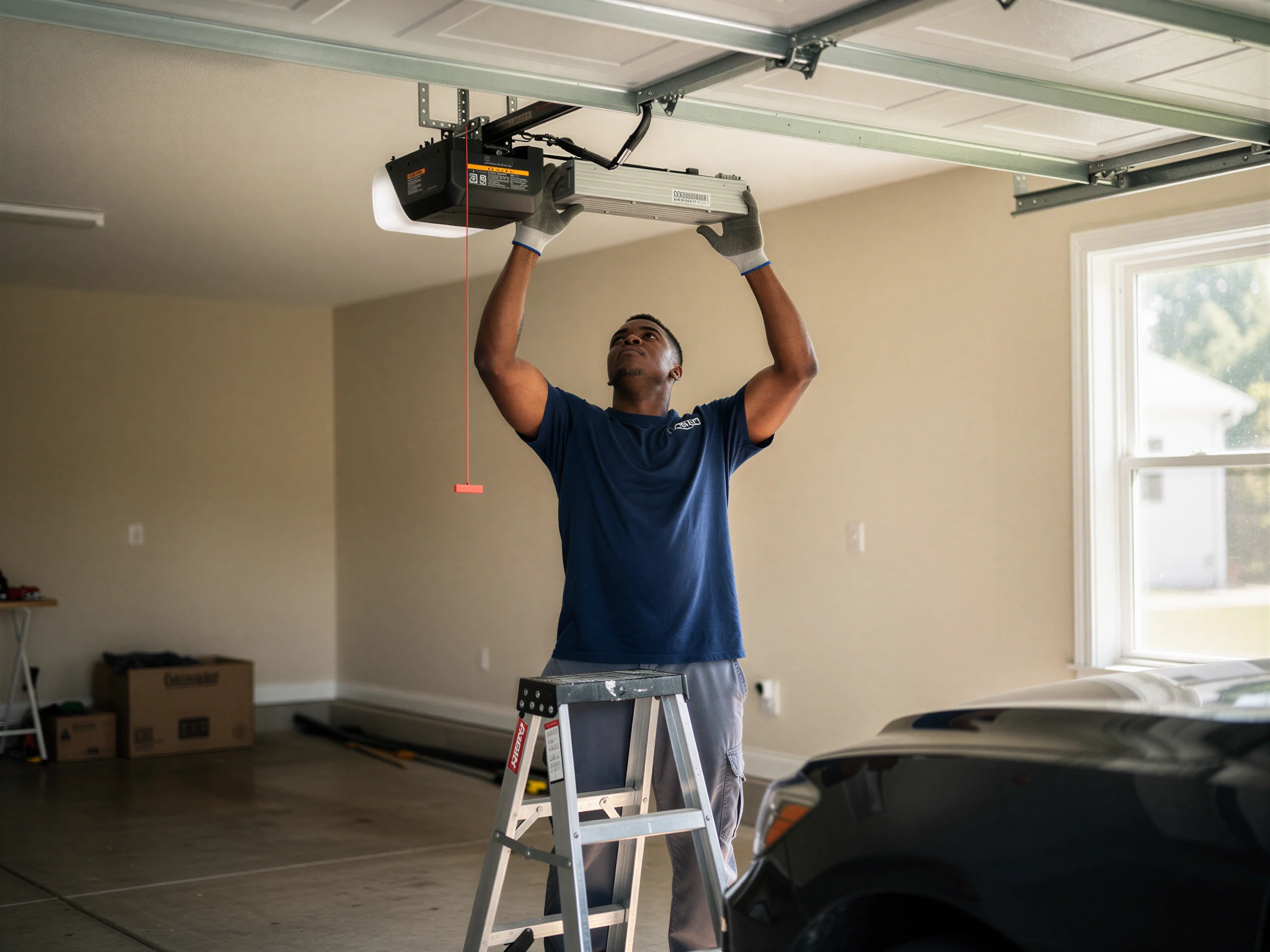
What this job costs in Rialto comes down to what opener you're replacing, not a flat number we can quote blind. Rialto's median household income runs at $85,521, a bit above the broader service area's median of $83,246, and that tracks with what we see on site: more owners here asking for a belt-drive unit with battery backup instead of the bare-bones chain drive that came with the house.
The price difference is mostly the motor and the backup battery, not labor. What we won't do is quote a number over the phone before we've seen the door.
A single door on light steel panels is a different job from a heavier double door on an old wood-panel original, and the opener has to be sized to the door it's lifting, not the other way around.
If your current unit is a 1/3 horsepower chain drive from the original build and the door is a heavy double, swapping in an identical replacement is often the wrong move even if it's the cheaper one up front.
Local causes
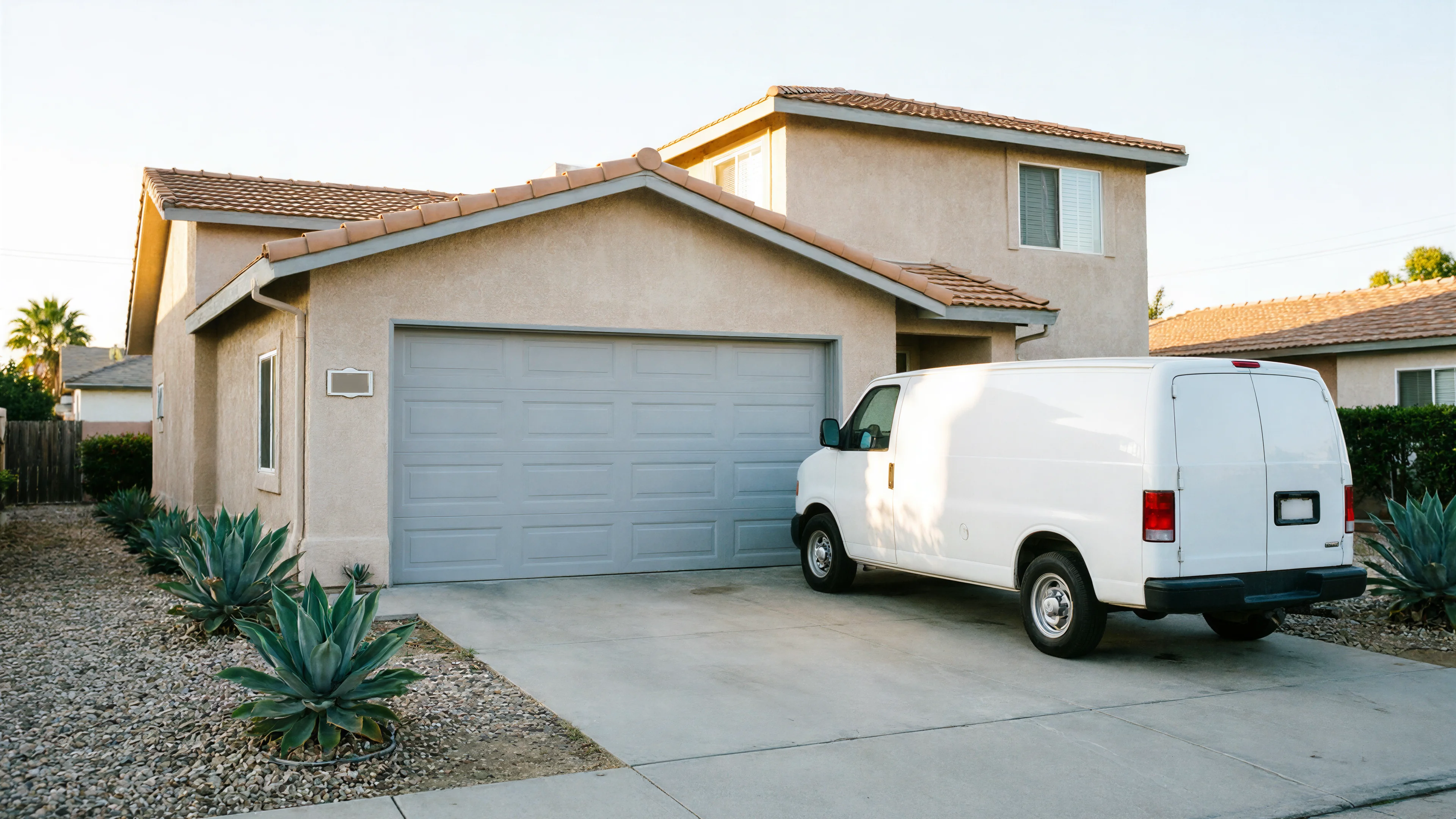
Rialto's housing stock centers on 1982, which puts it right inside the service area's broader 1958-2003 build window with a median around 1983. That matters for openers specifically: a house built around 1982 almost never has the opener it started with, but it often still has the garage door that came with the house, and that door was spec'd for the opener hardware of its era - heavier torque, simpler drive, no rolling-code circuit board.
When that original door gets a modern opener bolted on without checking the math, the new unit either strains against a door heavier than it's rated for or runs an older track that's been reworked more than once since the house was built. We see failed logic boards and stripped gears here more than snapped springs, because the spring side of these doors has usually already been serviced once in forty-plus years - the opener hasn't.
DIY or pro
A straightforward swap - same mounting, same door weight, same rail length - is within reach for an owner who's comfortable on a ladder and reads the manual instead of guessing.
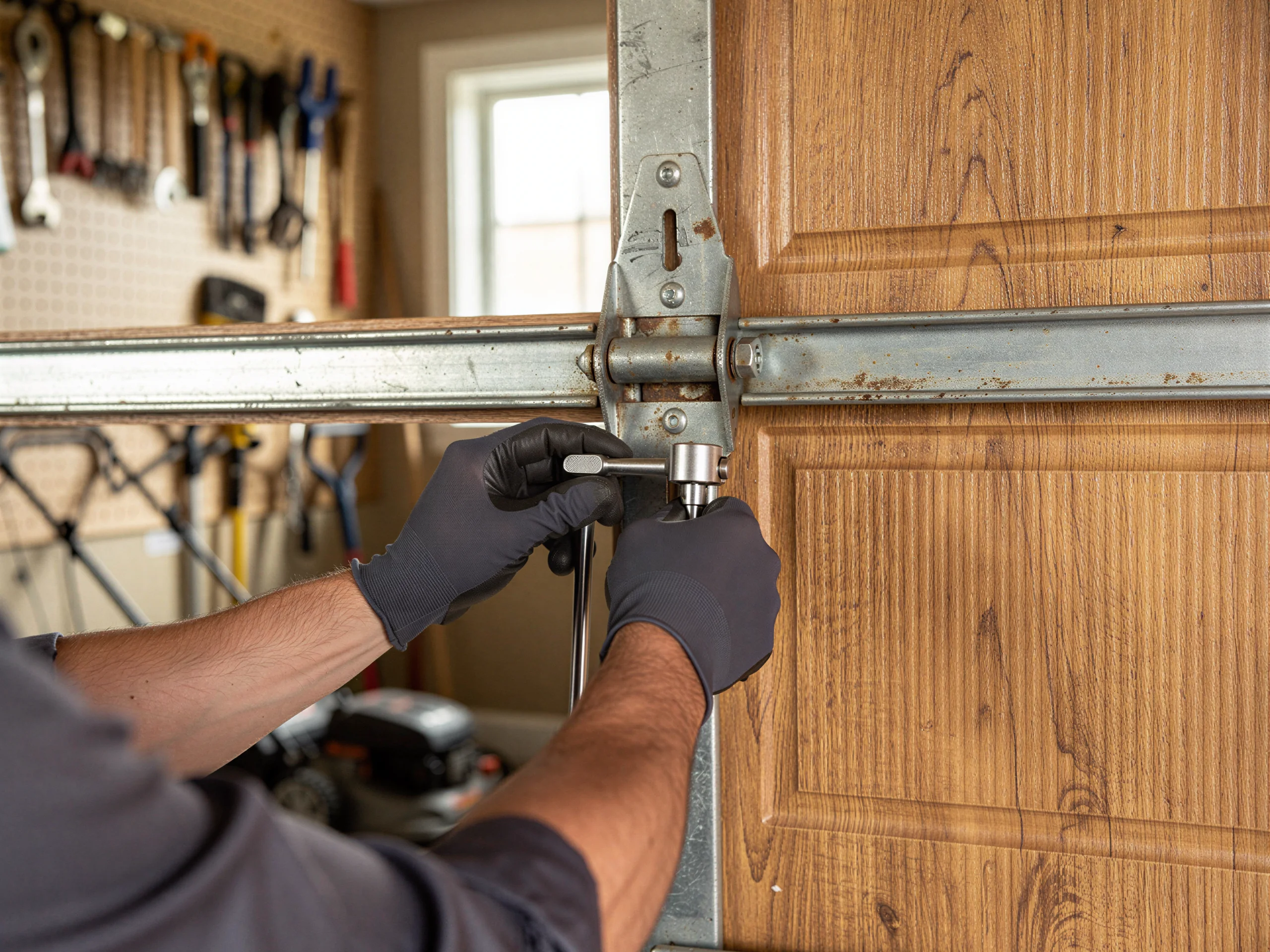
The parts that go wrong aren't mechanical skill, they're judgment calls: how much travel to set before the door bottoms out, where the safety sensors sit relative to the floor, and whether the existing rail and header bracket can actually carry the new motor's torque.
Where we tell people to stop and call someone is anything involving the spring side of the door or a header that's been patched, warped, or isn't original to the door.
We also won't walk someone through a phone-diagnosed install sight unseen - we haven't seen your door, your track, or your framing, and guessing wrong on opener sizing is how you burn out a motor in under a year.
Our process
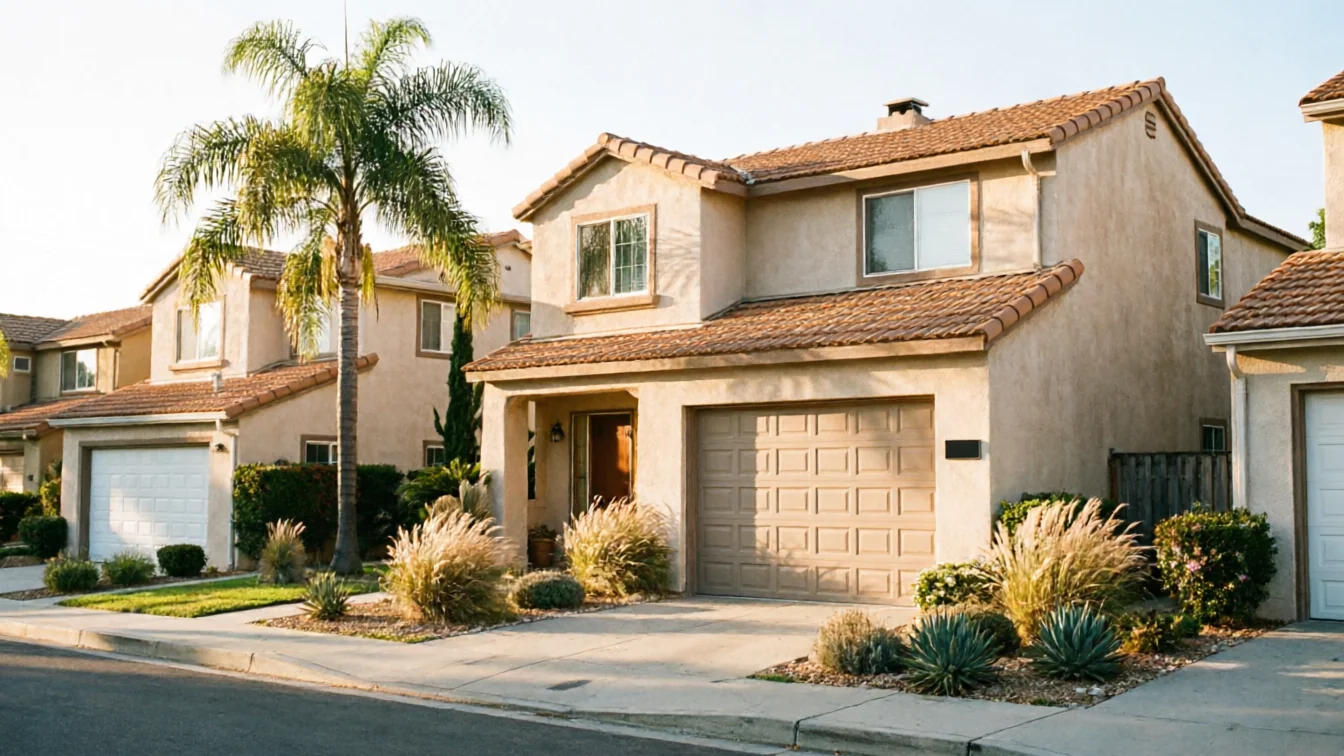
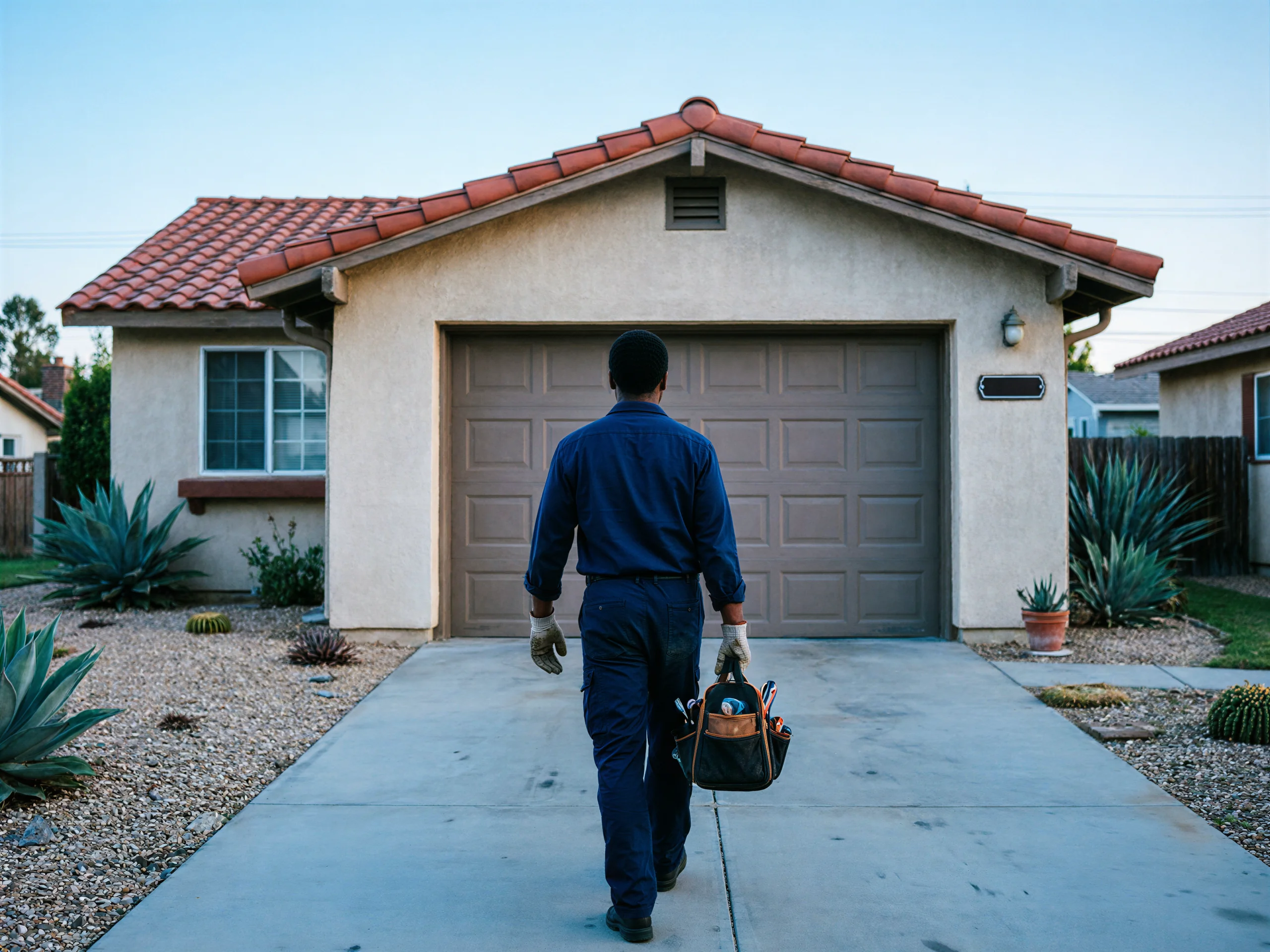
We come out from Moreno Valley, about 17 miles to Rialto, so the opener install gets scheduled as the job for that trip, not squeezed in around something else. On site we check door weight and balance before anything else, because an opener installed on a door that isn't balanced will fail early no matter how good the unit is.
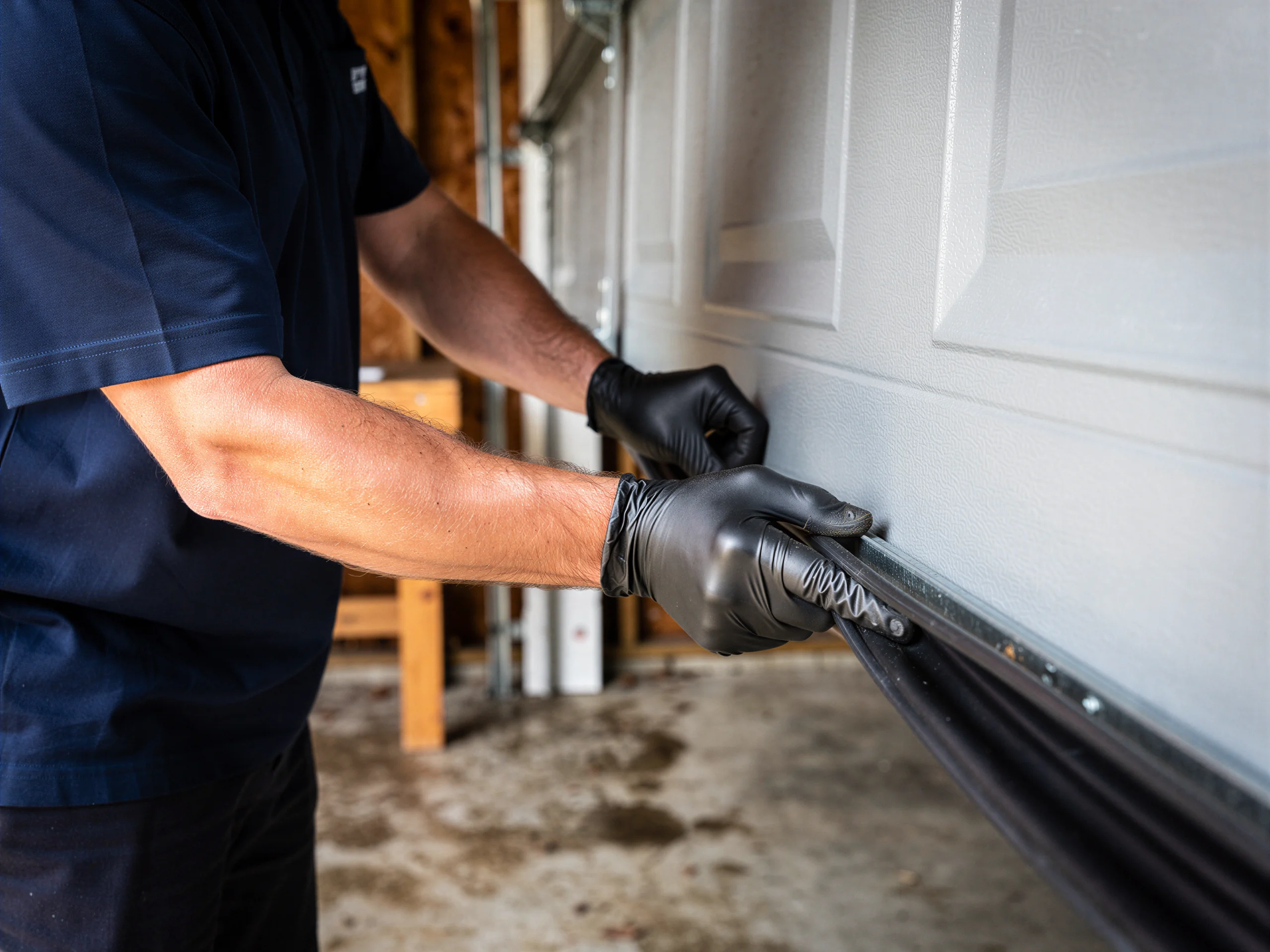
From there it's matching horsepower and drive type to the door, running new wiring to the wall control and safety sensors if the old run is undersized or missing a ground, and setting travel limits and force settings by hand rather than trusting factory defaults. We test the auto-reverse with a real object under the door before we call it finished, since that's the one safety check that actually matters and the one most skipped installs get wrong.
Watch-outs
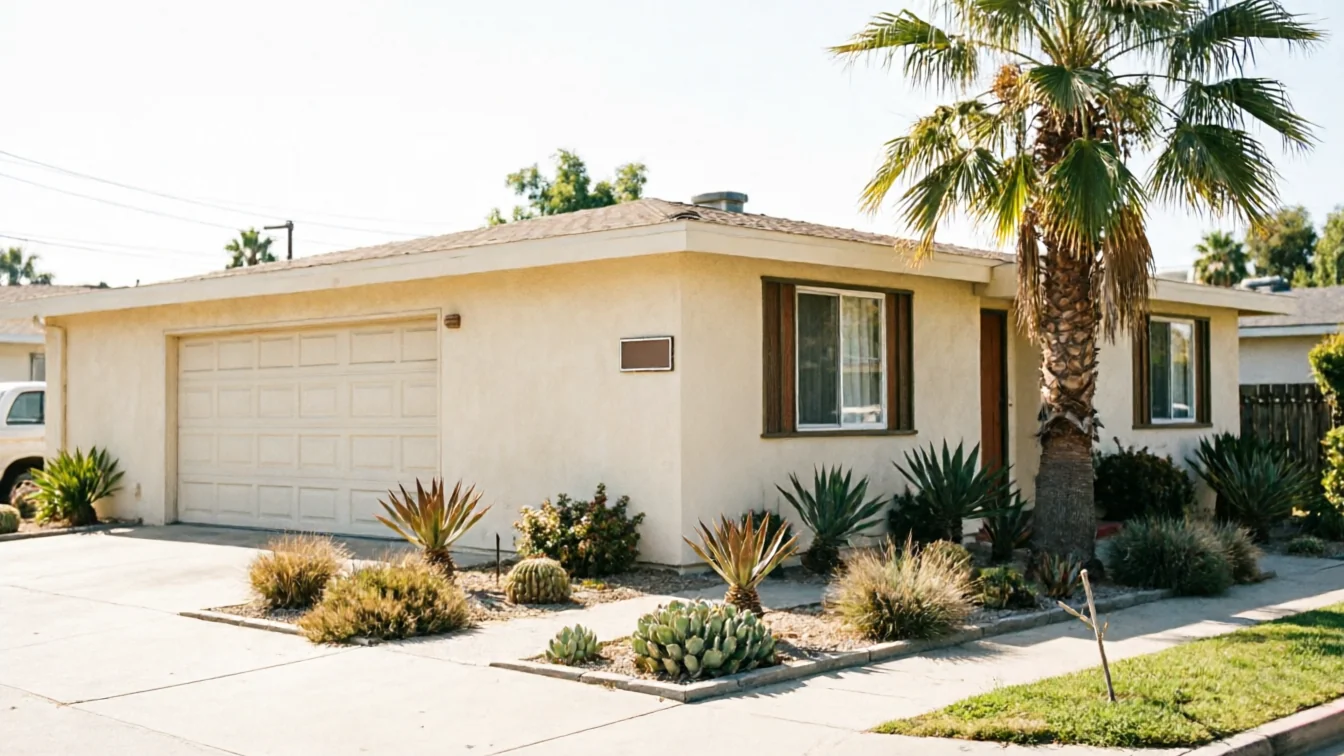
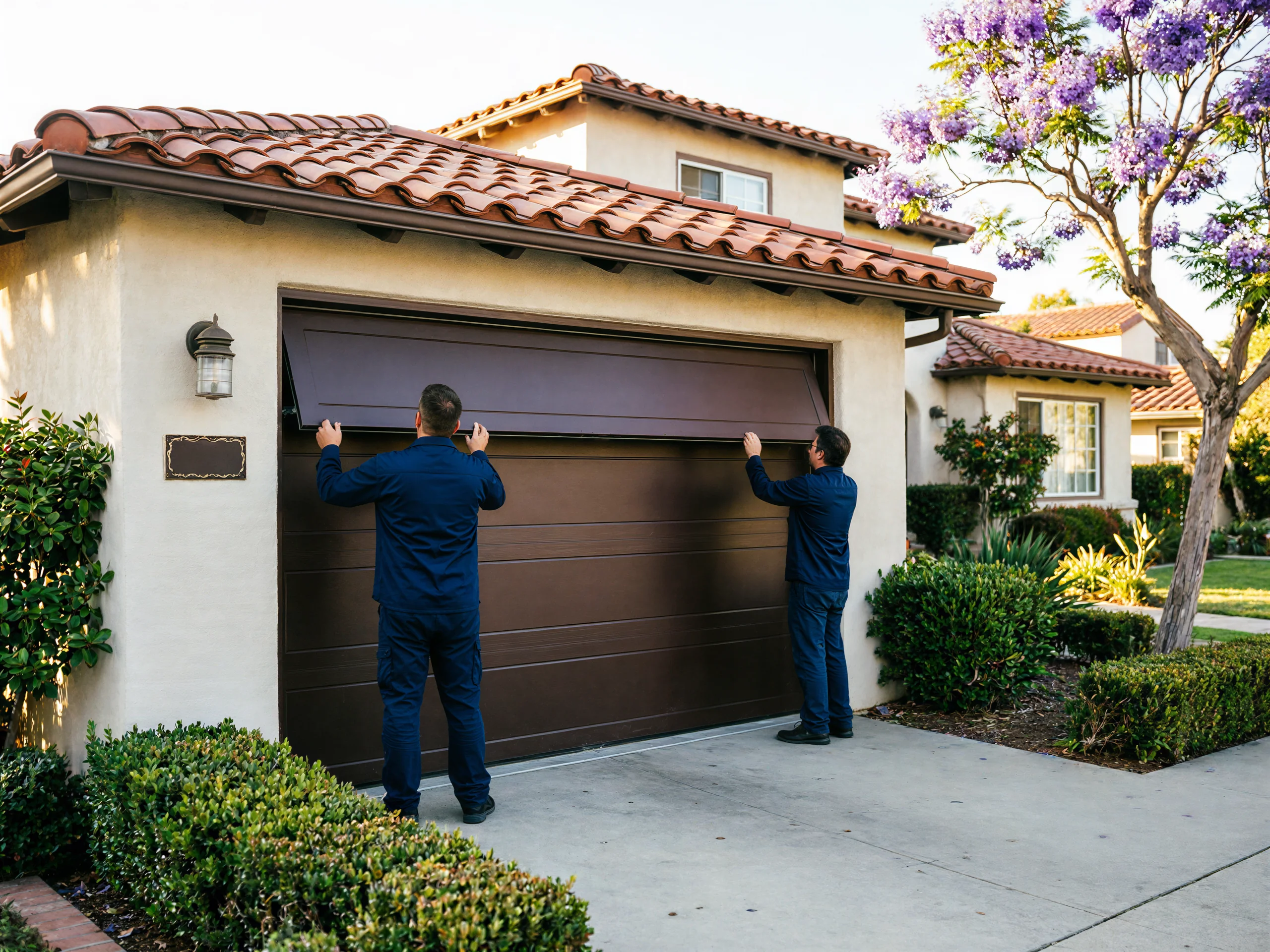
The job goes wrong most often when the opener gets replaced in isolation and the door underneath it doesn't get a second look. A heavier double door on an original 1980s-era track with a modern 1/2 horsepower belt drive can lift fine for months and then start slamming the last six inches as the spring tension drifts - that's a spring problem showing up as an opener complaint.
The other failure point is wiring: houses from this build era were wired for a single switch and a light, not a safety sensor pair and a smart hub. Running new low-voltage wire through an attic that's been insulated since the house went up takes longer than the install itself. We tell owners this up front rather than let it turn into a surprise line item halfway through the job.
Questions
Usually, but only if the opener is sized for that door's weight and the track and spring are already in good shape. Rialto's housing stock mostly dates to the early 1980s, and a lot of those original doors are heavier than the openers sold today assume. We check balance and weight before we pick a unit.
We travel from Moreno Valley, about 17 miles out, so we schedule the opener install as the job for that trip rather than promising a same-day callback. Once we're on site, a standard install is usually finished within a few hours.
Sometimes, if the wiring is intact and grounded, but houses from Rialto's 1980s build era were often wired for a basic switch only. Newer openers need separate runs for safety sensors, and that wiring frequently has to be added, not reused.
Explore more
Ready when you are
Moreno Valley Garage Door Pros repairs and installs garage doors, springs and openers in Moreno Valley, CA and the surrounding area.