Older lumber dimensions
Houses from the early run of that window sometimes have openings that were framed to older lumber dimensions, which means a modern pre-hung door doesn't always drop in without trimming jamb or shimming track.
Jurupa Valley, Moreno Valley
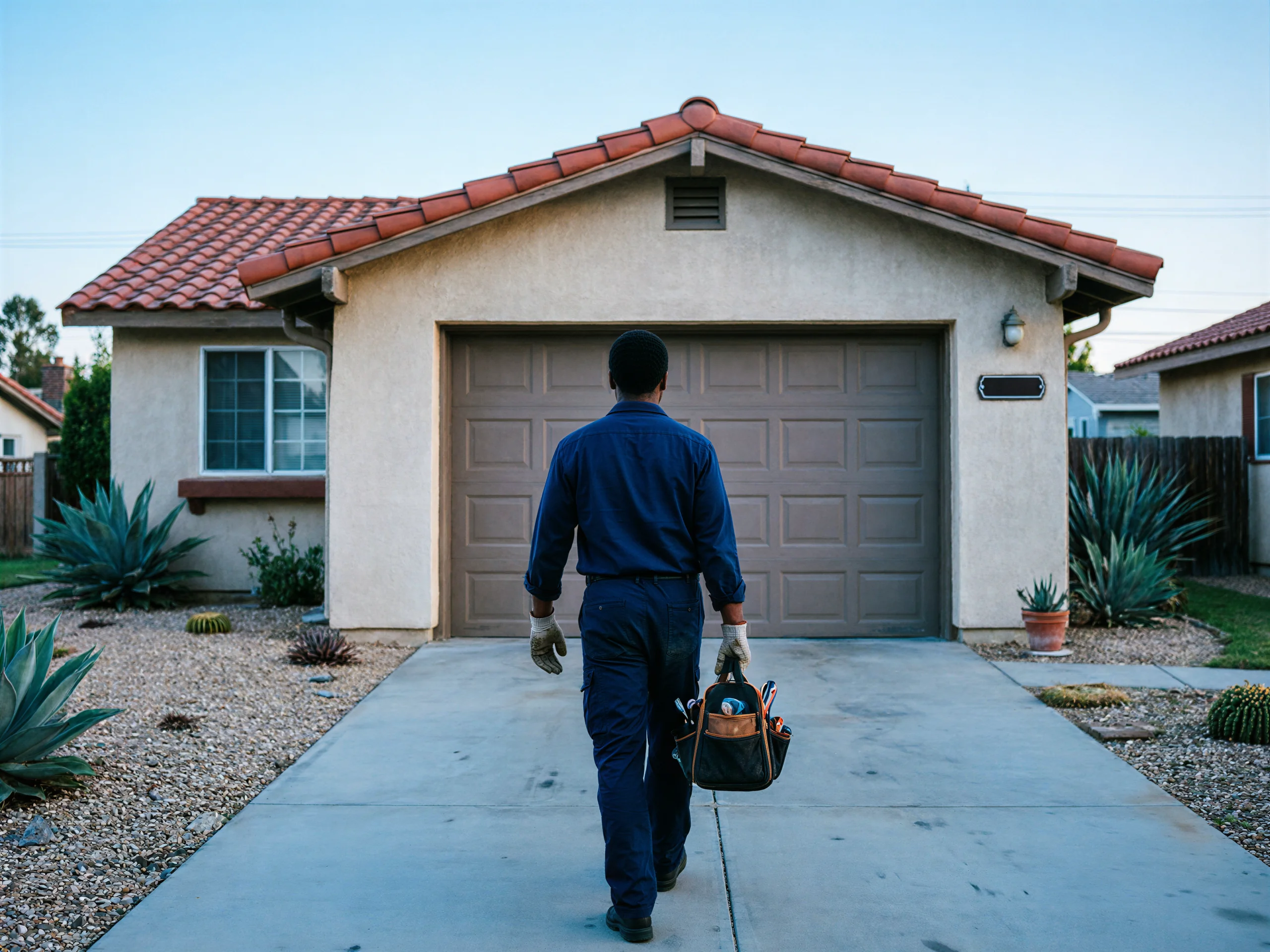
New garage door installation in Jurupa Valley, CA, 16 miles from our Moreno Valley crew, built around the 1980s tract homes and moderate heat common here.
Booking
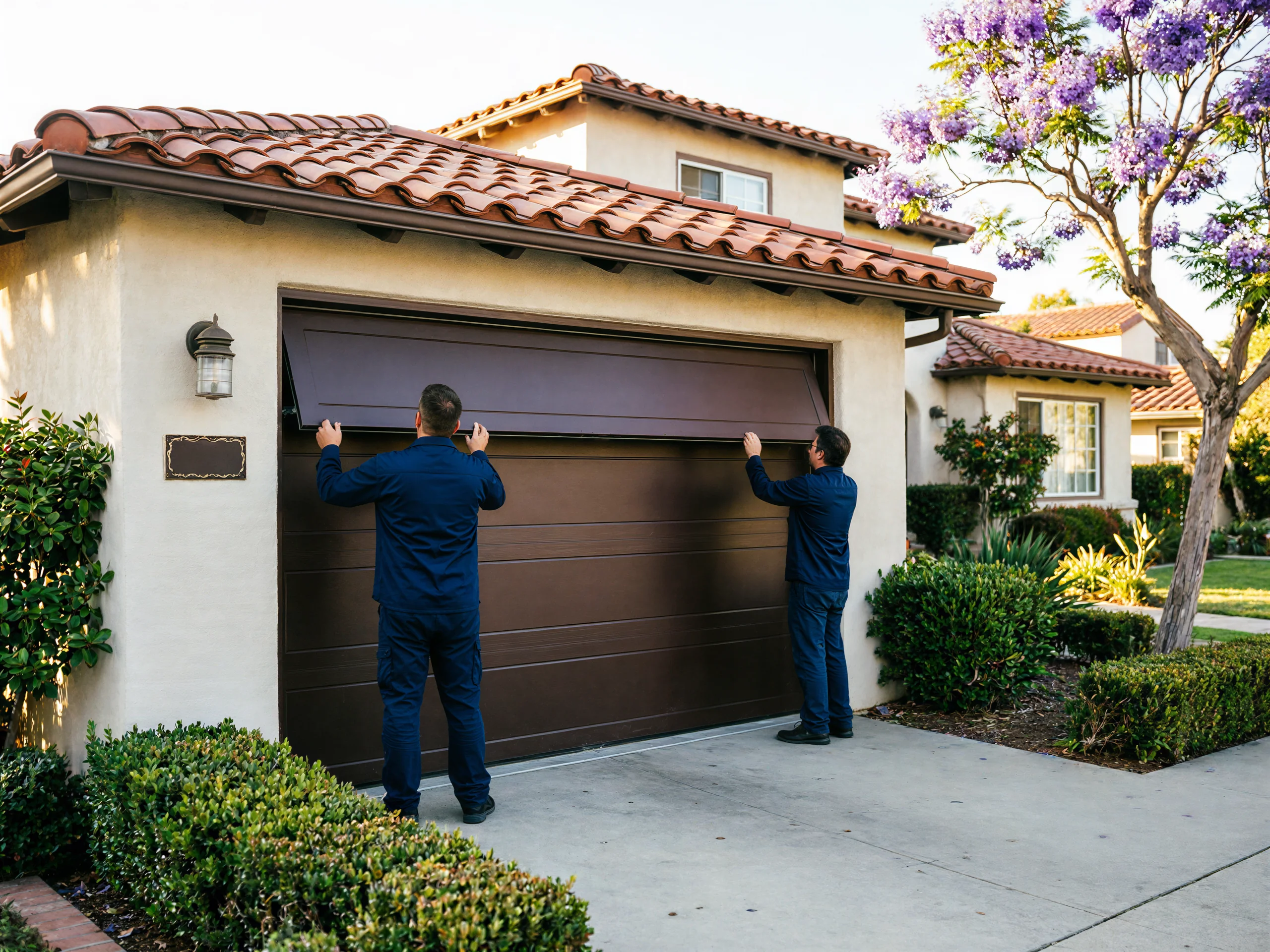
The crew runs this job out of Moreno Valley, and Jurupa Valley sits about 16 miles out, so booking here works best when we can line the visit up with other calls on that side of the service area.
When you reach out, have your garage's rough opening width and height ready, along with the age of the house if you know it - most of this area was built between 1958 and 2003, and knowing roughly when yours went up tells us a lot about what hardware is behind the drywall before we ever show up.
We confirm measurements over the phone or by photo first, because a tract-built double door from the early 1980s often takes a different track radius than a custom-built single from the 1990s, even on the same street. You can see the rest of what we cover from Moreno Valley on our service area page.
We do not keep a separate branch or dispatch point in Jurupa Valley itself - every job here is scheduled as a trip out, not a local call, and we're upfront about that when we book the date.
Job timing
A straight swap of an existing sectional door, same size opening, usually moves faster than a job where the opening itself needs reframing - and in a neighborhood built mostly between 1958 and 2003, we run into both.
Houses from the early run of that window sometimes have openings that were framed to older lumber dimensions, which means a modern pre-hung door doesn't always drop in without trimming jamb or shimming track.
We budget extra time on the first visit to measure before we quote a start date, rather than guessing off a phone description. Double doors on 1980s tract construction are the most common call we get from this area, and they tend to go faster once we're on site because the hardware pattern is familiar.
What slows a job down is usually not the door - it's old framing that's shifted slightly over forty-plus years, or an opener mount that was never squared to begin with. We'll tell you on site if that's what we're looking at, rather than padding the estimate and hoping it's simpler than it looks.
On the truck
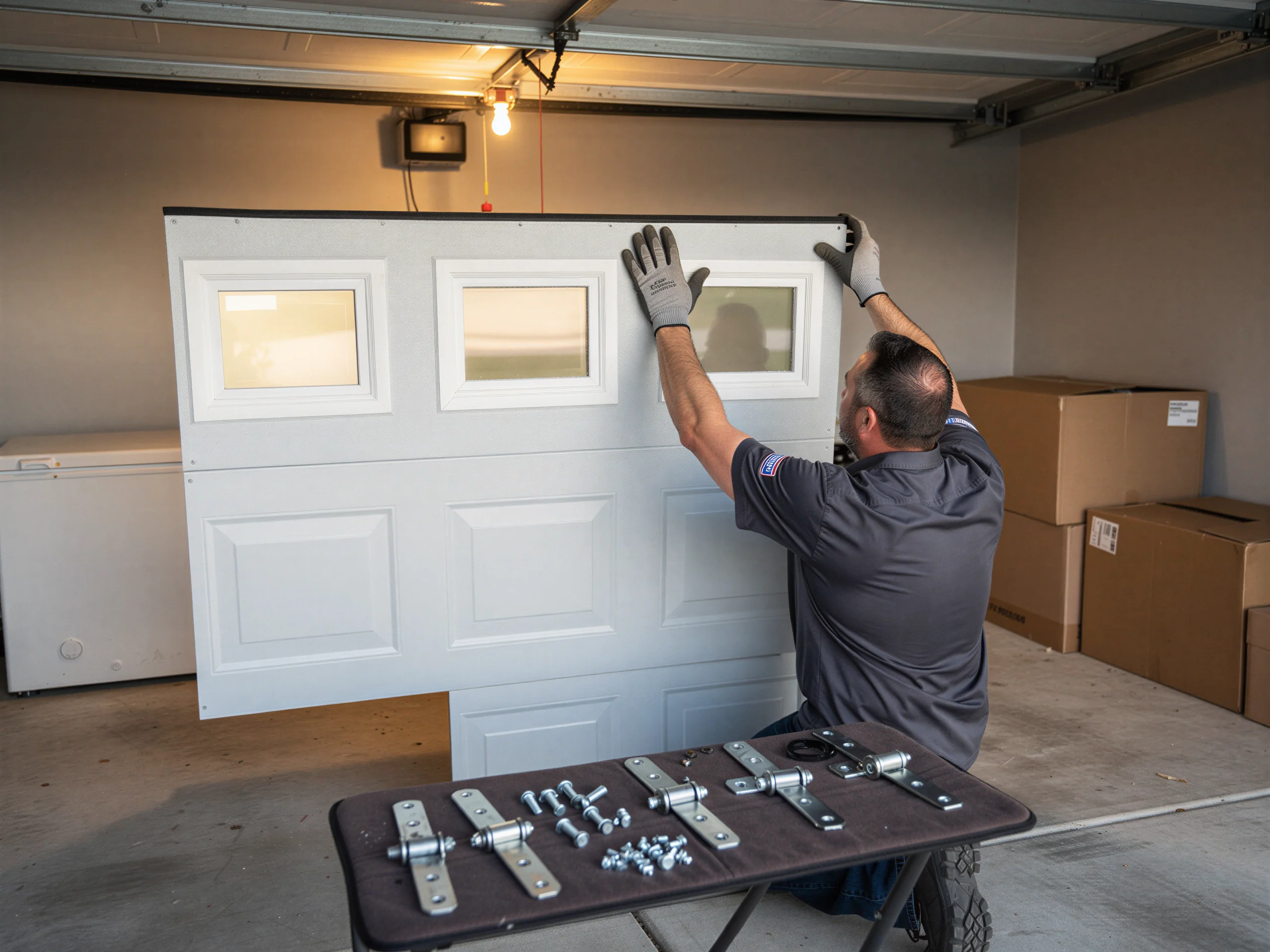
For this area we carry steel sectional sections sized for the openings common to 1958-2003 tract construction, plus the torsion spring weights that match standard double and single door widths from that build era. Given the moderate heat band this region sits in, insulated door options come up more than they would somewhere colder - not for frost protection, but because an uninsulated steel door absorbs a lot of radiant heat over a summer afternoon and that heat migrates into an attached garage. We stock galvanized torsion springs rated for standard residential door weights, nylon and steel rollers, and both chain and belt-drive openers. What we don't carry on every truck is specialty glass-paneled custom doors or oversized commercial-width sections - those get special-ordered once we've measured, and that adds lead time we'll flag up front rather than promise around. If your opening is non-standard, we'd rather tell you that before the appointment than show up short a part.
DIY or pro
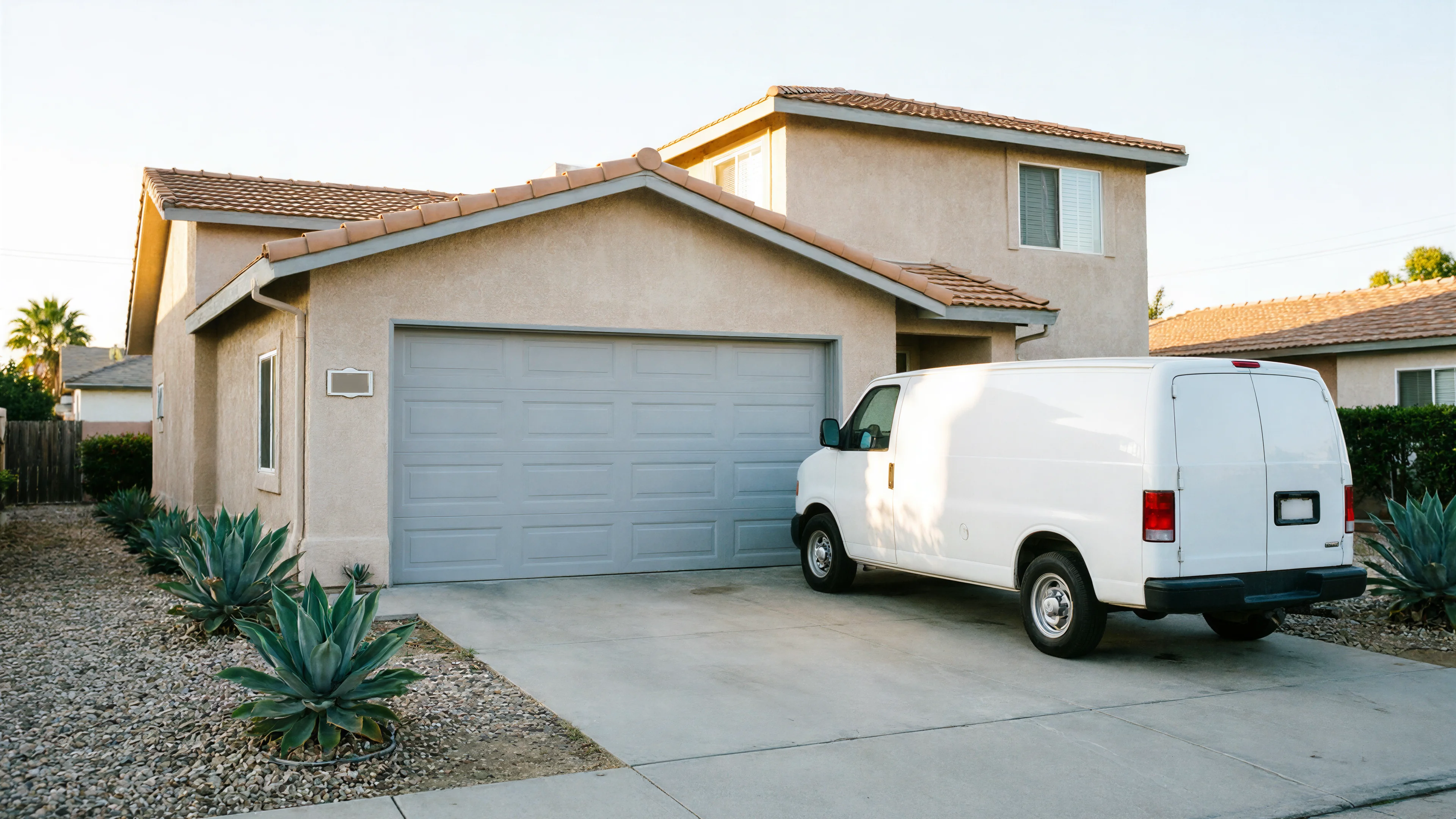
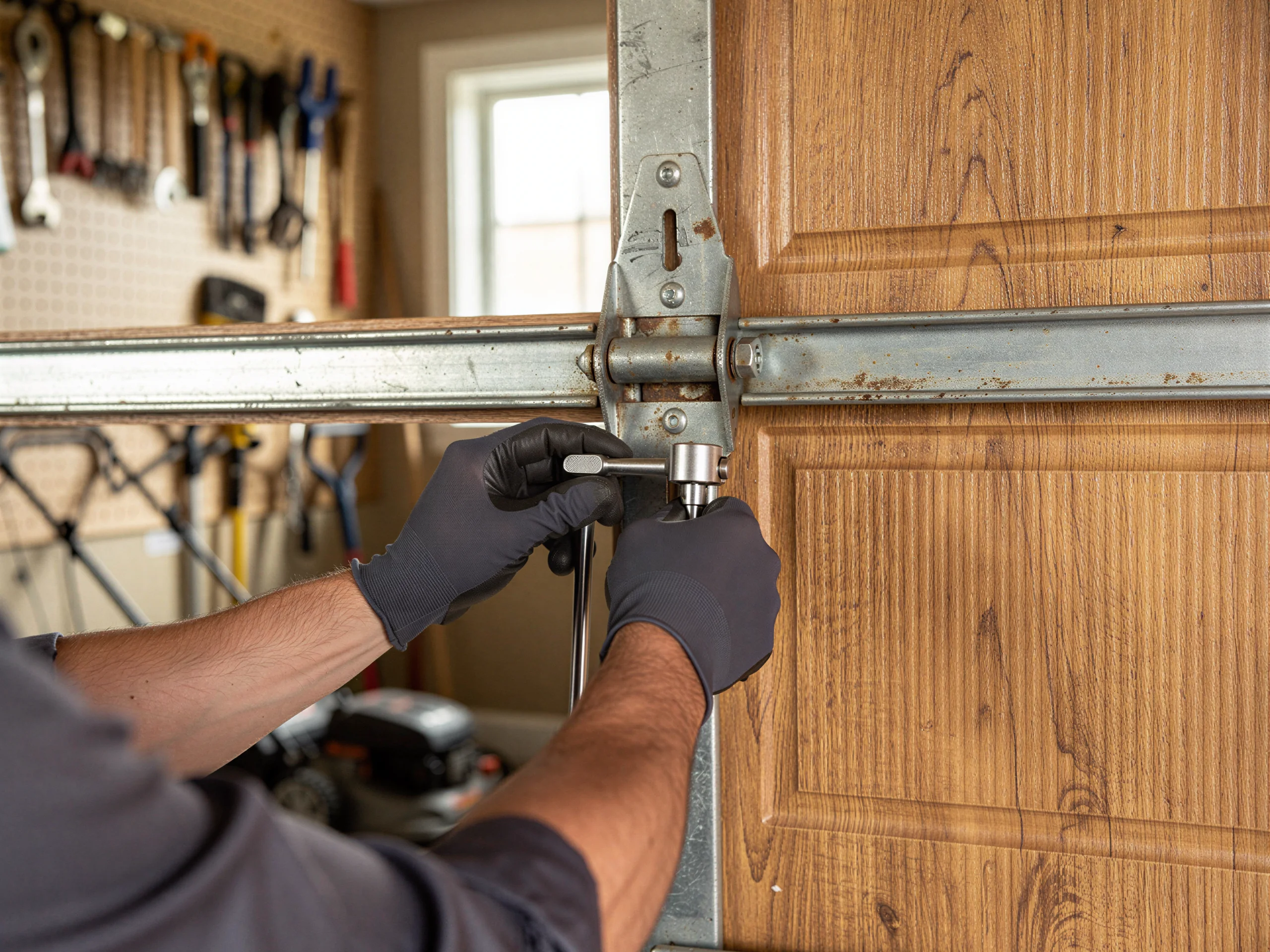
A torsion spring under full tension can break a finger or worse if it slips while you're loading or unloading it, and that risk doesn't change because the door is new instead of old.
Swapping panels or adjusting track alignment on a door you already own is reasonable DIY territory if you've done it before. A full new-door install is a different job: you're setting new track plumb, balancing spring tension from zero, and squaring an opener mount, often on framing that's forty-plus years old and not perfectly square to start with.
We've seen owners get partway through a self-install and call us to finish because the opening fought them - that's not a failure on their part, tract-built homes from this era just don't always match the dimensions printed on a big-box door kit.
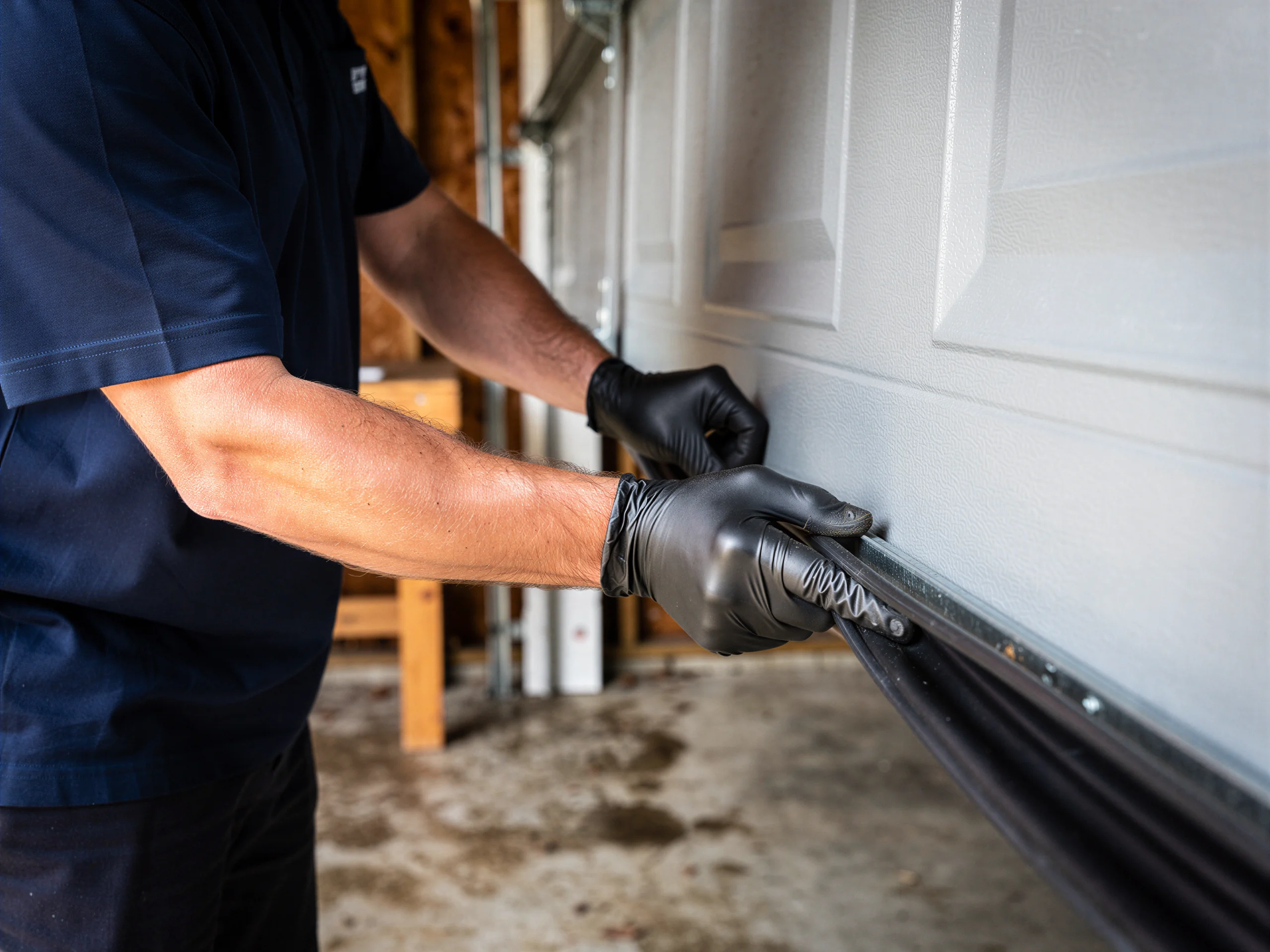
If you're comfortable with hand tools and want to handle weatherstripping or a keypad swap yourself, go for it. Spring tensioning and track-setting on a full install is where we'd tell you to call instead.
Warning signs
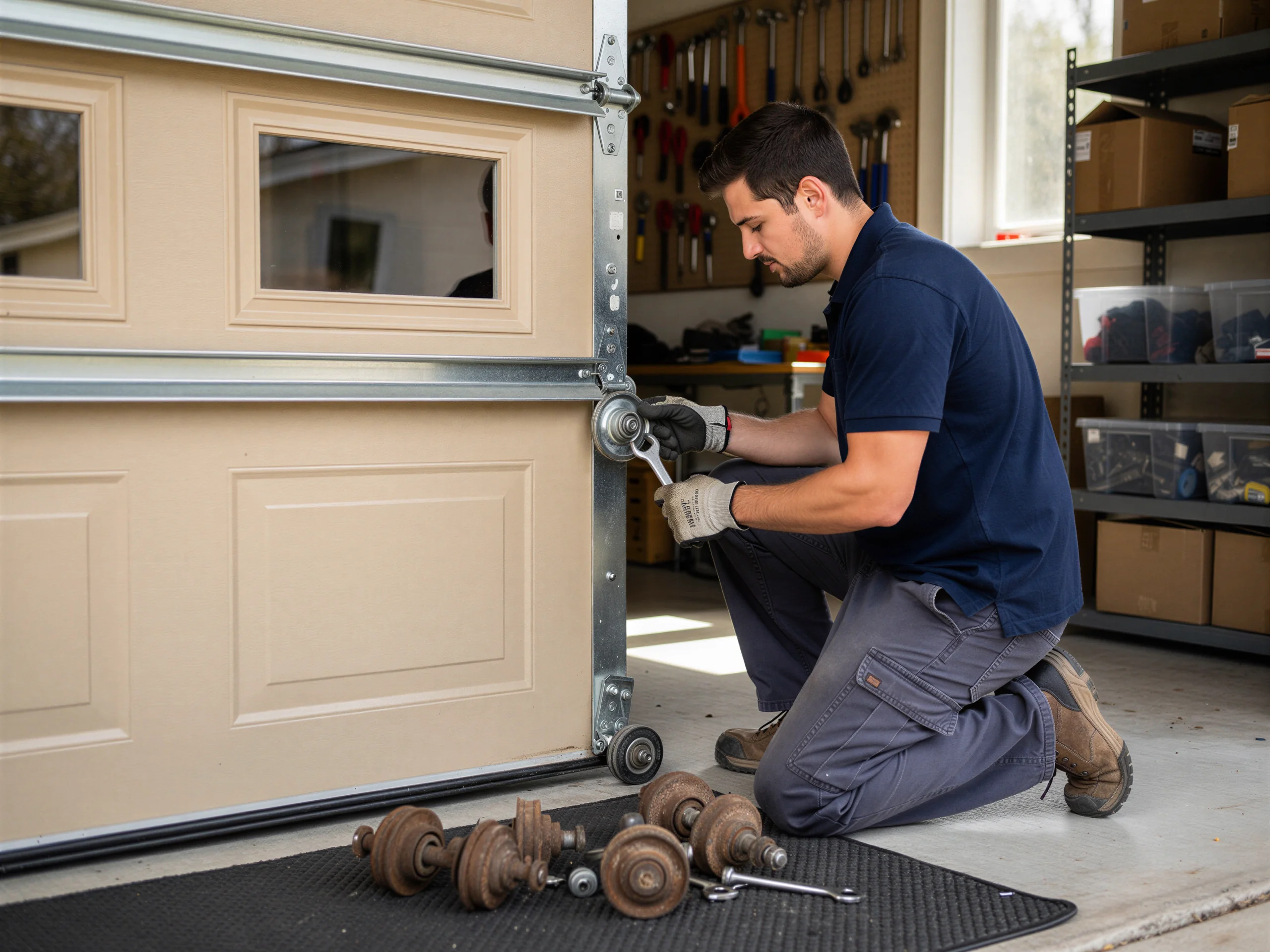
If your door is original to a house built anywhere in that 1958-2003 run, the most common giveaway is a steel panel that's dented along the bottom rail or a torsion spring with visible rust at the coil ends - galvanized coating wears thin after decades of heat cycling.
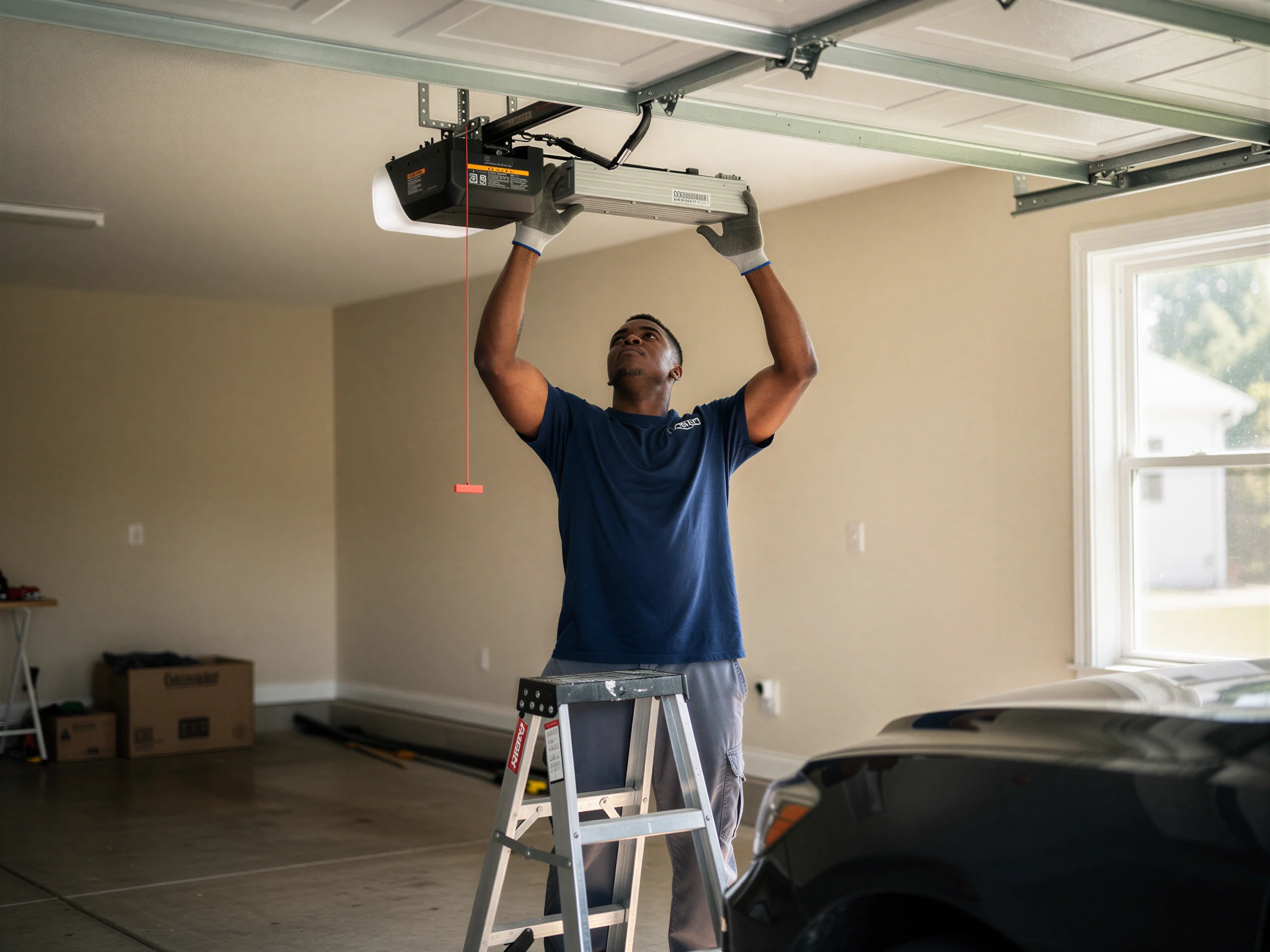
Owners in this area often call us about an opener that runs louder than it used to, or a door that drifts open a few inches on its own after the motor cuts; both point to spring tension that's drifted off balance rather than an opener problem.
On homes nearer the 1980 median for this area, we also see single-layer steel doors with no insulation at all, which were standard then but show their age now as higher garage temperatures on hot afternoons.
None of these mean the opener or the door is unsafe to use tomorrow, but a door that's visibly sagging at the top corner on a double-wide opening usually means the track has walked out of plumb, and that's worth getting looked at before a full new install rather than after.
Local causes
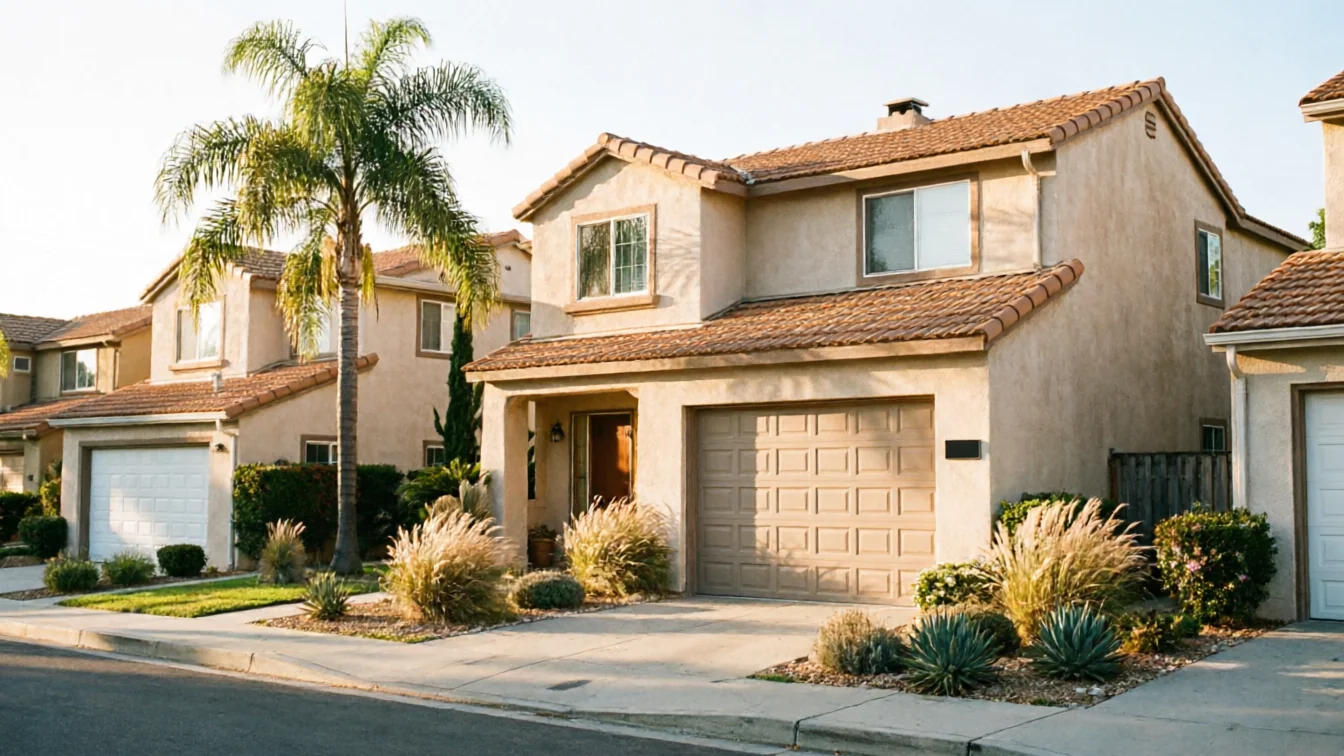
Jurupa Valley carries a median household income of $96,190, noticeably above the $83,246 median across the wider service area, and that shows up in call patterns - more owners here replace an aging single-layer steel door with an insulated one before it fails outright, rather than waiting for a spring to snap. The area's roughly 27,132 households sit inside a service region of 250,595 households and 136,012 owner-occupied houses, built mostly between 1958 and 2003 with a median year around 1980 locally. That build era means steel sectional doors on side-mounted torsion hardware are the default, not the exception. The region's climate band runs moderate heat rather than severe cold, so the failures we see trend toward UV-faded panels, heat-softened weatherstrip, and spring fatigue from thermal cycling - not the frozen-track calls you'd get somewhere with real winters. None of that is unique to one street or subdivision; it's a function of when this area was built and what the air does to steel and rubber over four decades. For the installation work we do from Moreno Valley generally, see our main installation page.
Questions
It's about 16 miles from Moreno Valley. We don't keep a separate branch in Jurupa Valley, so your appointment gets scheduled alongside other calls on that side of the service area rather than as a standalone local visit. It doesn't change the work, just how the day gets routed.
Most doors built in this area between 1958 and 2003 follow standard residential widths, but framing can shift over decades and some early-era openings were cut to older lumber dimensions. We measure on site before quoting a start date rather than assuming off a phone description.
The climate here runs moderate heat, not severe cold, so insulation is mostly about keeping an attached garage from baking in the afternoon sun, not about frost. Plenty of owners in this income bracket upgrade to insulated steel for that reason, but an uninsulated door still works fine if you don't use the garage as living space.
Panel and weatherstrip work is reasonable DIY territory. Setting new track plumb and balancing torsion spring tension from scratch is not - a spring under full tension can seriously injure you if it slips, and that risk is the same whether the door is new or forty years old.
Explore more
Ready when you are
Moreno Valley Garage Door Pros repairs and installs garage doors, springs and openers in Moreno Valley, CA and the surrounding area.